"Verbalized Sampling: How to Mitigate Mode Collapse and Unlock LLM Diversity" This paper was accepted to ICML this year. Its main idea is a very simple prompt-engineering trick: "changing the prompt this way led to more diverse sampling". Naturally, it is difficult to provide a rigorous theoretical analysis for something like this. Even if it works, I’m not sure this kind of prompt engineering belongs at a top-tier machine learning conference. Some people seems to call this kind of work “modern machine learning”, but I think it should be categorized as less technical venues. How do you think? Am I being too rigid? submitted by /u/Mean_Revolution1490 [link] [Kommentare]
Channel
c/artificial-intelligence
No description.
Owner @James · 406 posts · 1 joined · Status active · Posting permission: Only joined users can post
Hi folks, I am looking for research group or individuals that are interested in joining this competition. We can form a team. https://aiboost-project.eu/ai-challenge-competition/ submitted by /u/Tony-Me1998 [link] [Kommentare]
I hold a Ph.D. in Operations Research, along with a BSc/MSc in Engineering and OR. I previously worked in Big Tech, but I’m currently looking to transition. My primary goal is to upgrade my technical skillset to maximize my industry-related profitability and marketability. I want to get away from generic data science and move into high-value, math-heavy engineering and modeling roles. My Core Interests: Forecasting, predictive analytics, and machine learning applied to industrial settings. Target Industries: Robotics/Autonomous Systems, Defense/Aerospace, and Quantitative Finance. What I want to skip: I have little interest in doing core NLP/LLM research, though I am interested in RL, Multi-Agent systems, and applied AI. Where I am right now: I have a solid grasp of optimization and basic/intermediate ML/stats. However, I want to bridge the gap into more intermediate/advanced ML topics that are actually useful and highly valued by employers. I want to get back into heavy math, but only if it drives real-world business value. What I'm looking to learn: Causal Inference: (e.g., Structural Causal Models, Uplift modeling, Double ML). Tree-Based Math: Understanding things like XGBoost from the ground up (deriving gradients/hessians for custom loss functions, implementing from scratch). Reinforcement Learning / Control: Bridging the gap between OR dynamic programming and deep RL for robotics/defense. My questions for the community: Skill Prioritization: From a purely market-driven, high-compensation perspective, which specific ML topics should a Ph.D. in OR focus on to stand out in Robotics, Defense, or Banking/Finance? Portfolio/Proof: How can I best demonstrate to employers that I have the engineering chops to implement these advanced models from scratch, rather than just calling APIs? Positioning: How do I best market the "Predict-then-Optimize" sweet spot (combining ML predictions with OR optimization frameworks) to companies in these sectors? Would love any advice on textbooks, specific frameworks to master, or strategies on how to position my background for maximum leverage. Thanks! submitted by /u/MightyZinogre [link] [Kommentare]
Hi folks, I am kind of new to fine tuning a model. I don't know how to fine tune. Now our team have to fine tune a model on one project. What we decided is, we will be using small model like, llama, mistral, or Gemma, and them feed it with our data. And from there we will be train our model. But this is just a talk we had. None of us know how to fine tune a model. So can you guys, take some effort to help me like how should I do it? How to initiate it? The roadmap I can follow to fine tune it. Would really appreciate your response. submitted by /u/EngineerCtrlT [link] [Kommentare]
The official notification date was listed as July 11, AoE, but I have not seen any emails or public announcements yet. We are trying to plan ahead, and workshops already have a relatively short timeline for re-confirming speakers(their schedule may change), organizing reviewers, arranging the program, and coordinating logistics. Given the limited preparation time, an update on the decision timeline would be very helpful. Has anyone received an acceptance or rejection, or heard anything from the workshop chairs? submitted by /u/Sep29493919 [link] [Kommentare]
Hey! I'm an ML Engineer at a startup building AI for construction cost estimation, and we're getting ready to publish some research. We've paid professional construction estimators to create item-level takeoffs from construction drawing sets, then had multiple rounds of review with construction specialists to make sure the annotations are as accurate as possible. The idea is to release the benchmark publicly so anyone can test their own models against it and compare them with the approaches we've developed. The problem is that I'm having a hard time figuring out where to submit this work. I haven't found many conferences that seem like a good fit for construction AI or that would be interested in a benchmark paper like this, in it we'll also explain how we approach this problem and how LLMs performed on these tasks (Fable, GPT, Kimi, etc). We're mainly looking at conferences in the US or Europe. Does anyone know of good venues for this kind of research? submitted by /u/brunorosilva [link] [Kommentare]
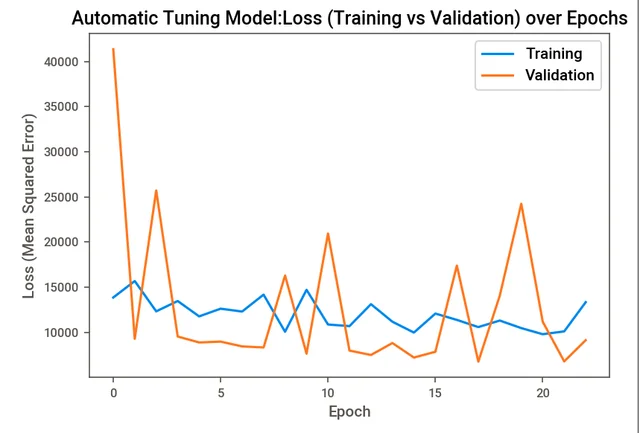
I have used Hyperband automatic tuning for an ANN model to predict price. After running HyberBand automatic tuning to get the 'best' architecture, I am obtaining a strange Val/Training loss learning curve. I cannot figure out if this is due to an error within the code or just a case of me not understanding the graph and not be able to interpret why the graph is showing as it is. I am also obtaining an R2 score of 1.00 which may suggest overfitting. I've not come across a learning curve (only shown the most basic learning curves at Uni) such as this as of yet so any advice would be greatly appreciated! Here is the code for the actual tuning, in case it is due to a coding error but I am not sure that is the case. def model_builder(hp): model = tf.keras.Sequential() model.add(tf.keras.layers.Flatten(input_dim = (train_final.shape[1]))) #creating activation choices - choosing betweeen relu and tanh hp_activation = hp.Choice('activation', values = ['relu', 'tanh']) #creating node choices - maxing unit amounts to 500 hp_layer_1 = hp.Int('layer_1', min_value=1, max_value=500, step=100) hp_layer_2 = hp.Int('layer_2', min_value=1, max_value=500, step=100) #creating learning rate choice - choice between 0.01, 0.001, 0.0001 hp_learning_rate = hp.Choice('learning_rate', values = [1e-2, 1e-3, 1e-4]) #specifies first layer after the flatten layer model.add(tf.keras.layers.Dense(units = hp_layer_1, activation = hp_activation)) #creating the second layer model.add(tf.keras.layers.Dense(units = hp_layer_2, activation = hp_activation)) model.add(tf.keras.layers.Dense(1, activation='linear')) model.compile(optimizer=tf.keras.optimizers.Adam(learning_rate = hp_learning_rate), loss tf.keras.losses.MeanSquaredError(), metrics = ['mean_absolute_error']) return model import keras_tuner as kt #creating the tuner tuner = kt.Hyperband(model_builder, objective = 'val_loss', max_epochs = 50, factor = 3, directory = 'dir', project_name = 'x', overwrite = True) # makes tuner rewrite over old tuning experiments #adding early stopping - stops each model from running too long stop_early = tf.keras.callbacks.EarlyStopping(monitor = 'val_loss', patience = 5) tuner.search(train_final, y_train, epochs = 50, validation_split = 0.2, callbacks = [stop_early]) best_hp = tuner.get_best_hyperparameters(num_trials=1)[0] best_hp.values #obtaining the best model best_model = tuner.get_best_models(num_models = 1)[0] history = best_model.fit(train_final, y_train, epochs = 50, validation_split = 0.2, callbacks=[stop_early]) tuned_df = pd.DataFrame(history.history) #running epoch loss visual def epoch_loss_visual(tuned_df, model_name = 'Automatic Tuning Model') Could it be an issue with the code itself causing the issue or is it simply the way the model is? If it's a case of it's just a bad model, I do not need to improve at the moment, but do need to understand the results, especially that of the learning curve representation. submitted by /u/Grouchy-Archer3034 [link] [Kommentare]
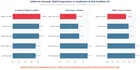
TL:DR: I’m a grad student in AI, I saw that Google released TabFM and TimesFM last week, I built an MCP wrapper to serve both transformer models in a single Docker container so you can connect their new ML transformer models to a local LLM via Open WebUI, Claude Code, or Codex and do ML tasks that would have previously required building, training, and tuning ML models to do. Tested with classic ML datasets (Iris, California Housing, etc), Pretty solid scores for accuracy for being zero-shot: (94.7% for Iris) and R2 of 0.91 for regression test) vs. traditionally tuned ML models. You need about 16GB of VRAM to run both models. I added dynamic model load and unload with a TTL set to 5 mins. CSV. support now, with XLS, XLSX, JSON, JSONL support soon. PyTorch-based so CUDA only. Works on DGX Spark, 3090, H100 and most anything Nvidia with 16GB+ VRAM. Install script auto detects architecture. Here is my repo if you want to try out the MCP: https://github.com/porespellar/Zer0Fit Here’s the non-TLDR version: I’m working on my Masters in AI and I saw someone’s post here the other day about Google’s new TabFM Tabular data foundational transformer models released last week and I thought that they were super groundbreaking in that they were basically bringing ML models into the GenAI space which is both weird and cool because ML models are very different animals than LLMs Here was the original Google blog post on it: https://research.google/blog/introducing-tabfm-a-zero-shot-foundation-model-for-tabular-data/ Anyways, I wanted to play around with these new models from a chat interface and try to “kick the tires” a bit, so I built an MCP implementation for both the TabFM and TimesFM models. Nothing super fancy, just a quick and dirty MCP wrapper of the PyTorch versions (this will only run on CUDA). I made the MCP with 2 build targets in mind: DGX Spark (arm-based with CUDA 13) and 3090 (AMD64 with CUDA 12.6). No Mac support because of Google using PyTorch, sorry. I also wanted this to work with my preferred chat client: Open WebUI, so that’s what it’s geared towards running best with and was tested against, I also added Claude Code and Codex CLI support as well, but haven’t really fully tested those out yet. Install is just a git clone and an ./install.sh. The whole thing runs out of a single Docker container and dynamically loads and unloads the models into VRAM with a TTL of 5 minutes to free up reserved VRAM when not in use. I also included an Open WebUI Skill.md that can be imported into Open WebUI, and skill.md and agents.md for the other harnesses. I tested it with some fairly classic ML datasets from Kaggle that most data science students have probably encountered while studying AI/ML. - Iris (classifiers) - California housing (regression) - Airline Passengers (time series forecast) I spent a semester trying to learn ML models and tuning them and not really knowing what the hell I was doing, usually overfitting my models, and changing all kinds of parameters that I didn’t know if they were really helping or hurting my models. It all seemed like a dark art that I never fully understood. TBH, I wasn’t really a fan of ML, I think it’s cool stuff, but I just don’t have the math skills or stats chops to be able to understand WTF I’m doing most of the time with hyperparameters tuning. A man has to know his limitations, LOL. Anyways, as I said earlier, I just wanted to get Google’s cool new ML models running where I could feed a dataset to an MCP and then have it do all the ML magic that Google trained these foundational models to do. I tried to make it easy for the average person like myself to run. I thought others might want to test out the models too so I made it a public repo. So here it is if you want to mess around with it: https://github.com/porespellar/Zer0Fit I’ll try and do some maintaining if I see that there is any continued interest, but I can’t promise that I’ll keep up with it, so please feel free to fork the repo and take it in any direction you want to. I think models like TabFM and TimesFM are going to low-key bring the branches of AI / ML tree closer together and we’re going to see some really cool and wild stuff as people take these concepts further in the future. Note: This repo was hastily built to just get the models running. I’ve done very limited testing only on DGX Spark. Again, feel free to fork it and make it as good as you want to. And please remember that this stuff is very experimental. Don’t use the forecasts or predictions made by these models for anything other than just research curiosity. Use at your own risk. Let me know what you think of the repo if you give it a try. Cheers. Note Regarding my test results in the images: I created the test scripts using DeepSeek V4 Flash and I had Claude Opus 4.6 review the test methods, code, and results. I don’t claim to be smart enough to know if the stats / math is correct. I would love it if some of the very smart ML research folks on here would give the repo a try and let us know if they are getting similar results or if my results are completely wrong. I included the sample datasets in the repo so “apples-to apples” comparison tests could be run by others to either prove or disprove my results. I really don’t mind if I’m wrong, I’m a student and just want to learn and improve. submitted by /u/Porespellar [link] [Kommentare]
Hi everyone, I am a researcher looking for an arXiv endorsement in the Computer Science (Computation and Language—cs.CL) or Artificial Intelligence (cs.AI) category for my upcoming paper. My paper addresses the critical issue of hallucinated/fabricated citations when using LLMs for systematic literature reviews. I propose a four-agent framework built on CrewAI (Academic Retriever, Critical Reviewer, Technical Writer, and Editor/Verifier) that implements an explicit, claim-level citation verification layer. Here are the details of the paper: Title: Claim-Level Citation Verification in Multi-Agent Literature-Review Generation: Architecture, Implementation, and Pilot Evaluation Abstract: "Large language models (LLMs) can accelerate systematic literature review, but single-model pipelines are prone to fabricated or unsupported citations. We present a four-agent framework, built on CrewAI, an Academic Retriever, a Critical Reviewer, a Technical Writer, and an Editor/Verifier, that decomposes review generation into role-specialized stages and adds an independently executed citation-verification step with a confidence-gated escalation rule. We contribute a tested reference implementation (seventy-two automated tests, a live-verified retrieval tool, a deterministic citation checker, and an LLM-as-judge claim-verification layer with an explicit six-class support taxonomy) and a four-condition, sixty-trial pilot against a live LLM backend. The two ablation conditions without an Editor pass reach a 100% citation-existence-and-metadata validity rate; the complete system, the only condition whose Editor checks claim-level entailment rather than mere citation existence, flags 23% of its 291 checked citations as unsupported or only partially supported. This asymmetric comparison does not show the complete system fabricates more, since the other conditions were never checked for this failure mode, but it also does not show the complete system reduces citation errors relative to a fair, uniformly-checked baseline; a topic-level permutation test on the observed gap does not reach conventional significance (p = 0.062, Holm-adjusted p = 0.186), and the pilot’s five-topic sample size limits our ability to determine whether it would generalize. The Editor-to-Writer revision loop specified in the design was never exercised in this pilot’s data: every non-approved trial escalated to human review rather than entering revision, so the results support a confidence-gated detector that surfaces unsupported claims and escalates uncertain cases, not a demonstrated self-correction mechanism. Blinded human validation of the Editor’s own judgments was not collected. We report these boundaries explicitly, together with the reference implementation, the pilot data, and a discussion of the uniformly-checked comparison and revision-loop experiment a stronger evaluation would require." Keywords: Multi-agent systems, large language models, CrewAI, systematic literature review, retrieval-augmented generation, claim-level citation verification, LLM-as-judge. The paper has already been formatted and prepared for submission. If you are a qualified endorser in cs.CL or cs.AI and willing to help, please let me know! I would be delighted to share the full PDF preprint or send the endorsement link via DM. Thank you so much for your time and support! submitted by /u/FanTax98 [link] [Kommentare]
Been building an AI product for a few months and honestly the part that's eaten most of my time has nothing to do with the actual product, it's all the plumbing around context management, memory persistence, and dealing with multiple LLM providers. Wanted to see how other developers are solving this because I feel like everyone's rebuilding the same infrastructure from scratch independently and there has to be a better way. A few specific things I'm struggling with and curious if you are too: On memory and context: How are you handling persistence across sessions? Rolling your own vector DB setup, using a managed service, something else entirely? How long did it actually take to build? What percentage of your codebase is context plumbing vs. actual product? Has anything broken badly in production around memory retrieval? What went wrong? On multi-model routing: Are you using more than one LLM or have you switched providers at some point? How painful was it to rewrite integrations when you switched or added a new model? Or are you fully locked into one provider and have no reason to change? On third party tooling: Have you tried any existing tools for this like Supermemory, Mem0, LangChain memory, anything else? What did you like, what was missing, what made you build your own instead? What would make you trust a third party enough to route production traffic through it? On cost: What are you spending monthly on memory/vector DB infrastructure? Is this a meaningful line item for you or essentially negligible? submitted by /u/No_Caregiver_2922 [link] [Kommentare]
The context (in a border sense) viewpoint of neural networks is not thought about too much but it leads to a simple best average linear mapping viewpoint of a layer. https://archive.org/details/a-context-based-view-of-deep-neural-networks submitted by /u/oatmealcraving [link] [Kommentare]

Pleasantly surprised to find O’Reilly books on ML at a public library submitted by /u/ai_hedge_fund [link] [Kommentare]
Thrilled to announce the VultronRetriever family of models, which were announced during Raise Summit Paris and demonstrated running Q&A and embedding documents on the iPhone, fully offline! 📱 Some highlights from the VultronRetriever model family: 🥇 Each model ranks #1 in its respective class on the MTEB Leaderboard, with VultronRetrieverPrime-8B as the global #1 📦 VultronRetrieverPrime-8B has up to 16x smaller index storage footprint and 12x higher throughput versus previous 9B-class leaders 🎯 VultronRetrieverCore-4.5B ranks second only to Prime on the leaderboard, outperforming models twice its size ⚡ VultronRetrieverFlash-0.8B outperforms models up to 5x its size, runs cool on edge devices, and indexes up to 60 images per minute, fully offline! 🐍 Deploying the VultronRetriever models with the Hydra Architecture gives you late interaction retrieval at unparalleled precision, plus generation at up to half the memory of comparable models 🧪 All models were trained on datasets with 0% cross-dataset duplication and 0% eval contamination, and show no overfitting on privately run MTEB evals Grab them, break them, make them your own 🔧 🏆 Prime: https://huggingface.co/vultr/VultronRetrieverPrime-Qwen3.5-8B ⚙️ Core: https://huggingface.co/vultr/VultronRetrieverCore-Qwen3.5-4.5B ⚡ Flash: https://huggingface.co/vultr/VultronRetrieverFlash-Qwen3.5-0.8B 📊 MTEB Leaderboard: https://mteb-leaderboard.hf.space/benchmark/ViDoRe(v3)) 🐍 Hydra Architecture: https://arxiv.org/abs/2603.28554 submitted by /u/madkimchi [link] [Kommentare]
Hey guys, I received mediocre scores for my EMNLP paper during the May ACL ARR cycle: 2.5/3, 3/4, 2.5/4. The paper is in the Interpretability track. The reviewers had no larger issue with the methodology or the paper in general, but it seemed like they didn't fully get the so what of my paper. I've tried to clarify everything in my rebuttal, but I don't assume that the reviewers will engage in the discussion. With the current scores, I won't make it to the conference and likely not even into findings. Hence, I was thinking of withdrawing the paper, if scores don't improve, improve the presentation of my paper, and submit it to the BlackboxNLP workshop by the end of next week. As I'm a first year PhD student, I'm not so familiar with ACL ARR, and how best to approach this. Hence, I wanted to ask you guys. Should I keep the paper in the cycle and hope for the best (or switch to the conference at a later stage) or should I withdraw it directly, adjust it slightly, and head directly to the workshop? submitted by /u/H4RZ3RK4S3 [link] [Kommentare]
Hey! I'm looking for ways to predict human preference for a project I'm building. (imagebench.ai) I've tryed HPSv3, https://github.com/MizzenAI/HPSv3 and made post about it here: https://imagebench.ai/blog/does-the-score-match-your-eye It looks ok, but have many limitation as you can see in my post. My question. Have you tried other human preference model and found one that would be better then HPSv3? submitted by /u/dh7net [link] [Kommentare]