As part of my ablations, I want to generate text with a medical-oriented LLM, and I was surprised to find no exposed APIs for this kind of model. I found models like MedGemma and BioMistral on Hugging Face, but they don’t seem to offer public APIs, and I really don’t want to host anything myself. Is that actually the case? submitted by /u/Entrepreneur7962 [link] [Kommentare]
Channel
c/artificial-intelligence
No description.
Owner @James · 417 posts · 1 joined · Status active · Posting permission: Only joined users can post
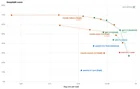
DeepSWE delivers four advances over existing public benchmarks: Contamination free: Tasks are written from scratch, not adapted from existing commits or PRs, so no model has seen the solution during pretraining. High diversity: Tasks span a broad pool of 91 repositories across 5 languages. Real-world complexity: Prompts are ~half the length of SWE-bench Pro's, yet solutions require 5.5x more code and ~2x more output tokens. Reliable verification: Verifiers are hand-written to test software behavior rather than implementation details. The result is a benchmark that reflects how today's frontier coding agents actually perform in software engineering work. https://preview.redd.it/lacvagyr159h1.png?width=1373&format=png&auto=webp&s=6514340a15d51d7f03da733f08fb3f6a302cac75 It's open-source: https://github.com/datacurve-ai/deep-swe submitted by /u/we_are_mammals [link] [Kommentare]

so I submitted a paper to a conference, and literally went one line on a 2 column submission so literally half a line over the page limit. im really paranoid that this will be a desk rejection.. has anyone ever had this happen before? will it be desk rejected? submitted by /u/Gold_You_6594 [link] [Kommentare]
Do you guys get a miccai grants result? I do not receive any mail. Don’t I accept? submitted by /u/CrazyIndependent7436 [link] [Kommentare]
Trying to understand how other people make this decision. Do you compare $/hr, $/token, throughput, reliability? Is there a tool or resource you rely on, or are you just doing the math manually? Asking because I'm an ML engineer who's been doing this in spreadsheets and wondering if I'm missing something obvious. submitted by /u/Technomadlyf [link] [Kommentare]
Hello, WACV conference submission deadline is by the end of this week, good luck everyone! Does anyone know what the expected format/duration of the video for the supp. mat. is? The guidelines only mention: The supplementary material can be either PDF or ZIP only (maximum 200MB). Supplementary material may include videos, proofs, additional figures or tables, more detailed analysis of experiments presented in the paper, or code. It is a bit vague for a first-time submission to this conference. Any help appreciated. submitted by /u/LetterheadOk7021 [link] [Kommentare]
Talk to a lot of ML teams who ship models but skip any adversarial testing before deployment. Feels like security review for models is way behind where it is for regular software. Anyone here actually doing this at their job? submitted by /u/Xorphian [link] [Kommentare]
Hey everyone! 👋 If you’re building RAG or autonomous AI agents, you’ve probably hit the "Vector DB Wall": flat Euclidean vectors suck at modeling complex hierarchical reasoning, and loading millions of 1536D vectors + JSON metadata into memory causes massive RAM bloat and OOM crashes. We spent the last few months solving this from the ground up. Today, we are releasing HyperspaceDB v3.1.0, transitioning from a standard vector index to a full Spatial AI Engine. Here is what’s under the hood: 1. The RAM Diet (Schema-Driven MRL) Instead of loading full dense vectors into memory, we built native support for Matryoshka Representation Learning (MRL). The engine keeps a lightweight navigation core (e.g., 129 dimensions) in ultra-fast RAM, while the heavy semantic tail (672 dimensions) streams dynamically from NVMe SSDs for final top-K re-ranking. The benchmark: In our stress tests with 100,000 vectors, HyperspaceDB consumed just ~72.0 MB of RAM compared to >3,000 MB for Chroma and ~1,700 MB for Milvus. 2. 801D Hybrid Vectors (Lorentz + Euclidean) Flat vectors fail at taxonomy (e.g., Legal Codes, Medical Trees). We introduced an 801D Hybrid Vector. The first 33 dimensions live in a negatively curved Lorentz hyperboloid (allowing for native graph/tree embeddings), while the remaining 768 dimensions handle Euclidean semantic density. Agents can now verify facts geometrically using geodesic path tracing. 3. Killing the "Two-Database Problem" Gluing Pinecone to MongoDB for document storage is painful. We built Sidecar Document Storage. You store massive raw texts directly in the index, which automatically compresses (Zstd) and pushes them to fractal .hyp chunks on disk. Meanwhile, Typed Metadata (int, bool, enum) is compiled directly into the HNSW graph nodes in RAM, providing zero-latency pre-filtering with no JSON-parsing overhead. 4. Lock-Free Rust Performance Under a 1,000-concurrent-client stress test, our lock-free HNSW and L0/L2 DashMap cache held flat at 9,476 QPS with a p99 latency of 11.83 ms. Competitors hit severe lock contention at this scale, with latencies spiking over 2,000 ms. We’ve also added a WASM runtime, Raspberry Pi ARM64 support, and native LangChain/LlamaIndex/MCP integrations. Would love to hear your thoughts, answer any questions about the architecture, or get feedback from anyone pushing the limits of Agentic RAG! Ask me anything! 🚀 submitted by /u/Sam_YARINK [link] [Kommentare]
I think I found a mistake in an ICLR 2026 blog post. I created an issue and have been trying to contact the author and organizers, but I haven't received a response after several weeks. Could anyone please take a look and let me know your thoughts? (I'm just curious and would like to know if my understanding is correct.) https://github.com/iclr-blogposts/2026/issues/218 submitted by /u/metalwhaledev [link] [Kommentare]
Hey everyone, I recently landed a Computer Vision internship after prepping with this checklist I put together. It starts with core math and ML fundamentals, then moves into the specialized CV topics that actually come up in interviews. I compressed it into just 7 days due to time pressure, so it's very actionable and easy to personalize for your own pace. Sharing it here in case it's useful for others prepping for ML/CV roles: → https://github.com/David-Magdy/CVIL Would love any feedback or suggestions to improve it too. Hope it helps someone land their next opportunity! submitted by /u/PolarIceBear_ [link] [Kommentare]
I work in firmware adjacent to AI, so not an ML guy exactly, so that's why I've come here. For work we got a bit concerned about Mythos and all the hype made me explore some benchmarking work. I now have this pretty cool benchmark that's about 80% done sitting around and haven't had the time to polish it up and show it off. I was hoping some more AI focused people could check it out, tell me if it's duplicate work, or if it is worth putting some time into and finishing. Also happy for some help too. The rundown of the code is that it is Juliet code that's been "hidden" to look somewhat like a real codebase, removing LLM's natural advantage when viewing known CWEs, while preserving the "ground truth" associated with Juliet. I also used an LLM to inject comments into the code in accurate, misleading, or neutral sentiments, allowing the user to examine how comments and plain English data can manipulate an LLMs ability to identify a CWE. There are a couple hundred CWEs, generally enough code to fill up the input context, the work that needs to be done is around presentation, actual benchmarking of publish LLMs, and possibly pruning of a couple CWEs that might occasionally get caught by certain LLMs as Juliet code still. Here's the project. Hopefully this doesn't break rule 6. I am not a regular here, just looking for advice. submitted by /u/Psychological_Meat_6 [link] [Kommentare]
Hi all, I'm looking for literature on relatively specific tooling. In autoregressive LLMs, there is substantial published work that used NLI on sub-claims produced by LLMs to gauge correctness of LLM answers. In diffusion (or D-) LLMs, the SoTA model generations that I see (outside of perhaps LLaDA) seem to struggle to be as correct syntactically as the generations from premier AR LLMs, in addition to the issue of semantic correctness. My intuition is that this complicates the usage of NLI (the syntactic noise). What is the SoTA on syntax-robust NLI? submitted by /u/RepresentativeBee600 [link] [Kommentare]
I'm looking for human-in-the-loop platforms that allow you to automatically transcribe audio followed by manually fixing the transcriptions and fine tuning the model. Is there a local (not an online service) installable platform for doing this? submitted by /u/neuralbeans [link] [Kommentare]
Hi, I'm thinking of building a small community of 10-15 people where we can help each other to learn something new. The primary focus will be on ML research and open-source projects. If you're interested, DM me. knowledge of machine learning is a plus, as want to keep this a high-impact, collaborative group. Only for the moderators, since my last post was removed and I was asked to post in the monthly hiring thread: This post is not related to hiring. If I post it in the monthly hiring thread, hardly anyone will see it, so it defeats the purpose. My last post was removed very quickly, but in the mean time I've received 3 comments and 3 DMs. This clearly shows that people are interested, so I kindly request that you don't remove this post. submitted by /u/Tall-Gold-3553 [link] [Kommentare]
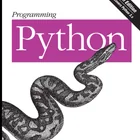
I've noticed something interesting while browsing ML, Data Science, and programming books. A surprising number of them have animals on the cover. Not just one or two books, but entire shelves full of them. Examples include books on Python, Machine Learning, Hadoop, Linux, Data Engineering, and many other technical topics. I was curious: - Is there any historical reason behind this? - Do the animals have some symbolic connection to the subject matter? - Did one publisher start the trend and others copied it? - Or is it purely a branding/design choice? I'm especially curious about whether specific animals were intentionally chosen to represent certain technologies or if they're mostly random. Would love to hear the story behind this from people who've been in tech longer than I have. submitted by /u/Rough-Usual-275 [link] [Kommentare]