Hey everyone, Over the past year I've been building this as a personal project (no company behind it, just me): a Python-based platform that takes measured input/output data from a physical system, automatically identifies the best mathematical model for it, designs an optimal controller (PID, LQR, MPC, and others), and generates ready-to-deploy C and Python code for the hardware. I've verified it extensively on synthetic benchmarks — DC motors, thermal systems, oscillatory mechanical systems, nonlinear processes — and it's holding up well. But I need to stress-test it on **real industrial or embedded data** before I can call it production-ready. **What I'm offering:** - Full analysis of your system's data (no charge) - A complete technical report: model accuracy, controller performance, stability margins - Ready-to-compile C code + Python implementation for your hardware - Everything is yours to keep and use **What I'm asking in return:** - A brief description of who you are, what company/project this is for, and what you're trying to achieve - Your honest feedback on the report and the generated code — does it make sense? Is the output useful? What's missing? This is genuinely valuable to me as a solo developer - Permission to mention you as a reference on my CV - Permission to cite the project as a validated use case (no sensitive data published — just "successfully deployed on [type of system] at [company/domain]") I'm keeping this to 1–2 pilots so I can give each one proper attention. **What kinds of systems are a good fit:** Motors, actuators, thermal processes, fluid systems, robotics, HVAC, industrial automation, biomedical devices — basically anything where you have logged sensor/actuator data and want better control. If this sounds useful, **send me a DM** with a short description of your system and what you're trying to achieve. I'll let you know if it's a good fit. Thanks for reading! submitted by /u/pipeline-control [link] [Kommentare]
Channel
c/robotics
No description.
Owner @master · 610 posts · 1 joined · Status active · Posting permission: Every logged-in user can post
Any one in New York City that wants to build robot let me know you have to be a super nerd and a hobbyist Thank you submitted by /u/BirdAccording7249 [link] [Kommentare]
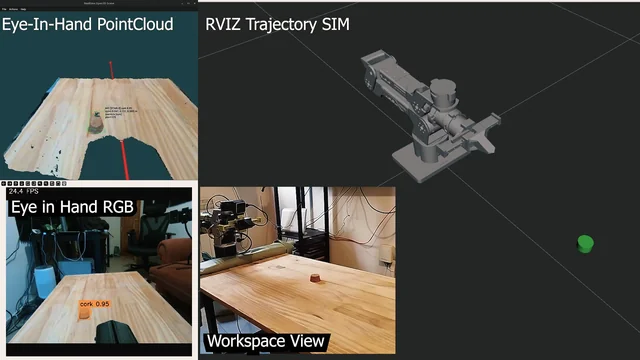
Another working step in my robotics pipeline! It detects the object with a finetuned YOLOv26, deprojects the RGB-D mask into a 3D point cloud, estimates the object position, sends the target to MoveIt, checks IK solver, plans the trajectory in RViz, and executes the motion on the robot before picking it. (next step!) If the object is moved, the target updates and the robot plans again. submitted by /u/nettrotten [link] [Kommentare]

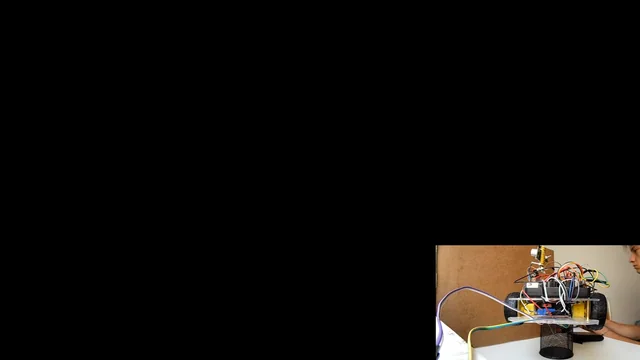
Following up on my last post about this robot project (which I'm currently working on with a Raspberry Pi)—I thought I'd share an update on the project's progress, since I ran into a problem that took me a bit of research to figure out, and I was also able to reflect on it thanks to the very valuable feedback I received. (https://www.reddit.com/r/raspberry_pi/s/eCKPFWwPhk) The issue While testing the 4 DC motors from the web interface, I noticed something off: sometimes the robot would suddenly lurch forward at full speed when I'd only tapped a key once, and other times there'd be a noticeable delay between pressing a key and the motor actually responding. Not a one-off glitch — happening often enough that I couldn't trust the controls. What was actually going on After digging into it, the culprit was the PWM signal I was using to control motor speed. I was using RPi.GPIO's software PWM, which relies on a Python thread toggling the pin at precise intervals to simulate the signal. The problem is that thread has to compete for CPU time with everything else my server is doing — streaming gyroscope data 20 times a second, running the radar scan, handling Flask/SocketIO requests. When the Pi got momentarily busy, the PWM timing would drift, which explains both symptoms: a duty cycle spike (sudden full-speed lurch) or a delayed update (the motor not getting the new speed in time). The fix Switched to pigpio, which runs as a separate daemon (pigpiod) in the background. Instead of my Python code generating the PWM signal itself, it just sends simple commands to this daemon, which handles the actual signal generation independently of whatever else the Pi is doing. So far the difference is noticeable — no more random speed spikes during testing. The other thing I added: a watchdog Separately, I realized there was a bigger risk I hadn't addressed: the robot is controlled entirely over WiFi through a browser. If the connection drops for any reason while it's moving forward, there was nothing stopping it from just... continuing toward whatever's in front of it. So I added a watchdog thread on the server side — it tracks the timestamp of the last command received, and if more than 500ms pass without a new one, it force-stops the motors automatically. Independent safety net, regardless of what causes the disconnect (WiFi hiccup, browser crash, whatever). what I plan to do next Mechanical redesign: dropping from 4 driven wheels to 2 front-driven wheels + a rear caster wheel, mainly to simplify trajectory control (the 4-wheel setup made it hard to drive perfectly straight) Mounting HC-020K encoders on the front wheels for actual odometry instead of relying purely on the gyroscope (which drifts over time) Eventually fusing gyro + encoder data to get a stable heading estimate Repo's here if you want to poke around: https://github.com/enzocolombat/EC-Hub Genuinely curious what people think of the pigpio + watchdog approach — is there a cleaner way to handle the real-time PWM issue I'm missing? And for anyone who's done the encoder + gyro fusion thing on a budget robot, would love to hear how you approached it before I dive in. submitted by /u/Pasteque9000 [link] [Kommentare]
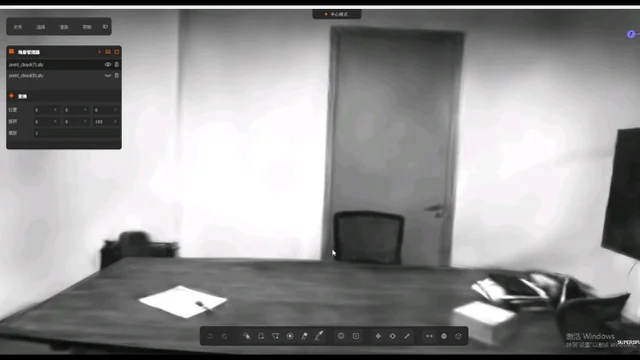
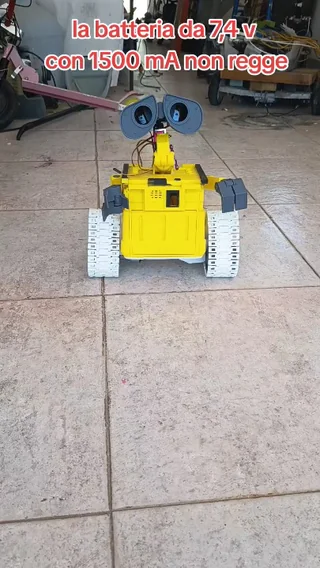
We just wrapped collecting 10,000+ hours of on-demand egocentric human activity data for a major robotics company. Are there any specific tools that you can recommend to data annotation. Happy to share our sample dataset with anyone working on manipulation or foundation models! submitted by /u/RemarkableFold888 [link] [Kommentare]
Lets say you get a call that an AMR just stopped in middle of the warehouse for no obvious reason. Maybe navigation got stuck, maybe localization drifted, maybe some weird sensor issue. My guess is the process looks something like: check whatever monitoring/dashboard you have ssh into the robot grab logs pull the rosbag for that time period replay in RViz/Foxglove look through planner, localization and perception topics eventually find the issue But honestly I'm not sure if thats how most teams are doing it. For people working on robots in the field: Whats your actual workflow? What tools do you open first? How do you get the logs/bags off the robot? What part takes the longest? What do you wish was easier? Is the workflow above pretty close to reality or is your team doing something completely different? Would love to hear some real examples from incidents you've had to debug recently. submitted by /u/rahulkatiyar1995 [link] [Kommentare]
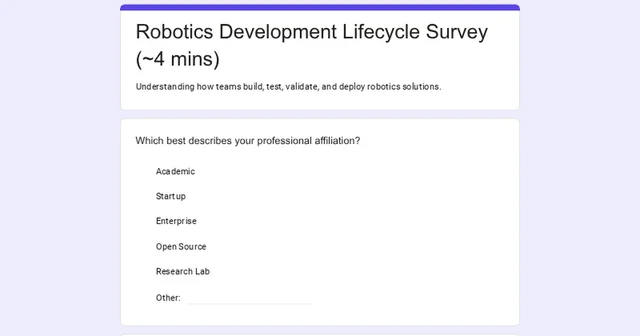
I’ve been talking to people building robots and keep hearing the same things: sim-to-real issues, hardware availability, debugging deployment failures, and testing taking way longer than expected. I’m doing a Cornell Master’s project to understand where robotics teams actually spend their time and what slows them down. The survey covers things like: - simulation tools (Isaac, Gazebo, MuJoCo, etc.) - ROS/ROS2 and middleware - RL, VLA, and classical stacks - testing and validation - deployment failures - world modeling and sim-to-real It takes about 4 minutes. If you’re working on real robots, your responses would be especially helpful. There’s also an optional follow-up interview with a $25 Amazon gift card :) submitted by /u/Realistic-Ganache446 [link] [Kommentare]

Hello all, I am trying to recreate this mechanism as a personal project - and I am really having trouble wrapping my head around how it works. The knees and below make perfect sense, but the hips are throwing me off. What is the purpose of the 2 perpendicular motors at the top? The ones facing horizontally? And how does the rest of the hip fit in with that purpose? I hope this question makes sense. Here is a research paper showing another angle and a more mechanical breakdown. https://arxiv.org/html/2512.16705v1#S4.F3 Also Nvidia GTC 2026 is where the original clip is from (2:11:36) further in the video it shows a side view: https://www.nvidia.com/gtc/keynote/ submitted by /u/halxcyion [link] [Kommentare]
Saw on X about a robot AI company having humans getting paid to train their robots. It sounds pretty insane, but I saw how much they say they could pay and I wanted to apply but I couldn't give them what they were looking for. So quick question for you all who know better than me, what are these companies looking the most right now in terms of data they need from humans for their robots? (ps. I didn't know where else to ask this question so I hope this isn’t a bad place to do so, thanks!) submitted by /u/Fushling [link] [Kommentare]