 T
↗
T
↗
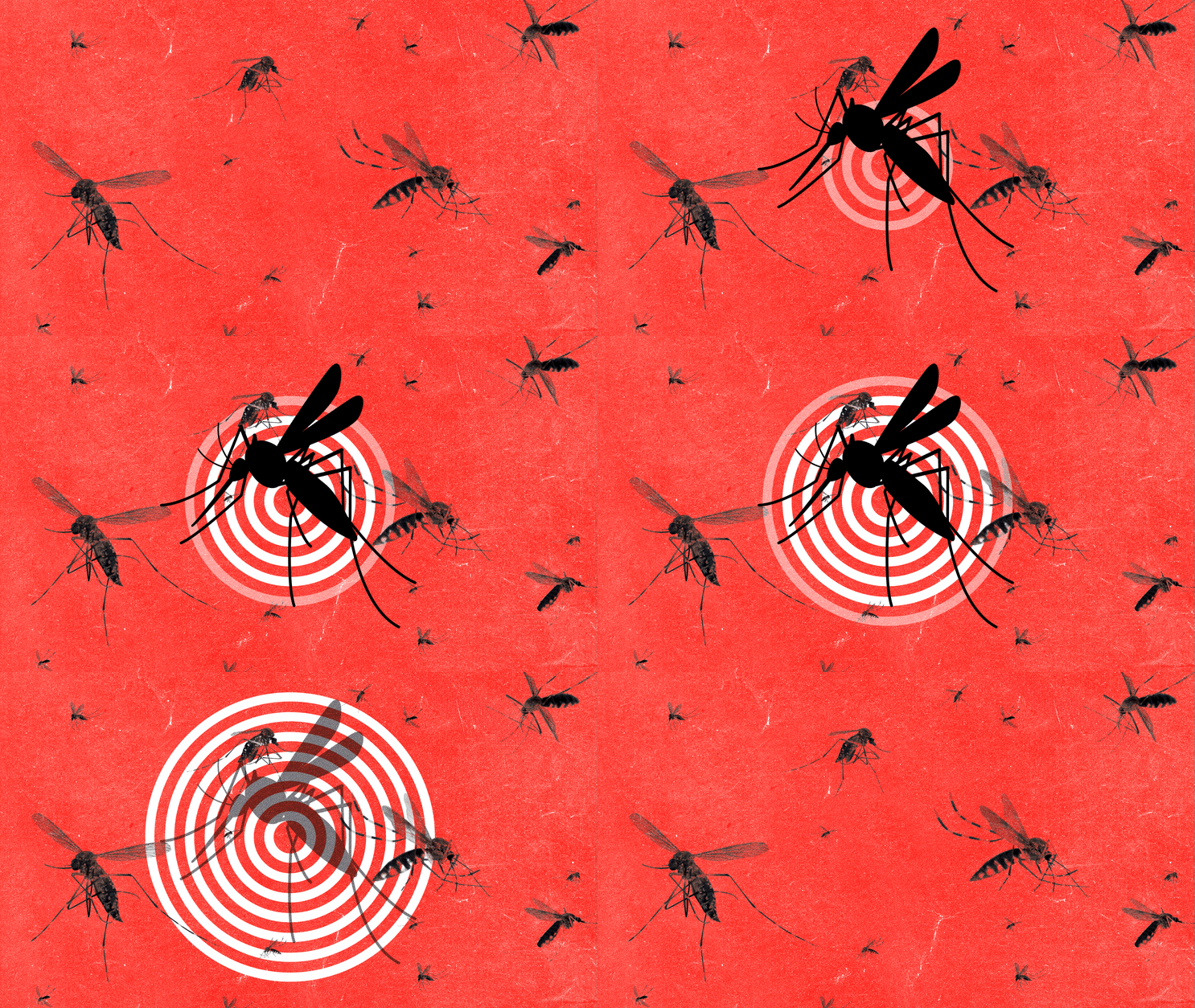
Humans miss this subtle sound of danger approaching – but this cheap gadget can sound the mosquito alarm.
 L
↗
L
↗
AI converts your lecture recordings into polished, editable course PDFs and ePub books — chapters from your words, figures pulled from your slides, exact price up front.
 H
↗
H
↗
We recreated the WordPress pull requests behind CVE-2026-63030 and CVE-2026-60137 to test whether today's code reviewers and SAST tools would catch both vulnerabilities.
 N
↗
N
↗
Is artificial intelligence displacing young workers at the start of their careers? Not so far. But that could change.
 P
↗
P
↗
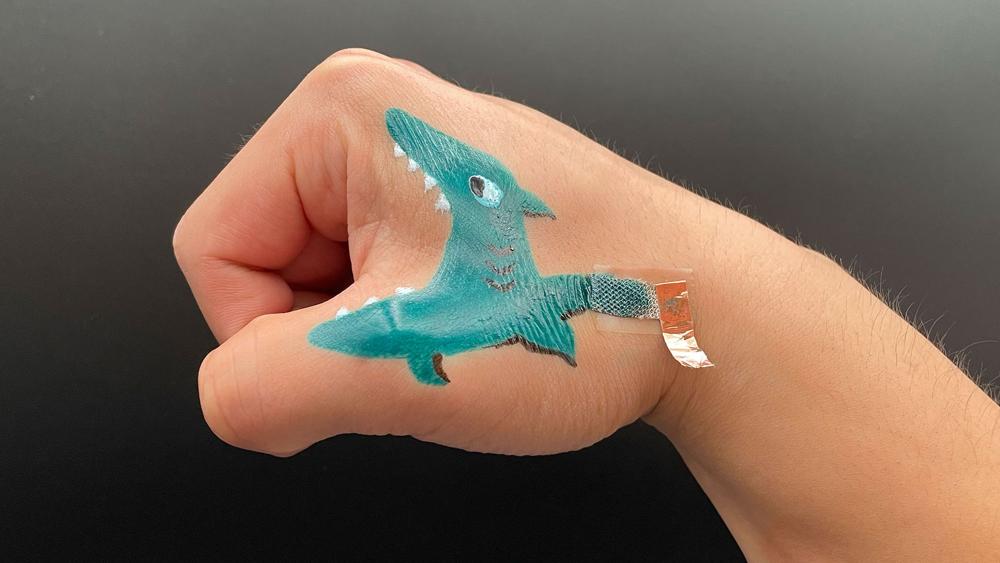
Engineers at Penn State are blending art and science to create cute, paint-on tattoos capable of recording different electrical signals produced by the body with more sensitivity, durability and accuracy than other wearable sensor designs.
 R
↗
R
↗
Learn to tailor your resume to a job description fast using a base resume and role workspaces. Cut a 45-minute chore down to under a minute.
 P
↗
P
↗
A nostalgic multiplayer lobby and live voice chat for old friends.
C
↗
TLDR: Neovim was good, I just personally like Emacs better (especially Org-Mode). I think I can call my experiment to try out Neovim finished, and I am happy to be back to Emacs. I used to be a GUI Emacs user. The motivation to try out Neovim was the rise of AI agentic workflows, and that the AI agent harnesses worked best in the “proper” terminals (Claude Code was flickering and jumping around in Emacs’s vterm, and it wasn’t a good experience). Thus, I had to move my terminal out of my editor and instead bring my editor into my terminal. Additionally, AI agent sessions are often long-living, so tmux became a requirement (not saying that I couldn’t have tmux in my Emacs’s vterm, probably I could, it was just another reason to shift from GUI Emacs to a terminal-based workflows).
 Z
↗
Z
↗
Accumulating tabs, saving PDFs, and making bookmarks feels like progress, but we systematically overrate its value. Understanding requires effortful engagement; you are not likely to draw much understanding from a folder of barely-skimmed PDFs. We collect material because it’s easy, and because it quells the anxiety that we’ll never find what we’re looking at again. But really, we’re often just making things worse, burying important materials in tons of secondary matter we just “don’t want to lose.” This notion is in contrast to Knowledge work should accrete. This is a first step to conquer Collector’s Fallacy: to realize that having a text at hand does nothing to increase our knowledge. Instead, we should Write about what you read to internalize texts deeply, because Evergreen note-writing helps reading efforts accumulate. And to help steer ourselves effectively (contra Note-writing practices provide weak feedback), we should process collected materials in short iteration cycles, rather than letting them pile up for long periods. But! Keep in mind that Most texts aren’t worth writing detailed notes about. Often a good compromise is to use spaced repetition to cheaply internalize a few key details; you can come back and write real notes later if the material turns out to be valuable. See e.g. Deciding to remember something with a spaced repetition system is (aspirationally) a lightweight gesture The Collector’s Fallacy • Zettelkasten Method Because ‘to know about something’ isn’t the same as ‘knowing something’. Just knowing about a thing is less than superficial since knowing about is merely to be certain of its existence, nothing more. Ultimately, this fake-knowledge is hindering us on our road to true excellence. Until we merge the contents, the information, ideas, and thoughts of other people into our own knowledge, we haven’t really learned a thing. We don’t change ourselves if we don’t learn, so merely filing things away doesn’t lead us anywhere. Just like photocopying is self-rewarding and addictive, I argue that we fall into the same trap of false comfort when we bookmark web pages and sort the bookmarks into folders or tagged categories. Bookmarking a web page is satisfying because we get rid of the fear of losing access to the information. I get into detail in another post . This is a first step to conquer Collector’s Fallacy: to realize that having a text at hand does nothing to increase our knowledge. We have to work with it instead. Reading alone won’t suffice: we have to create notes, too, to create real, sustainable knowledge. Especially when we start to research something new, Eco recommends we read and highlight texts right after we create copies. If we train ourselves to process photocopied texts soon, we get a feeling of how much we can really handle. Shorter cycles of research, reading, and knowledge assimilation are better than long ones. With every full cycle from research to knowledge assimilation, we learn more about the topic. When we know more, our decisions are more informed, thus our research gets more efficient. If, on the other hand, we take home a big pile of material to read and process, some of it will turn out be useless once we finished parts of the pile. Kidd, A. (1994). The marks are on the knowledge worker. Proceedings of the SIGCHI Conference on Human Factors in Computing Systems, 186–191 The marks which can make a difference to their organisations are on the knowledge workers not on the pieces of paper. This is what it means to inform - to change the form of a person or a device such that they act differently (ideally more effectively) on their environment.