

Contribute to firish/claude_code_vs development by creating an account on GitHub.
Hello all! Half of all industrial "chatbots" are just text-to-SQL models in a trenchcoat (and the other half RAG!). I wanted to explore just how small you could make these models if you trained, evaluated, and ran inference in the exact same structured harness, leading to Cleo: a Qwen3.5-2B-Base finetune. Currently, some features of cleo that are only possible/useful in a unified hardel are: Training on the exact same gather, repair, and answer contract it uses at inference time Searching over candidate queries with live execution evidence, not just model likelihood Co-designing the model contract, SQL safety layer, dialect handling, timeouts, and clarification behavior as one system Everything is completely open-source, including the harness, model, and datasets. GitHub: https://github.com/Dreeseaw/cleo Hugging Face model: https://huggingface.co/dreeseaw/cleo PS: If you're also resource-constrained and trying to do RL like me, I would highly recommend experimenting with ECHO: https://arxiv.org/abs/2605.24517 submitted by /u/Dreeseaw [link] [Kommentare]
I’ve been thinking about whether the same basic concept behind Bitcoin could be applied to AI training. In Bitcoin, miners perform proof-of-work and are rewarded for contributing computational resources to secure the network. The actual computation itself isn’t particularly useful outside of the network, but it creates a decentralized system. What if a similar incentive structure could be used for training large language models? Instead of miners solving hash puzzles, participants would contribute GPU resources toward training an open-source AI model. In return, they would receive tokens or rewards based on their contribution. Some questions that immediately come to mind: How could the network verify that a participant actually performed useful training work? How would you prevent people from submitting fake or harmful gradients? Could model improvements be measured objectively enough to determine rewards? Would this be more efficient than training models in centralized data centers? Could a decentralized network eventually compete with large AI companies? I know there are already decentralized AI and compute projects, but I’m specifically interested in whether a true “proof-of-training” mechanism could exist, where rewards are tied directly to improving a model rather than simply renting out compute. Curious to hear thoughts from people who understand distributed systems, machine learning, or crypto economics. Is this fundamentally impossible, or is there a viable architecture that could make it work? submitted by /u/notfinancialadvice0 [link] [Kommentare]

Recent years I see plenty of folks from OpenAI and Anthropic attending conferences like ICML/Neurips, yet obviously few are presenting. Are they mainly recruiting? Following emerging research? Curious if anyone with firsthand experience can shed some light on how attendance is justified internally and what the main objectives usually are. submitted by /u/snekslayer [link] [Kommentare]

Build a professional, ATS-friendly resume with AI-powered guidance. Start from scratch or upload a draft to be pre-filled. Free, no sign-up, PDF and Word download.

I'm pretty tired of the usual crypto talk sometimes, the charts, the hype, and the scams. It feels like the actual tech got lost under a mountain of speculation. But I just read a great article by a writer named Patrick about a project called BrowserCoin and it's a breath of fresh air. Link to his write-up: https://complexsimplicity.substack.com/p/you-cannot-buy-this-no-matter-how TLDR: No Money: You literally cannot buy or sell this coin. There is no price, no exchange, and no presale. It exists just to show you how a blockchain works. Anyone Can Do It: You don't need a massive mining rig. You just open a web browser tab and your computer starts mining blocks. Learn the Mechanics: Patrick writes that once you watch the machine run with your own hands, nobody can fool you with a crypto scam again. You get to see what decentralization actually means without someone trying to sell you something. If you want to remember what made this tech interesting before the money ruined it, give his piece a read or take a run at mining some on your browser. It won't make you a dime, but it's a neat experiment. The feeling of hitting a block felt pretty darn cool. submitted by /u/Fienx [link] [Kommentare]


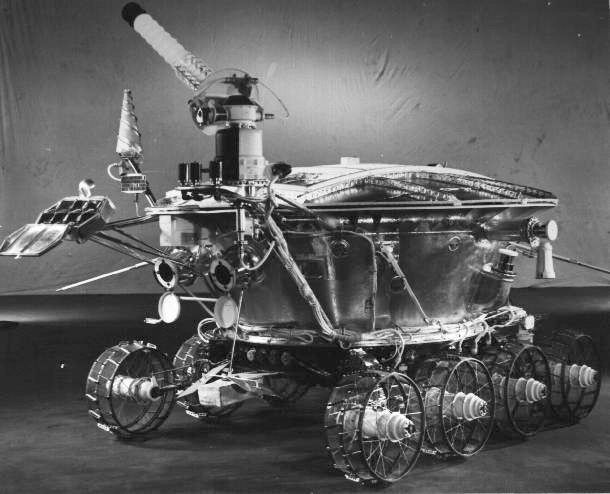
Click on a planet to see JPL Horizons details | NASA Deep Space Network logs update in the background (all antenas) Demo for Datastar + Common Lisp / by fsm ΛↃ lambda combine

Eight long held and common beliefs about the network have been shown, time after time, to be false. What are they, and what do they mean?
Google once again has a model worth at least some consideration. Gemini 3.5 Flash is likely the best model out there at its particular speed point, as long as you don’t mind that it is a Gemini mod…