

![Lauren Ipsum #582 [OC] – Image](https://infeeo.com/m/622/lauren-ipsum-582-oc-image.webp "Lauren Ipsum #582 [OC] – Image")


Help me guys submitted by /u/Inside-Type-4814 [link] [Kommentare]
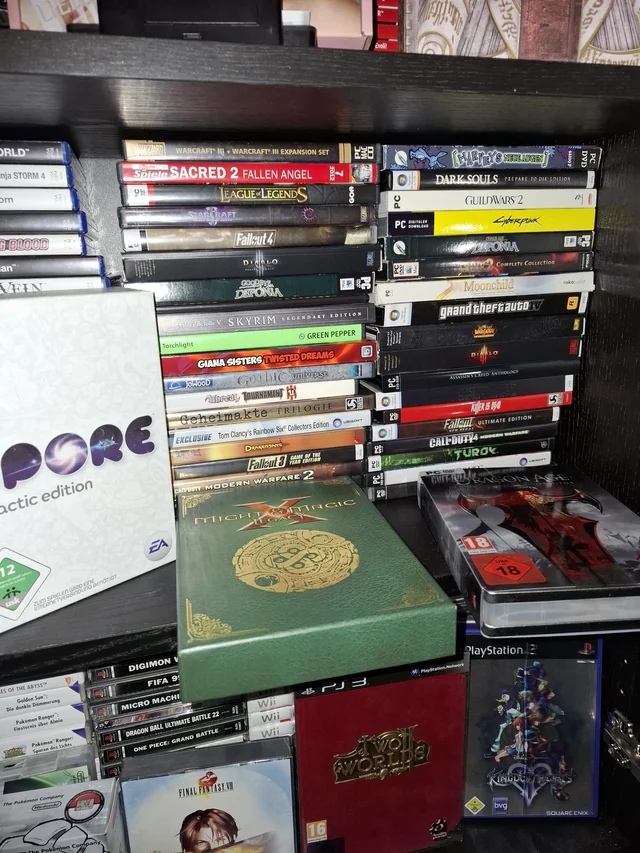
Hallo zusammen, Meine Partnerin und ich sind frisch zusammengezogen. Nun merke ich, dass ich doch ein paar PC Spiele habe. Nun ist die Frage: lohnt es sich, die noch zu behalten? Bei Collectors Edition verstehe ich das schon, aber bei Games wie z.B. Dark Souls oder Fallout 4? submitted by /u/ElMinioninio [link] [Kommentare]
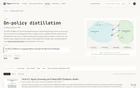
Hi, Niels here from the open-source team at Hugging Face. At paperswithcode.co I am trying to make it easier for people to learn about the newest techniques used across AI papers. One of the hottest terms in AI research that I've recently added is On-policy distillation, also abbreviated as OPD. It's the key post-training behind models like Qwen 3.6 and 3.7, GLM-5.1, and DeepSeek-V4. https://preview.redd.it/yegq2gfag95h1.png?width=3046&format=png&auto=webp&s=f68fdf3ca075f3c4e56051fdd0ebcf97be9bcbc9 On PapersWithCode, you can find the original paper that introduced it, learn more about the method itself, as well as all papers that cite or mention it. Sasha Rush (who used to be a colleague of mine at Hugging Face, now at Cursor) recently made an excellent whiteboard explanation of OPD with Dwarkesh. I've linked this video lecture in the method description on PwC's website, so more people can find it. I'll copy the excellent short description of the method from Dwarkesh here: "The basic idea is this: if the model made a mistake at some point in the rollout (for example, calling a tool that doesn't exist), we want to discourage this specific error, but we don't want to just learn from the final reward, because it's a very noisy signal spread out over the whole trajectory. So we have another model to read this trajectory and figure out where the error was made. It simply inserts some hint tokens into the part of the trajectory immediately above where the mistake occurred. Now, with these injected hint tokens, run a forward pass through the model. You're not having to regenerate a new rollout - aka no new decode required. The hint causes the model to assign lower probabilities to the error tokens. You then train the original model to match these new probabilities, teaching it to downweight that specific mistake." Let me know which other methods I should add! Cheers submitted by /u/NielsRogge [link] [Kommentare]
I have a paper accepted at a non-archival ICML workshop this year, and I am trying to decide whether it is worth registering and attending. By coincidence, I will already be in Seoul around that time, but I would have to pay the workshop registration fee (~$400) out of my own pocket. I would only be registering for the workshop day since I have other commitments during the rest of the conference. I am thinking of applying to PhD programs this fall (I applied this year too, but didn't get in), and the workshop speakers and panellists look genuinely great. Not sure what the real benefits are here or whether I should go for it. For context, I am also attending ACL 2026 this year, but that trip is fortunately sponsored, so this would be a separate personal expense. I would also appreciate guidance on how non-archival workshops work in general. Since the paper is non-archival and not formally published (at least to my understanding), is registration still expected or required for accepted papers? Do authors typically attend and present in person, or is it common to skip attendance and conference registration? Has anyone been in a similar situation? I want to understand the benefits of this. Any advice would be greatly appreciated because I honestly have no idea how to evaluate this. submitted by /u/YOYOBOYOO [link] [Kommentare]