


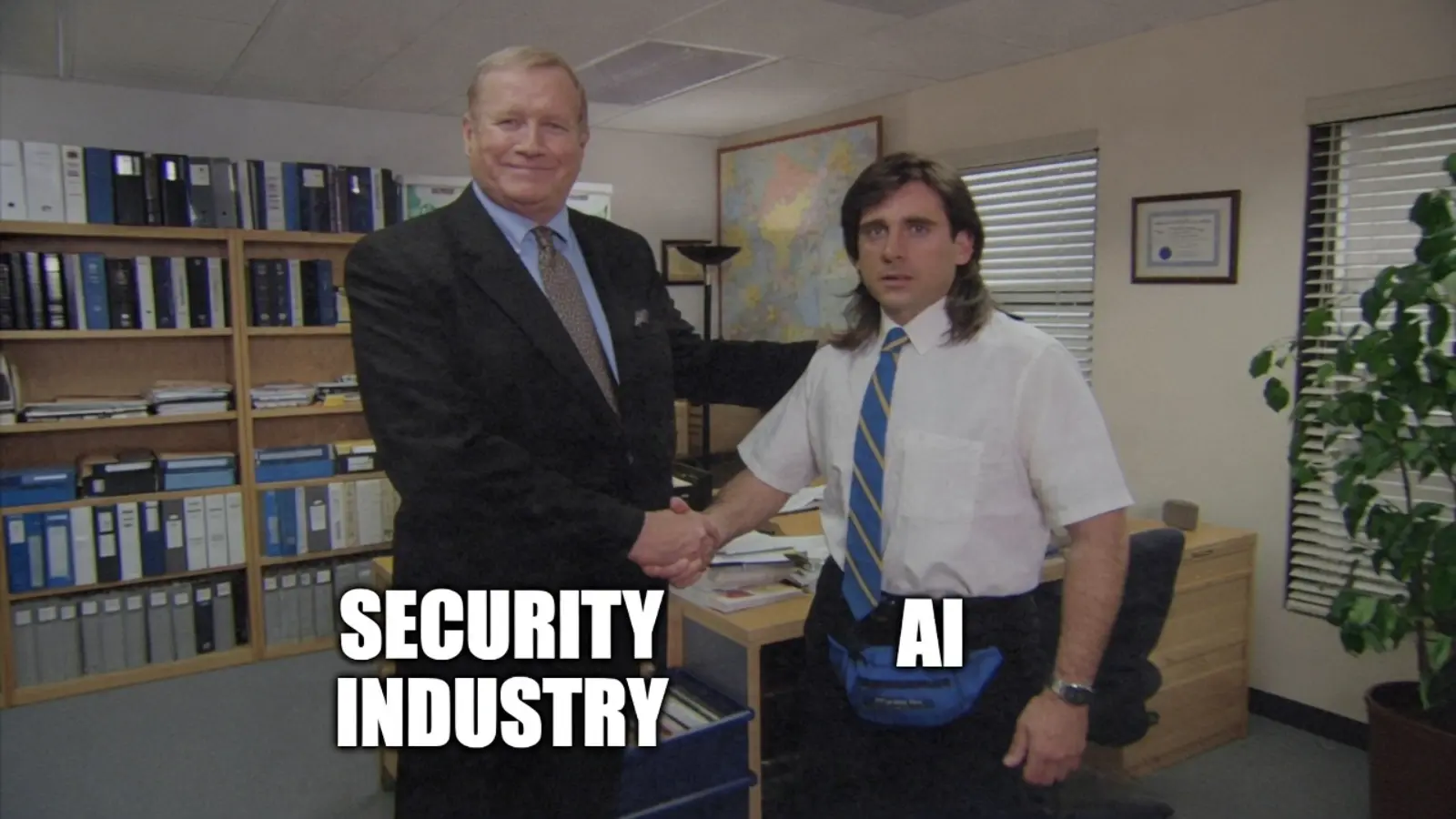
AI makes attackers more capable, developers faster, and attack surfaces bigger. The asymmetry between offense and defense grows - and that's why security as a domain is about to get a lot more investment.

About Steve's blog, The Words of the Sledge steve@einval.com I previously wrote about the upcoming UEFI CA rollover. Well, it's happened now - the old Microsoft UEFI CA from 2011 expired yesterday: Third Party Marketplace Root (used for signing option ROMs and other software) Subject: C=US, ST=Washington, L=Redmond, O=Microsoft Corporation, CN=Microsoft Corporation UEFI CA 2011 Validity Not Before: Jun 27 21:22:45 2011 GMT Not After : Jun 27 21:32:45 2026 GMT The world doesn't seem to have ended yesterday, so I guess we did ok? :-) After a lot of prodding behind the scenes, Debian and many other distributions managed to get new shim binaries dual-signed with both the old and new CAs. The members of the shim-review team did a sterling job with reviews in the last few weeks. Since I started pushing people in May, we've had 21 reviews accepted successfully - see here for the list. Great stuff! Microsoft have also been working quickly - many of those shim submissions were accepted and signed by Microsoft very quickly too, with a turnaround time of less than 1 day in some cases. Not all of those signed shims have been published and used by the distros involved yet, but expect to see them in the wild in the coming weeks and months. These binaries should be good for people to use for the foreseeable future, until either we need to do another CA rollover or (sadly, more likely) we find an issue in shim that necessitates a new release. We already have one of our new dual-signed shim binaries in place in Debian, in unstable and testing (Forky) right now. In a couple of weeks from now, we'll be rolling out very similar new dual-signed shim binaries in the next point releases for Debian 12 (bookworm) and Debian 13 (trixie). We'll also be upgrading fwupd in both those point releases, to make DB and KEK updates work better. For more information about these updates, see https://wiki.debian.org/SecureBoot/CAChanges. For your own safety, validate that your systems are updated when possible. If you don't, they may fail to boot in future.

Marfa Public Radio is literally never asleep. It operates 24/7 (except when lightning strikes) and there’s so much that goes on behind the scenes to make this happen– fundraising, compliance, protocols, emergency response, maintenance…the list goes on and on.Do you lay awake wondering what FCC compliance entails? Ever wondered what NPR's code of journalistic ethics involves for the newsroom?We may never be able to explain what it takes to operate the station, but we can put you to sleep trying to.For this fall membership drive we bring you Marfa Public Radio Puts You to Sleep. It's a sleep podcast wherein we read you the boring documents essential to our jobs, in the hopes we might lull you into slumber.We do actually hope that you fall asleep listening to this, but when you wake up, help us continue to read our boring documents and keep Marfa Public Radio awake by donating to the station at marfapublicradio.org/donate.
Why Frontier Fiction Archive preserves longform AI fiction with provenance, editorial context, and reception as model-behavior artifacts.
Two years ago, I bought a secondary phone. It’s a cheap Android phone that always travels with me outside of town. I’ve for the case that my main phone breaks from a fall, fails to boot after an update, gets lost or runs out of battery. The secondary phone has a set of essential apps installed. Simply put, its task is to get me to my next destination and have some hours or days to repair or replace the main phone.
Wan Streamer: a native-streaming, end-to-end interactive foundation model for real-time, low-latency, full-duplex audio-visual interaction.
Hey guys, I was playing around with Nanotron recently and got super frustrated by how many heavy, hardware-specific dependencies it imports at the module level ( flash-attn , triton, functorch , etc.). If you try to run it on older or budget GPUs like a T4 or V100, it just crashes on import. So I wrote Picotron (https://github.com/Syntropy-AI-Labs/picotron) to solve this. It's a clean-room rewrite that gets rid of all mandatory GPU-specific dependencies. It runs on pretty much any GPU that supports PyTorch (defaults to FP16 on older cards under compute capability 8.0, and BF16 on newer ones). It falls back to standard PyTorch SDPA by default, but still hooks into FlashAttention-2 at runtime if it detects you have it installed. I used an AI assistant to write a lot of the boilerplate/code modules, but I've got it working locally and just trained a tiny 2M model on FineWeb-Edu. Also added configs for: • GQA / MLA (Multi-head Latent Attention) • QK-Norm & logit soft-capping (Gemma 2 style) • Parallel FFN/Attn runs • ZeRO-1 wrapping on DDP Roadmap is pretty short right now: MoE prep (routing capacity factors and load balancing loss) Making dataset prep easier than streaming manually Check it out if you've been fighting with CUDA dependency hell: https://github.com/Syntropy-AI-Labs/picotron submitted by /u/Capital_Savings_9942 [link] [Kommentare]



BlackRock sells $444,500,000 worth of Bitcoin. submitted by /u/Rc7xn [link] [Kommentare]