 R
↗
R
↗
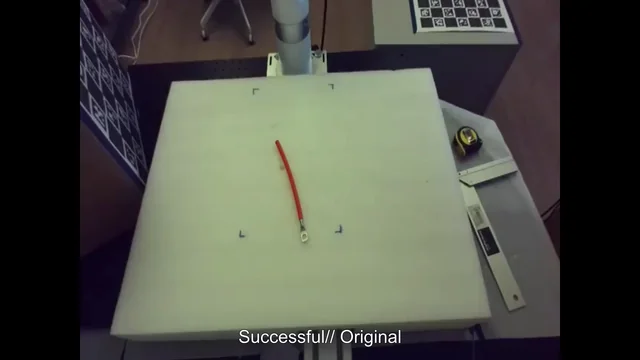
I love experimenting with different boards for computer vision and robotics :D And when a board labeled "Robotics board" appeared, I decided to investigate it. Previously, I tested Qualcomm, Intel, and a few other boards. And in my opinion, this one is pretty nice on this list. No, of course, all of them are worse than Jetson (except for the price part). But it's nice that vendors are increasingly considering this task. My full overview you can find here: Article - https://medium.com/@zlodeibaal/rdk-s100-review-80-tops-robotic-board-d9ad0f464942 Video - https://youtu.be/WHAEl05g8Xk A few highlights here: The S100 is genuinely fast. Especially for classic computer vision. It's not an "INT8" board, which I hate the most:) Pipelines are nice: Python bindings, easy export, good support of operations, etc. Nice extension board. With ~$ 30, you can add GMSL support and a CAN/30-pin header LeRobot support But of course: It's not "super cheap". Just "cheaper than NX" or "cheaper than Jetson with GMSL" Export is working for general policy. But it tends to fail for accurate actions where a few millimeters of accuracy is required. I am still investigating this Only ACT is supported from LeRobot submitted by /u/Wormkeeper [link] [Kommentare]
 R
↗
R
↗
R
↗
R
↗
I have recently started working in mechanistic interpretability independently, starting with distill circuits thread My work is on disentangling and closely studying a single neuron, a 1x1 convolution in inceptionv1 model (and applying the method to other neurons in the same layer). The key insight was that the hadamard product of the receptive field and the weight of a neuron is what the neuron is 'seeing' or detecting. We can cluster the hadamard product to get all the patterns a neuron detects. It gave clean monosemantic clusters (cars, cats, dogs which it was known to activate on). We also get more clusters however, letters, human faces, and many more low valued activations. This gave me a new technique to analyse the neuron very closely. On close analysis the most peculiar thing I found was that the low valued clusters (like letters) had all its dependent neurons also firing on the same concept (letter), and the positive and negative weights were evenly distributed between them to bring down the sum. An evidence of gradient descent working deliberately to put patterns and concepts in a noisy range. I've tried to keep it very distill like with good visualisations. I hope you give it a read. https://pages.narang99.in/posts/2026-07-12-disentangling-mixed4e-55/ I made a mistake honestly by starting with convolutions, nobody seems to care about it. I'll start working on language soon, but it would be good if anyone can read this, it would be good to have some feedback on whether I've actually found anything useful. Thank you :) submitted by /u/narang_27 [link] [Kommentare]
 R
↗
R
↗
R
↗
R
↗
I’m training a single-class segmentation model for large rectangular artwork placed on the floor and photographed from above. We have around 3,000 accurately masked original images taken by six different photographers. They are not the same height and do not hold the camera in exactly the same way, so the photos naturally vary in: roll pitch yaw camera distance object coverage in the frame centering and X/Y shift orientation perspective lighting The photos taken with flagship iPhone. I want to use on-the-fly augmentation to simulate realistic human-hand variation and save our designer from adjusting each time to make it flat. is 100 augmentation combinations per original be useful, or excessive? Should the policy be: mostly isolated transforms, mostly crossover combinations such as orientation + roll + pitch + yaw + coverage + shift, or a controlled hybrid of both? The goal is maximum segmentation accuracy, especially around the object boundary, not speed. I plan to train for around 300 epochs and keep validation and test images unaugmented. submitted by /u/Loganbirdy [link] [Kommentare]
R
↗
Hi all, I’m building a data-readiness platform that runs a raw-to-training-ready workflow for Physical AI teams. It starts with the messy middle after capture: robot video, sensor streams, logs, and kinematics that are not yet reliable training data. Euler combines visual and kinematic readiness checks with annotation and labeling, with the goal of taking a raw data slice toward a dataset for a specific policy. I’m conducting user interviews to gauge whether I'm heading in the right direction, because I do not want to build just another annotation platform. For teams training VLA or other robot policies, I’d really value a candid view on three questions: Is the harder problem knowing which data is usable, or annotating it once you know? Would a policy-aware workflow from raw capture to training-ready data be useful? What would make this meaningfully better than annotation software: readiness checks, visual plus kinematic context, curation, or something else? Project: https://sudotank.com/ I’m looking for honest pushback as much as interest. Thanks! submitted by /u/sennath [link] [Kommentare]
R
↗
R
↗
Over the past few years, humanoid robots have attracted a lot of attention. However, I have been noticing another interesting trend: service robots are already creating practical value in real business environments. In restaurants, hotels, warehouses, and commercial spaces, robots with clear tasks seem to have a faster path to deployment. Examples include: - Delivery robots reducing repetitive labor - Cleaning robots improving operational efficiency - Warehouse robots optimizing internal logistics The challenge is no longer only about robot intelligence. Real adoption also depends on: - Reliability ; - Maintenance - Cost efficiency - Integration with existing workflows I am curious about the community's opinion: Do you think the next major growth wave will come from humanoid robots, or from specialized robots designed for specific business scenarios? submitted by /u/Jane-Tannai [link] [Kommentare]
R
↗
Hello everyone whats the customs situation for getting a robotic arm into india( cost is around 12,000 dollars) 13-14 lakhs INR please let me know your experience with things like the additional duties, how the process is etc i checked the hs code calculator but wanted to know from people/companies who have bought these arms. submitted by /u/optimusprime1001 [link] [Kommentare]
R
↗
COLM 2026 Decision about to come soon so lets talk here. submitted by /u/North_Menu718 [link] [Kommentare]
 R
↗
R
↗
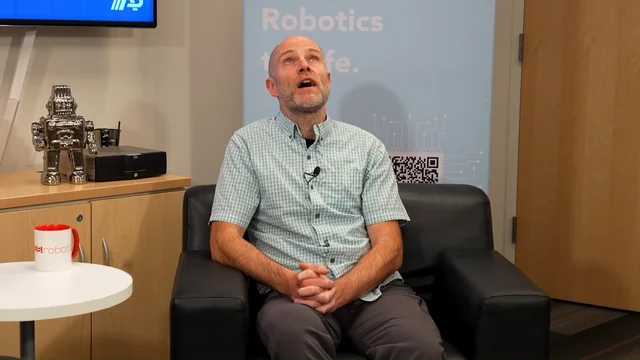
Russ Tedrake says the current robotics boom is not just about one technical breakthrough. The difference now is that several things are happening at the same time: AI progress, more talent entering the field, more investment, better supply chains and a growing need for automation in the real world. Robotics has had hype cycles before. Tedrake’s point is that this one has more than hype behind it. The question is still whether the field can execute, but the pieces are lining up in a way they have not before. submitted by /u/Responsible-Grass452 [link] [Kommentare]
 R
↗
R
↗
Found this demo on their project page showing exactly the transparent-surface problem that breaks most RGB-D setups. Raw sensor depth drops to nothing on the glass panel, and the completion model fills it in from the backbone features. Only the four vision encoders went up on HuggingFace and GitHub this week under Apache-2.0; the depth completion weights themselves are not released. Their paper lists NYUv2 RMSE of 0.296 for the flagship ViT-g, and they report 2.552 on KITTI, trailing both DINOv3-7B and V-JEPA 2.1. For actual robotics work this is the exact failure mode that makes wine glasses and steel cabinets a consistent headache for grasp pipelines. Curious how people see validating these depth numbers when the completion weights are not available for independent testing. submitted by /u/Savings-Display5123 [link] [Kommentare]
R
↗
I've been running a lot of comparative evals across recent model releases—both API and open-weight—and there's a pattern I can't unsee. After a certain number of turns, or when you push into niche territory, the outputs start converging. Same cadence. Same hedging phrases. Same blind spots. It's not full collapse. It's a kind of... homogenization. A creep. My working theory: we're deep enough into the synthetic data flywheel now that we're seeing the first-generation effects. Not model collapse in the catastrophic sense, but a gradual loss of "texture" across models that share overlapping synthetic ancestry. I've been calling this EchoCreep in my notes. The slow, creeping homogenization of model behavior driven by shared synthetic data lineage. Has anyone else been tracking this? Is there a formal term yet? If not, what are you seeing in your evals that fits this pattern? I'm especially interested in: Concrete eval metrics that might capture it Whether fine-tuning on entirely human-curated data clears it If you've seen it worsen between checkpoint versions any feedback would be appreciated? Thanks submitted by /u/BCondor3 [link] [Kommentare]
 R
↗
R
↗
 R
↗
R
↗
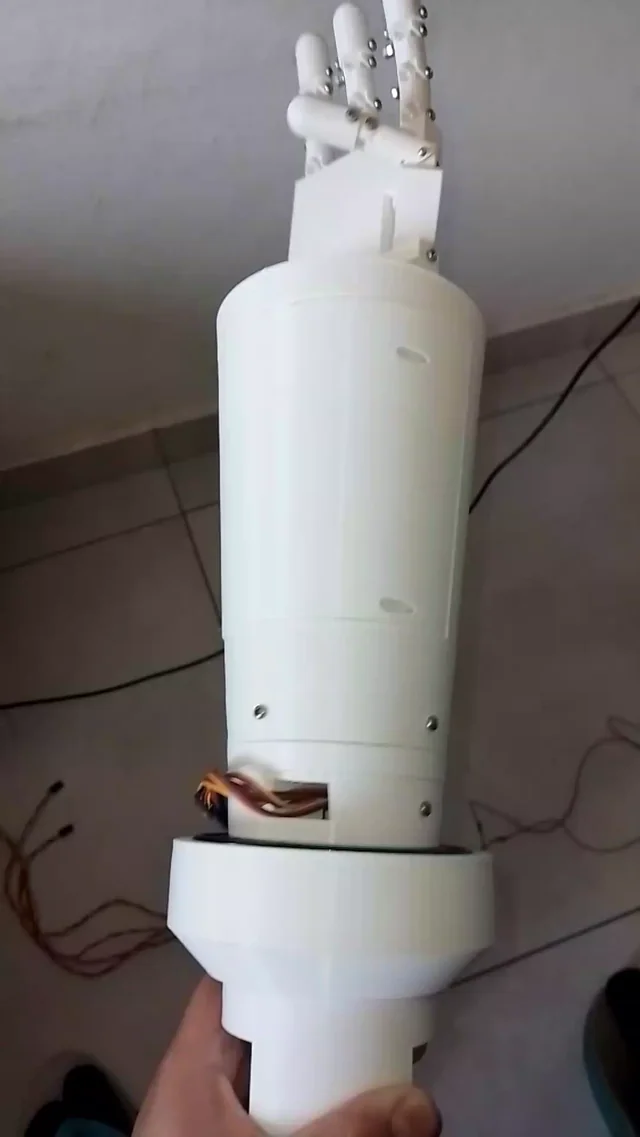
Olá a todos! estou construindo meu próprio robô humanoide em tamanho real do zero. Este é o protótipo atual do antebraço, cotovelo e mão. Para a mão, fiz engenharia reversa do mecanismo dos dedos usado no robô InMoov e o recriei usando parafusos em vez do projeto original. Os dedos são acionados por servos que puxam linha de pesca, que funciona como tendões artificiais. O mecanismo de rotação do antebraço usa um rolamento 6916-2RS e projetei todas as peças mecânicas no Fusion. Esta versão é apenas um protótipo. Ela é impressa em PLA e montada com parafusos zincados para manter os custos baixos durante os testes. A versão final será impressa em PETG e usará parafusos de aço inoxidável, insertos de latão termofixados e porcas autotravantes de nylon (porcas Nyloc) para maior resistência e durabilidade. Infelizmente, ainda não consigo demonstrar todos os movimentos porque um dos canais do meu testador de servos está com defeito, então só consigo testar dois servos por vez em vez de três. Agradeceria muito qualquer feedback ou sugestão. Estou aprimorando o projeto passo a passo antes de construir o robô humanoide completo. submitted by /u/Lonely-Advisor-8990 [link] [Kommentare]