
@James
Profile channel
@James
No bio yet.
Since 30.05.2026
⚫ Reconstructed tables ⚫ Census ⚫ Online works ⚫ Computing aids ⚫ Pi ⚫ Sustainable digitization ⚫ Nancy The aim of the LOCOMAT project is to make available a number of interesting and/or important historical tables, and to facilitate the study of the original tables by historians of mathematics. An overview of the motivations of the project appears in Denis Roegel, "The LOCOMAT Project: Recomputing Mathematical and Astronomical Tables", IEEE Annals of the History of Computing, April-June 2012, pages 74-79. Slides of an overview of the project can be found here (in French). This page is located at http://locomat.loria.fr/ GDML (Global Digital Mathematics Library)
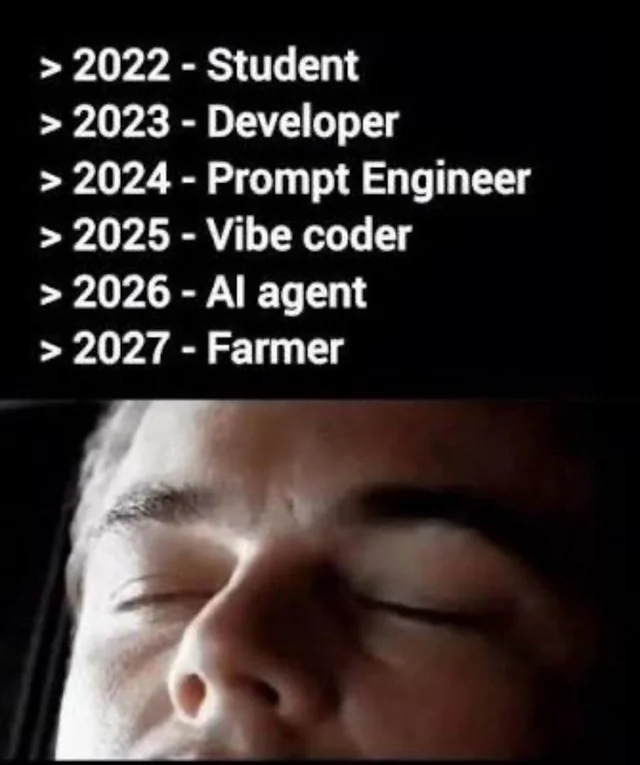


I recently came across Pi Network and their push toward building an ecosystem for Al-created apps through Pi App Studio. They are trying to attract "vibe coders" (developers using Al tools like Replit, Cursor, Claude Code, etc.) to deploy apps into the Pi ecosystem. The idea is that developers can: build apps with Al tools integrate them into Pi App Studio reach a claimed 60M+ user base use Pi for payments, identity, and distribution It's interesting to see crypto projects shifting from speculation toward app ecosystems and real utility. I'm curious what developers think - could Pi actually become a useful distribution layer for Al apps, or is this just marketing? submitted by /u/Longjumping-Meet3953 [link] [Kommentare]

Why Engineers Struggle to Decide (And How to Teach Them)



A few months ago I may have accidentally pre-ordered the Accurascale Pacer... I have a history of pre-ordering, then cancelling (as I dislik...
Hello everyone, Is it allowed to use OpenAI API outputs to create a silver code dataset or benchmark for a specific Python library? I am working on a project idea related to library-specific code generation. The concrete case is a specific Python library used in a technical/scientific domain. The goal would be to improve and evaluate how well code-generation models can use this library correctly. I am trying to understand the legal / Terms of Service boundary around using OpenAI API outputs in two different scenarios: Scenario 1: Silver dataset for fine-tuning an OSS model Use the OpenAI API to generate programming tasks, reference solutions, and verification tests for the specific Python library. Then human-review, filter, and validate the generated examples. Then use this silver dataset to fine-tune an open-source code model, with the goal of improving its performance on this specific library. My question: would this violate OpenAI’s terms because the API outputs are being used to train/fine-tune another coding model, even if the scope is narrow and library-specific? Scenario 2: Benchmark only, not training Use the OpenAI API to generate programming tasks, reference solutions, and verification tests. Human-review and validate them. Then use the resulting dataset only as an evaluation benchmark to compare different models. The benchmark would not be used to fine-tune or train any model. My question: is this generally considered allowed under OpenAI’s terms, assuming the benchmark is properly reviewed and documented as AI-assisted? I understand that Reddit is not legal advice, and I would still contact OpenAI or legal counsel for a definitive answer. However, I thought new ideas could come up from people who have already faced similar situations in practice. submitted by /u/ororo88 [link] [Kommentare]