
@James
Profile channel
@James
No bio yet.
Since 30.05.2026


I graduated with my bachelor's in a top 3 CS program and have had a rough recruiting season. I received a full time offer as AI Product Engineer at a tax software company, where they are trying to become more AI native. It's essentially a PM + AI engineering role. Long term I'd love to work at a frontier lab or in a research/more technical role at an AI startup. So, should I take up the offer or pursue my master's at the same school? I am able to defer my master's but don't feel fully comfortable accepting the offer just to only work there for 6 months... At the same time it's not fully aligned with where I want to be long term and feel I can do better, but recruiting was also really difficult. Note, I'm not able to pursue my Master's while working, the company was firm on this TC 126k submitted by /u/jollyjove [link] [Kommentare]
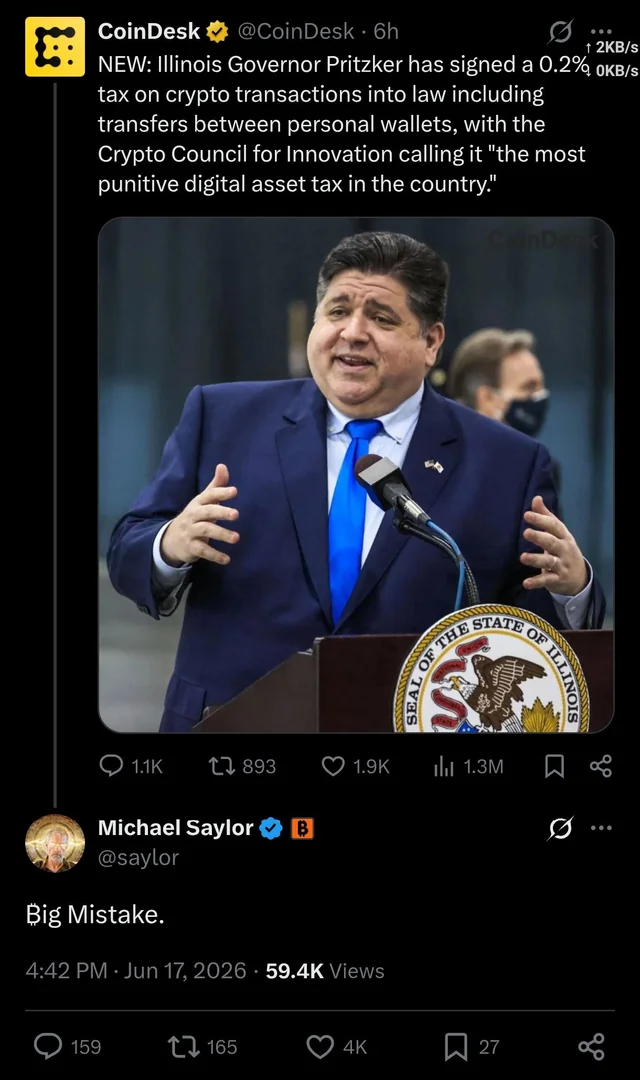

Everyone uses chat gpt for everything it told me a coin made 1500% in returns but a lot of people just didnt know I have over 200k in the bank should i trust chat gpt and put it all on something Im not sure chat gpt seems pretty good how did all of you become millionaires from this did you spend ages researching or use ai to make you millionaires? Its telling me Ethereum Bittensor Render submitted by /u/Prior_Night_985 [link] [Kommentare]

A method that is currently trending on Papers with Code is Speculative Decoding. https://preview.redd.it/dm4nh4t71o7h1.png?width=3082&format=png&auto=webp&s=b6468668667d4bcfb6c9248d3af7fd09f21fe0da Speculative decoding is an inference optimization technique that uses a fast, small "draft" model to quickly propose several future tokens, which are then verified in parallel by a larger, slower "target" model. This process significantly speeds up token generation for large language models (LLMs) by allowing multiple tokens per step without sacrificing output quality. SGLang, one of the most popular frameworks for running LLMs alongside vLLM, just released a blog post detailing how they achieve state-of-the-art latencies for LLM inference serving using Modal and Z.ai's DFlash speculative decoding models. Learn more at https://paperswithcode.co/methods/speculative-decoding. You can also find all the papers that cite the original paper that introduced this technique. SGLang's blog: https://www.lmsys.org/blog/2026-06-15-next-generation-speculative-decoding-dflash-v2/ Let me know which other methods I should add! Cheers, Niels from HF submitted by /u/NielsRogge [link] [Kommentare]

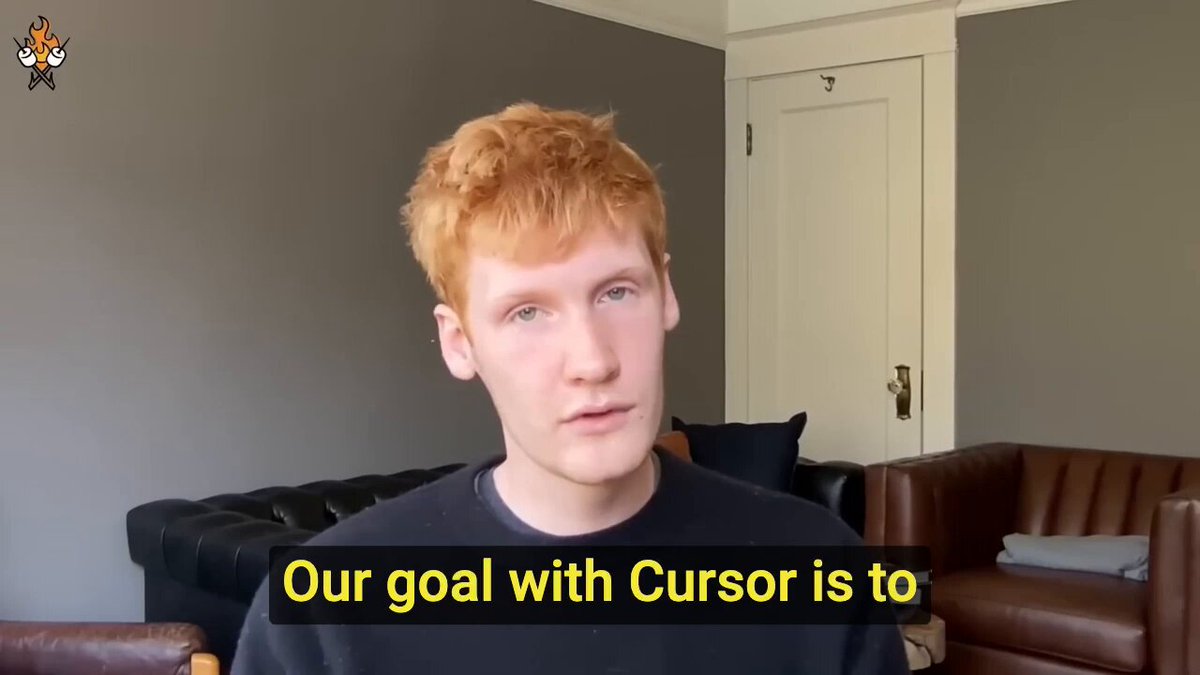
Cursor CEO Michael Truell on the future of writing code: "Our goal with Cursor is to invent a new type of programming." "It looks like a world where you have a representation of the logic of your software that does look more like English." "You can imagine kind of an evolution https://t.co/CjQuHMVUJk
Let me preface this by saying I think RWAs are truly revolutionary, and bridging the global financial system together to allow people in developing nations to purchase treasury bonds and stocks in stronger economies is truly a remarkable technological development, and has become a discovery of mine that has made me understand that crypto truly does have use. However, after digging deeper into tokenomics, I am extremely confused by the market valuations of XRP and XLM. With other coins like ETH, TRX, and SOL. I can understand that they have somewhat reasonable multipliers due to the fact that they generate billions in revenue annually. But I can’t quite wrap my mind around how XRP is worth 70 billion, and XLM is 7 billion, when these coins would need to generate trillions of transactions daily to generate fees that could even be considered substantial. Is there anyone that understands these projects better that has some knowledge that opposes this? Or are these coins really that grossly speculative and overpriced? submitted by /u/Most-Use-2167 [link] [Kommentare]
Character AI, founded by former Google/LaMDA developers Noam Shazeer and Daniel De Freitas, proved that text-based character chat can work as a real entertainment category. But the next chapter might not be better text chat. It might be real-time video interaction. Mel AI recently shared a demo of AI character video chat, and the interesting part is the interaction stack: voice, lip sync, facial reactions, and camera-aware responses instead of just a static avatar or chat box. The character can respond to visual context too. If the user is visibly on a plane or in a different environment, the character can notice and react to that context during the conversation. I don’t know how much of the video layer is truly generated in real time versus powered by a clever animation/rendering system, but it feels meaningfully different from the usual text-based character AI experience. Character AI proved the demand for entertainment AI. Now it feels like the race is about who can make AI characters feel alive in real time. Demo: https://x.com/Building_Mel/status/2064848256115626481 submitted by /u/DonutRare5633 [link] [Kommentare]