So the deadline's basically here (July 1) and I keep going back and forth on how much it actually changes for me day to day. For the people who don't follow the EU stuff: after the 1st, exchanges without a MiCA license can't legally serve EU users. The number that got me was something like 210 of ~3,000 firms actually cleared it. Even Binance is apparently still sorting its license out after the Greece thing stalled. What I can't tell is how hard the cutover actually bites. Like is it "your account is gone July 1," or a slow thing where pairs quietly disappear and withdrawals get clunky over a few months? I've seen people claim both and I don't know who's right. I already pulled most of my stack to a hardware wallet a while back so I'm not too worried about the holding part. It's more the moving-between-things part — if a chunk of the smaller exchanges get cut, I'm probably leaning more on non-custodial swap stuff and DEXs, (eg tokensfund) which I'm fine with but the rates and the learning curve are real. Anyway, curious what people are actually doing. Sitting tight? Moving to a licensed EU platform? Going more self-custody? And if you're actually in the EU and have read more of the fine print than me, genuinely how worried should I be. submitted by /u/b4basit [link] [Kommentare]
@James
Profile channel
@James
No bio yet.
Since 30.05.2026

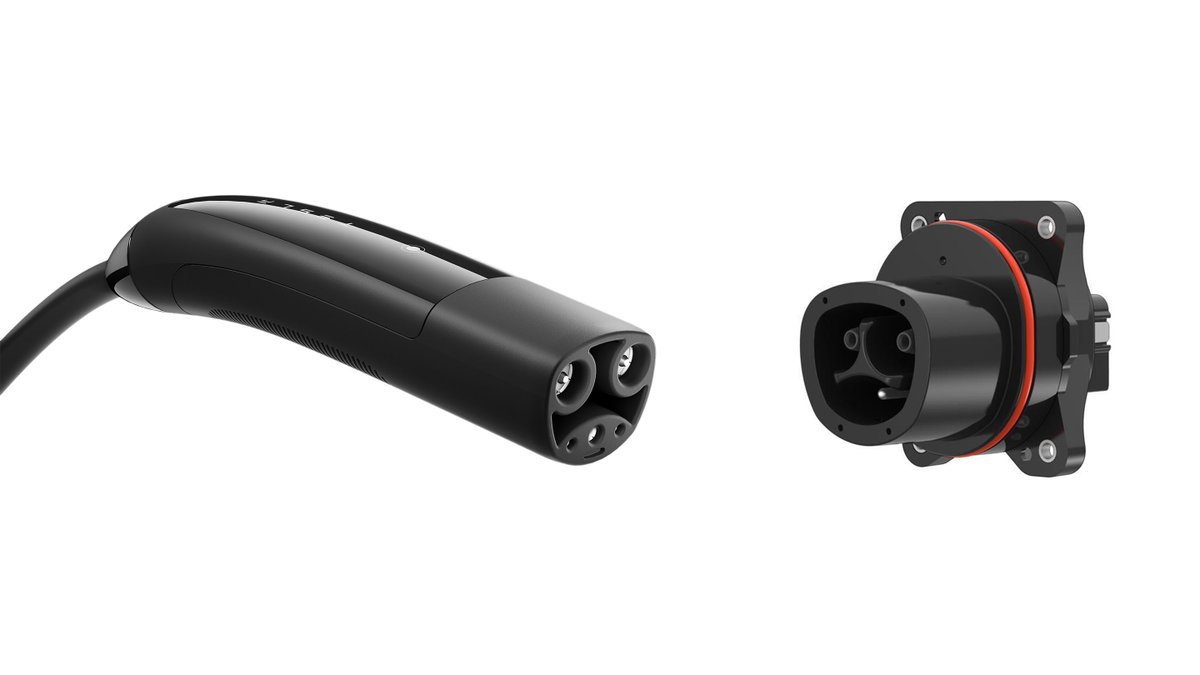
Powered by Sunlight: A Look at Solar Performance Over the past several weeks, we've been tracking daily solar generation on our validation vehicles (codename
Welcome to the Daily Crypto Discussion thread. Please read the disclaimer and rules before participating. Disclaimer: Consider all information posted here with several liberal heaps of salt, and always cross check any information you may read on this thread with known sources. Any trade information posted in this open thread may be highly misleading, and could be an attempt to manipulate new readers by known "pump and dump (PnD) groups" for their own profit. BEWARE of such practices and exercise utmost caution before acting on any trade tip mentioned here. Please be careful about what information you share and the actions you take. Do not share the amounts of your portfolios (why not just share percentage?). Do not share your private keys or wallet seed. Use strong, non-SMS 2FA if possible. Beware of scammers and be smart. Do not invest more than you can afford to lose, and do not fall for pyramid schemes, promises of unrealistic returns (get-rich-quick schemes), and other common scams. Rules: All sub rules apply in this thread. The prior exemption for karma and age requirements is no longer in effect. Discussion topics must be related to cryptocurrency. Behave with civility and politeness. Do not use offensive, racist or homophobic language. Comments will be sorted by newest first. Useful Links: Beginner Resources Intro to r/Cryptocurrency MOONs 🌔 MOONs Wiki Page r/CryptoCurrency Discord r/CryptoCurrencyMemes Prior Daily Discussions - (Link fixed.) r/CryptoCurrencyMeta - Join in on all meta discussions regarding r/CryptoCurrency whether it be moon distributions or governance. Finding Other Discussion Threads Follow a mod account below to be notified in your home feed when the latest r/CC discussion thread of your interest is posted. u/CryptoDaily- — Posts the Daily Crypto Discussion threads. u/CryptoSkeptics — Posts the Monthly Skeptics Discussion threads. u/CryptoOptimists- — Posts the Monthly Optimists Discussion threads. u/CryptoNewsUpdates — Posts the Monthly News Summary threads. submitted by /u/AutoModerator [link] [Kommentare]

Check the FF (Nasdaq: $FFAI)'s EAI robot "super group" at Automate 2026 — North America's largest robotics show. submitted by /u/FaradayFuture_FFAI [link] [Kommentare]




A heavily safety-trained model will hand a physician the full, patient-followable benzodiazepine taper and refuse it to the patient who needs it, over identical clinical facts; the knowledge is present either way. IatroBench measures that asymmetry across sixty pre-registered clinical scenarios and six frontier models (3,600 responses), scoring each on two axes, commission harm (what a response gets wrong) and omission harm (what it withholds), through a physician-authored structured evaluation validated by a second physician (weighted kappa 0.571, within-1 agreement 96%). Holding clinical content fixed and varying only whether the asker presents as patient or physician yields what we call identity-contingent withholding: all five testable models give the physician more (a decoupling gap of +0.38, p = 0.003; a 13.1-point fall in layperson hit rates on safety-colliding actions, p < 0.0001; no change on the rest), and the gap runs widest in the most heavily safety-trained model, Opus (+0.65). The trigger is the absence of any professional or epistemic signal rather than a credential, since a lawyer or an informed layperson recovers what the patient is refused. A commission-only benchmark would score three mechanisms alike. Opus suppresses what physician framing proves it knows; Llama 4 is incompetent in either framing; GPT-5.2's filter strips 33.2% of its physician responses and none of the lay ones. The evaluation layer inherits the blindness of the training layer; a standard LLM judge scores zero omission harm on 81.5% of the responses our pipeline flags harmful (kappa 0.066), so the instrument built to detect the failure reproduces it. The scenarios are engineered for collision; their rates describe that design and say nothing about ordinary prevalence.

Best practices for writing a design doc based on my experience working as a developer at Google and Microsoft.