

The federal bill would impose mandatory universal age verification and restrict access to artificial intelligence companions.

More young girls sue X over Grok CSAM; X accused of shielding child predators.
Large language models (LLMs) are increasingly adapted to downstream tasks via reinforcement learning (RL) methods like Group Relative Policy Optimization (GRPO), which often require thousands of rollouts to learn new tasks. We argue that the interpretable nature of language often provides a much richer learning medium for LLMs, compared to policy gradients derived from sparse, scalar rewards. To test this, we introduce GEPA (Genetic-Pareto), a prompt optimizer that thoroughly incorporates natural language reflection to learn high-level rules from trial and error. Given any AI system containing one or more LLM prompts, GEPA samples trajectories (e.g., reasoning, tool calls, and tool outputs) and reflects on them in natural language to diagnose problems, propose and test prompt updates, and combine complementary lessons from the Pareto frontier of its own attempts. As a result of GEPA's design, it can often turn even just a few rollouts into a large quality gain. Across six tasks, GEPA outperforms GRPO by 6% on average and by up to 20%, while using up to 35x fewer rollouts. GEPA also outperforms the leading prompt optimizer, MIPROv2, by over 10% (e.g., +12% accuracy on AIME-2025), and demonstrates promising results as an inference-time search strategy for code optimization. We release our code at https://github.com/gepa-ai/gepa .



AI built for autonomy crowds people out, making us passive observers of what’s coming. We’re building toward a different future.

Using Jacobian Lenses to peer into what an LLM is thinking when it sees you.
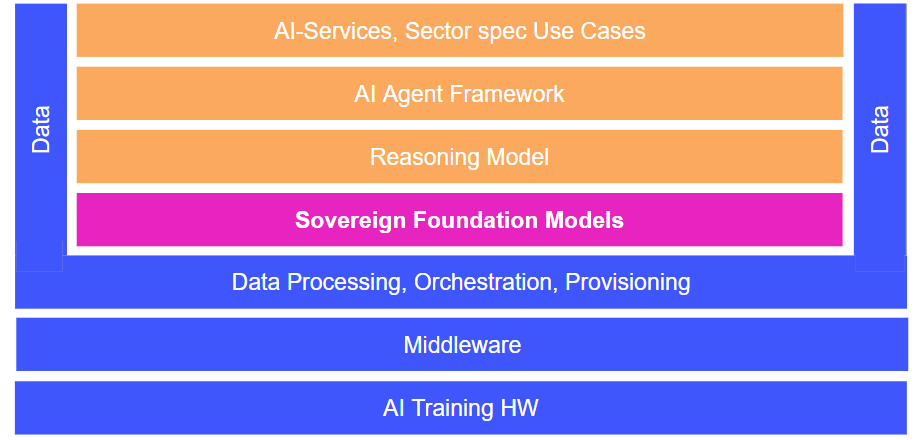
Entdecken Sie die neuesten Entwicklungen im Bereich KI-Forschung bei Soofi.