
@MrStickman
Profile channel
@MrStickman
No bio yet.
Since 30.05.2026
Hey everyone! I teach CS and programming at a small school in Syria and I'm in the middle of designing a full 5-year hardware-focused IT curriculum. I'd love some honest feedback from people with hands-on robotics/embedded systems experience. Here's the current plan: - **Grade 7:** Lego Spike Prime + Micro:bit - **Grade 8:** Arduino Uno with multiple sensors - **Grade 9:** Project-based learning with Arduino *(see note below)* - **Grade 10:** ESP32 - **Grade 11:** Advanced ESP32 + Raspberry Pi **Note on Grade 9:** This is the Basic Education Certificate year (think national standardized exams), so the curriculum here is intentionally lighter — more of a consolidation year with small projects rather than introducing heavy new concepts. Students won't have the bandwidth for anything too demanding, so I'm keeping it Arduino-based but project-driven to keep them engaged without piling on. --- **My questions for the community:** **Is this hardware progression age-appropriate?** Students range from roughly 12–17. Does the jump between stages feel right, or are there places where it's too much too soon (or not enough)? **ESP32 in grades 10–11 — good idea or not?** I like it because it covers WiFi/BLE, has plenty of GPIO, and feels like a natural step up from Arduino. But I've heard mixed things about its learning curve and toolchain complexity for high schoolers. What's been your experience? **Are there better alternatives to the ESP32 at that level?** I'm open to suggestions — whether that's staying on the Arduino ecosystem (Nano 33 IoT, Portenta, Uno R4 ?), or something else entirely. Budget is a consideration but not the only one. Any feedback appreciated — curriculum design resources, pitfalls to avoid, or even just "this worked great for my students" stories. Thanks in advance! submitted by /u/Pastalini_Byte [link] [Kommentare]
Hi everyone, I recently completed my Bachelor's degree in Mechatronics and Robotics Engineering, and I'm currently focusing on improving my ROS 2 skills. I'm looking for individuals, teams, or communities that are actively working with ROS 2 and would be open to having a beginner- or intermediate-level member join them. My goal is to gain practical experience, contribute to projects, learn best practices, and develop my robotics software skills. If you know of any ROS 2 groups, open-source projects, Discord servers, study groups, or communities where I can learn and collaborate, I would greatly appreciate your recommendations. I'm motivated to learn, willing to put in the work, and eager to contribute wherever I can. Thank you in advance. submitted by /u/Maleficent_Youth_168 [link] [Kommentare]
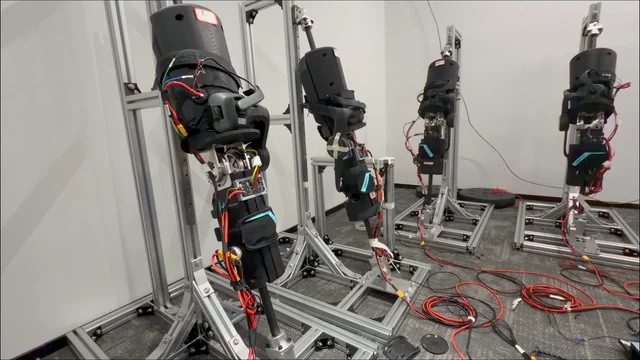
Hey everyone, Daniel here, we’re building Vastnaut One, a 4x4 exoskeleton designed for people moving through demanding terrain with load where fatigue tends to build gradually across hips and knees, especially on descents. What you’re looking at here is part of our joint aging tests, repeating the same movement cycles than any normal hike would require. At some point, it stops looking like testing and starts looking a bit obsessive. Our system works across both hips and knees in real time step by step based on movement, terrain, and load. The goal isn’t to change how you move, but to redistribute effort over time so the later miles feel closer to the first. Curious how others here think about for a wearable like this, and what do you usually trust as a good enough cycle count. submitted by /u/dan1elfeng [link] [Kommentare]
This is a comprehensive living reference guide to AI agent security — synthesizing 18 articles from The Agent Report covering the 75-day period (April–June 2026) when agent security went from theoretical concern to operational crisis. What's inside: • Incident timeline — 18 major events, from the first production database deletion by a coding agent (April 30) through the first confirmed in-the-wild LLM agent cyberattack (Sysdig, June 1, exfiltrated a PostgreSQL database in under 60 minutes), to an AI agent finding 21 zero-days in FFmpeg for a $1,000 prize. • The AIRQ report's sobering numbers — Only 11% of production AI agents pass security thresholds. 98% exhibit the "lethal trifecta": private data access, exposure to untrusted content, and outbound action capability. Computer-use agents scored an average of zero on output guardrails. • Deep dives into attack anatomy — The Sysdig attacker used 12 cloud API calls across 11 IPs in 22 seconds via Cloudflare Workers to break IP-based alerting. A Chinese-language planning comment leaked into the command stream, revealing the agent's internal reasoning: "see what else we can do." The Google-confirmed criminal use of AI to discover and weaponize zero-days with reasoning-based codebase analysis. • Defensive architecture — The three-layer model distilled from Anthropic's published containment patterns, CISA/NSA/Five Eyes guidance, and industry research: environment-layer (gVisor containers, hypervisor VMs, egress MITM proxies), model-layer (classifiers, safety probes — probabilistic only), and external-content controls. Anthropic's key finding: "The weakest layer is the one you built yourself." • Government & regulatory response — CISA/NSA/Five Eyes joint guidance (May 3) identifying five risk categories, the Trump AI Executive Order (June 10) mandating federal agency assessments, and the emerging global regulatory pattern. • Actionable guidance — Immediate (next 30 days) and medium-term (30–90 days) steps for security teams, including auditing for the lethal trifecta, patching Starlette (BadHost CVE-2026-48710) and Marimo, implementing egress controls, and establishing agent identity management. https://the-agent-report.com/2026/06/ai-agent-security-complete-guide-threats-defenses/ submitted by /u/docdavkitty [link] [Kommentare]

Im buying a PDF from someone on Telegram,and they want 10USD, and the payment method is crypto... What are the steps i need to do to accomplish this... I have an account with Revolut. submitted by /u/BigTasty1975 [link] [Kommentare]


From premises no one disputes to a world everyone could sign — with the hard problems actually settled and the steps in between.


Build your all-time XI from football legends across every era. Simulate a full 8-match World Cup tournament. Can you go 8-0?