 R
↗
R
↗
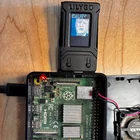
I trained a 128×128 DCGAN on my Macbook M3 and deployed it on a Raspberry Pi 4 connected to a LILYGO TTGO T-Display ESP32. The whole thing runs headlessly as a systemd service and generates hallucinated face hybrids at the press of a button. It is a 6-block generator (latent → 4×4 → 8×8 → 16×16 → 32×32 → 64×64 → 128×128) with feature maps starting at f×16=1024. Corresponding 6-block discriminator. Trained for 800 epochs on Apple Silicon MPS, 4 hours. Dataset was 2480 images across 11 subjects. One dominant anchor class (2000 images) contaminated with minority classes to produce hybrid outputs. (Can you guess who and what was included?). : ) I exported the model from PyTorch to ONNX (float32, 53MB). Inference takes 3 seconds per face on Pi 4. The Pi generates the face and sends it to the ESP32. The title is generated through a dictionary and a template sentence: "This is a NFT and I want to it." The device was built as an art piece. I took it to the streets of NYC and let strangers use it. Full video: https://youtu.be/y-S74aoud54?si=yPh5GmCJZFIIzwq6 Happy to discuss the training pipeline, ONNX conversion, or anything you're curious about. submitted by /u/Numerous-Dentist-882 [link] [Kommentare]
R
↗
Hi everyone, I have a fairly weak undergraduate: a 3.3/5 GPA in Computer Engineering from an average Nigerian university. For my Master's, I studied Artificial Intelligence at an average European university, where I finished with an 8/10 GPA. A condensed version of my Master's thesis was recently accepted at ACL 2026, with a meta-review score of 8/10 and a confidence score of 5/5. It's scheduled for presentation next month. I want to pursue a PhD focused on expanding linguistic resources for low-resource African languages. I know my weak undergrad GPA and the relatively unknown reputation of my previous universities will make it hard to get into top NLP programs (CMU, Edinburgh, ETH, MBZUAI, etc.), though I'm hoping the ACL paper helps offset that somewhat. At the same time, I don't want to end up at a less competitive university just for the sake of getting in somewhere, if it doesn't do meaningful work on low-resource NLP. How should I think about structuring my application strategy here (reach vs. safety schools, how to frame my profile, what to emphasize)? I'd also genuinely appreciate honest feedback on my overall profile. Thanks. submitted by /u/Unlikely_Screen_9287 [link] [Kommentare]
R
↗
Driver rewrite was expected part. What got us was everything downstream that was quietly depending on old sensor and nobody documented it. New sensor's X-axis points a different way, your TF was written around the old one, and now everything's subtly rotated but nothing throws an error. Rate doubles and you're retuning Kalman gains you thought were settled. And then power rail - a different draw, nothing to debug on software side, just had to find it by elimination. Every single one of these was invisible until we actually swapped sensor. Sensor swap is probably most honest test of whether architecture is actually modular or just looks modular in README, and I'm not sure if our codebase was just particularly messy or this is how it always goes. submitted by /u/NickShipsRobots [link] [Kommentare]
 R
↗
R
↗
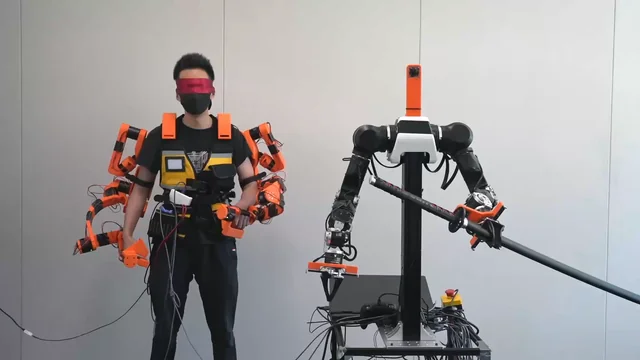
From Litian Liang on 𝕏 (thread with multiple videos): https://x.com/litian_liang/status/2066541466286215570 This work is done in Inclusion AI lab at Ant Group, advised by James (Jingxi) Xu and Professor Mark Cutkosky from Stanford BDML lab. Website: https://ume-exo.github.io Paper: https://arxiv.org/abs/2606.14218 submitted by /u/Nunki08 [link] [Kommentare]
 R
↗
R
↗
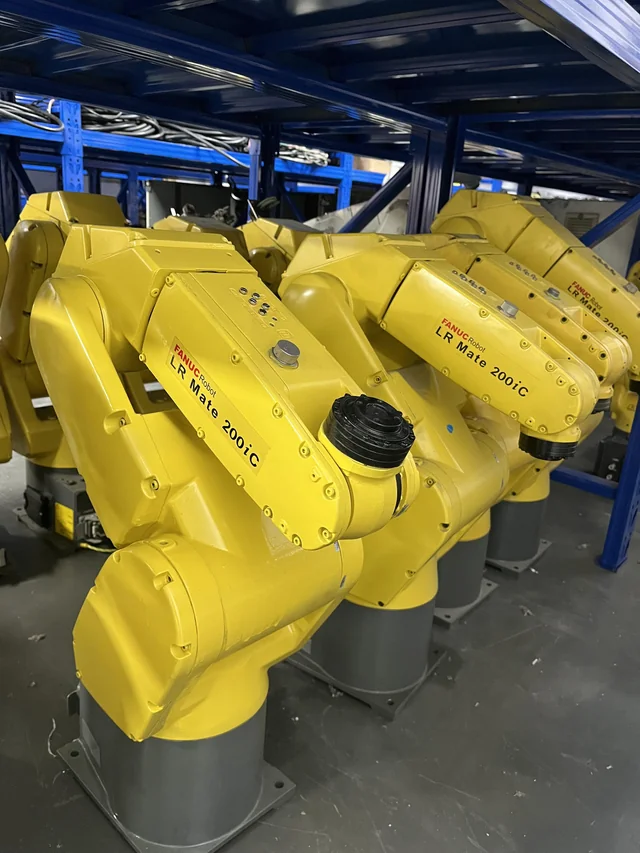
Payload 5kg, reach 704mm 6-axis industrial robot industrial arc welding, high-speed industrial assembly robots, pick and place etc. submitted by /u/Iris-lee88 [link] [Kommentare]
 R
↗
R
↗
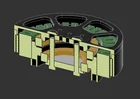
I recently came across a very affordable 8115 45kv (0.3ohms phase R) motor kit which includes a wound stator and a steel magnet ring . Quickly modeled a mockup in Fusion : https://preview.redd.it/ckbo2a7d5h7h1.jpg?width=1043&format=pjpg&auto=webp&s=40716922ce7ca2358503ede09badaa0f0de7417c https://preview.redd.it/rrtz8qvd5h7h1.jpg?width=1280&format=pjpg&auto=webp&s=9b356dfab5d5953781b3e0b4d9fcb25fb3f2a37c Instead of using a pressfitted central shaft like most bldc do , i opted for a pilot diameter directly on the rotor to locate it on the 52x40x7 bearing (possible stiffnest improvement ?) then use 2 bolts ,circular nuts, a plate to preload and lock the bearings and rotor to the stator. I'm also using a very shallow bearing seats with both 7mm thick bearings lightly-pressfitted in to shallow 3mm seats. Would this work or this housing design need to be scrapped immediately ? Additional images : https://preview.redd.it/hb1u55ef6h7h1.jpg?width=813&format=pjpg&auto=webp&s=1d6de3288f287c2ab477c0350d2e3d21858b8553 https://preview.redd.it/6qsu8zdf6h7h1.jpg?width=886&format=pjpg&auto=webp&s=6a3137c5578289c86b78c7bdc9c7fd8c952ec8b7 submitted by /u/lekhoi_trym_to [link] [Kommentare]
R
↗
I keep thinking about this idea of a small robot that lives on your desk and is built specifically to help you focus, not just look cute. Like, it tracks your work sessions, notices when you've been scrolling instead of working, reacts when you hit a deep focus streak, calls you out when you've been on your phone for an hour. Vector and Emo type robots failed because they were essentially toys pretending to be useful. What if you flip it? A focus tool with a personality, not a toy with productivity bolted on. Right now it's just a side project so I'm focused on getting the prototype right first. I will take it to cocreate pitch. Price range I'm imagining: somewhere between a fitness band and a smartwatch. submitted by /u/RemarkableCaptain318 [link] [Kommentare]
R
↗
 R
↗
R
↗
R
↗
R
↗
my preprint is on SSRN and i feel somewhat shy to share it here... but the PKU lab's paper that cited mine got accepted by ICML 2026: https://arxiv.org/html/2602.06358v2 submitted by /u/max6296 [link] [Kommentare]
 R
↗
R
↗
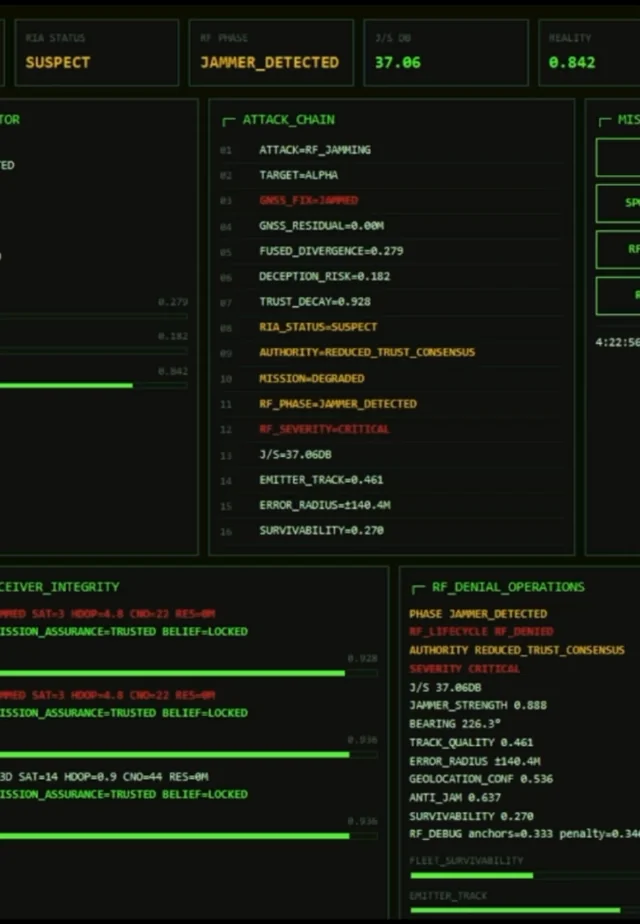
I’ve been working on a mission assurance architecture called Parallax and recently completed another validation run in a degraded operating environment. In this sim run, an autonomous USV fleet experienced GNSS/RF degradation resulting in conflicting navigation observations across multiple assets. Rather than assuming all telemetry was trustworthy, the system continuously evaluated observation integrity, measured divergence from a shared world model, isolated compromised data sources, reconstructed authority through distributed consensus, and maintained mission continuity without operator intervention. One of the problems I’m interested in is what happens after sensor fusion. Most autonomy stacks do a good job combining observations, but what happens when those observations can no longer be trusted? The entire system runs locally at the edge with no cloud dependency. All processing, validation, trust scoring, consensus generation, and decision support remain completely air-gapped and self contained. Current areas of development: • Distributed trust scoring • Reality integrity assessment • Consensus reconstruction • Autonomous recovery and reintegration • GNSS degradation and spoofing resilience • Edge-native operation with no cloud connectivity Interested in hearing how others are approaching sensor trust, degraded navigation environments, and resilient autonomy. submitted by /u/DraevenOfficial [link] [Kommentare]
 R
↗
R
↗
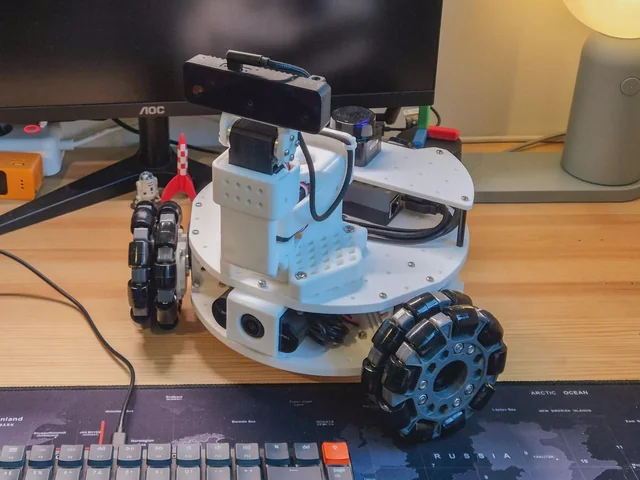
At Foxglove, we collaborated with Aditya Kamath, resulting in another blog post in his ROS 2 LeKiwi series, this time covering the integration of SLAM and Nav2. This blog post should be relevant to anyone wanting to integrate Nav2, even if they don't have a holonomic platform. If you find this kind of content useful, let us know, and we will keep it coming! submitted by /u/arewegoing [link] [Kommentare]
 R
↗
R
↗
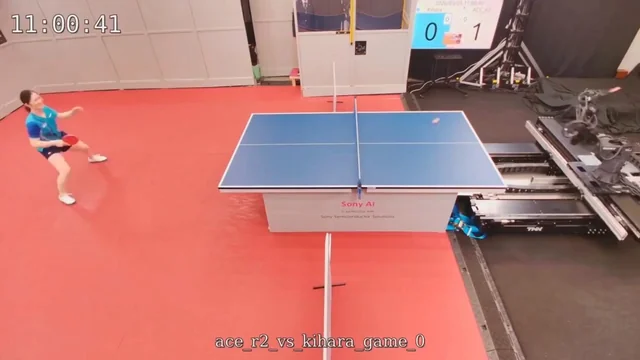
Nature: Outplaying elite table tennis players with an autonomous robot (Published: 22 April 2026): https://www.nature.com/articles/s41586-026-10338-5 YouTube Sony AI: Ace vs. Kihara | Pro Match Highlights | Sony AI Table Tennis Robot: https://www.youtube.com/watch?v=TwkDm2H6ft8 From 链上小财女 on 𝕏: https://x.com/Zoozo2025/status/2064998917394374930 submitted by /u/Nunki08 [link] [Kommentare]
R
↗
Hey everyone, I am planning out a new open-source infrastructure project and want to get some brutal feedback on the architecture and use-case validity from people running high volume LLM workloads in production. The Problem: Python-based proxies/gateways introduce too much latency overhead for real-time streaming agent steps or fast UI completions. Additionally, centralized semantic caching still suffers from cross-region network latency (e.g., London to us-east-1), and enterprise API costs remain a massive bottleneck for repetitive/predictable user queries (like customer support or structured data extraction). The Proposed Architecture: Instead of a heavy centralized gateway, the goal is to build a lightweight, zero-dependency semantic cache running directly at the CDN Edge using WebAssembly (WASM) compiled from Rust. The flow looks like this: Inbound Prompt: Hits the edge node closest to the user (e.g., Cloudflare Workers / Fastly Compute). Edge Embedding: The Rust/WASM module intercepts the raw text prompt and instantly generates a vector using an edge-native lightweight model (e.g., bge-small-en-v1.5). Similarity Index Check: It performs a fast cosine similarity check against an edge vector database (like Cloudflare Vectorize) to find the nearest semantic neighbor. Cache Hit: If similarity >= threshold (e.g., 0.88), it pulls the full generated response text from an edge KV store and returns it in ~5ms. The main LLM provider is never billed or touched. Cache Miss: It proxies the streaming request to OpenAI/Anthropic/vLLM, streams it back to the client, and asynchronously updates the edge vector index and KV store. Why Rust/WASM? To achieve sub-millisecond execution overhead on the proxy itself, avoid garbage collection pauses, and maintain a tiny memory footprint suitable for edge runtime constraints where traditional databases or Python scripts cannot run. My Questions for the Community: For those running LLMs in production (especially customer support, internal RAG, or autonomous agents), what is your realistic semantic cache hit rate? Is the power law of repetitive queries high enough in your domains to justify this? What are the biggest footguns with semantic caching at the edge? (e.g., Cache invalidation strategies, handling system prompt updates, or drift in embedding models). Would you actually use a drop-in open-source template/CLI that lets you spin this up on your own edge account, or do you prefer centralized API gateways? submitted by /u/Real-Huckleberry-934 [link] [Kommentare]
R
↗
ACL ARR May 2026 reviews are due on July 2. I do not see any reviewer assignement as of today. Will the review period be just 2 weeks in that case? Anyone got papers assigned for reviewing? submitted by /u/Impossible-Garden612 [link] [Kommentare]