@MrStickman
Profile channel
@MrStickman
No bio yet.
Since 30.05.2026


Get real reviews for Chrome extensions, Edge add-ons, and Android apps. Boost store ranking with authentic reviews, SEO backlinks, and market analytics.

A world grown from your real light. You don't pick the one that returns.

A capability threshold I've been carefully monitoring.
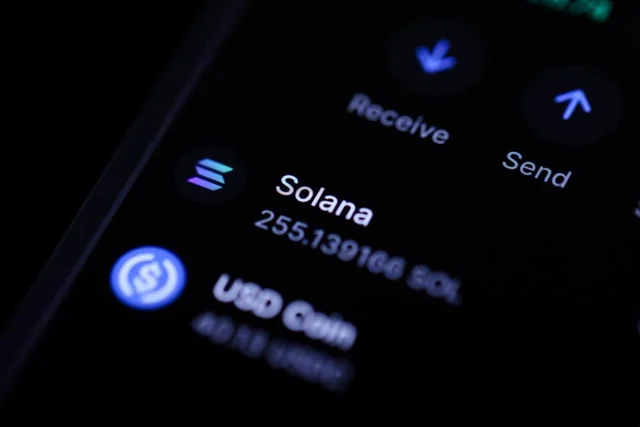

This post is a cursed compendium of 69 ways to f*** up your deploy. It is the irreverent Grimms Brothers version of deployment scenarios.
I work in firmware adjacent to AI, so not an ML guy exactly, so that's why I've come here. For work we got a bit concerned about Mythos and all the hype made me explore some benchmarking work. I now have this pretty cool benchmark that's about 80% done sitting around and haven't had the time to polish it up and show it off. I was hoping some more AI focused people could check it out, tell me if it's duplicate work, or if it is worth putting some time into and finishing. Also happy for some help too. The rundown of the code is that it is Juliet code that's been "hidden" to look somewhat like a real codebase, removing LLM's natural advantage when viewing known CWEs, while preserving the "ground truth" associated with Juliet. I also used an LLM to inject comments into the code in accurate, misleading, or neutral sentiments, allowing the user to examine how comments and plain English data can manipulate an LLMs ability to identify a CWE. There are a couple hundred CWEs, generally enough code to fill up the input context, the work that needs to be done is around presentation, actual benchmarking of publish LLMs, and possibly pruning of a couple CWEs that might occasionally get caught by certain LLMs as Juliet code still. Here's the project. Hopefully this doesn't break rule 6. I am not a regular here, just looking for advice. submitted by /u/Psychological_Meat_6 [link] [Kommentare]

A popular way to explain how current LLMs work is to say that “all” they do is predict the next most likely word in a sentence. From one perspective, this is correct. Trained on all human language, the LLMs distilled … Continue reading →
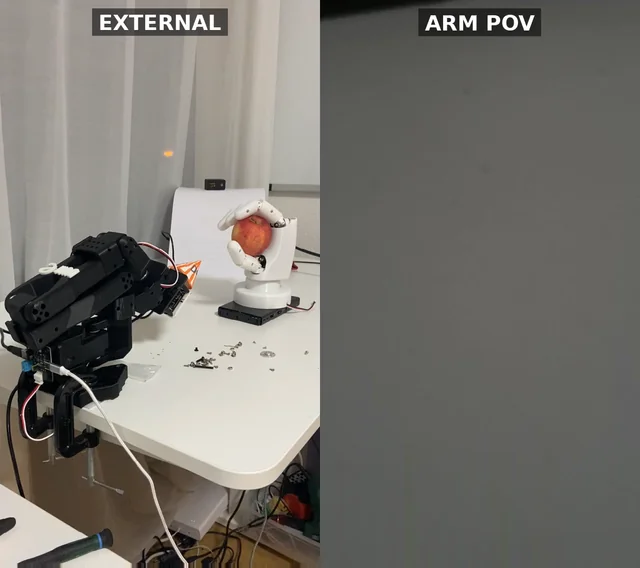
Weekend project, one weekend in — lots still half-built: a 6-DoF SO-101 arm (Feetech STS3215 / LeRobot) with a wrist camera, driven by an agent that plans camera moves, films them, and stitches the edit. Sharing v1 — rough, but the loop works. The demo is a side-by-side: left is an external phone shot (manual), right is the arm's own wrist camera. The choreography — wake → framed "hero" pose → dolly/roll/tilt beats → rest — runs through a safety layer (soft joint limits + velocity cap + stop sentinel). A few things I hit that others might find useful: 🔧 Dead elbow servo, diagnosed by feel. Stiff to backdrive, idle temp 53°C vs ~38°C on the others = shorted/lossy winding. Swapped it, re-set the ID, recalibrated the joint. 📐 The jerky motion wasn't the servo or the mount. Braced the table and it still jerked — turns out it's STS3215 gear backlash (~0.87° measured by others) plus low-speed stick-slip. Confirmed stick-slip is speed-dependent: ~51 backward micro-ticks at 12°/s vs ~0 at 50°/s. ✅ The fix: dropped P_Coefficient 32 → 16 (LeRobot's own recommended value). Slow-speed judder went from ~43 stutter events/sweep to ~0 in a controlled A/B. Plus: keep recorded moves single-direction and faster. 🎯 No IK yet, so "orbits" drift. Leaned on framing-safe moves — roll about the optical axis, dolly, tilt — to keep the subject centered. The goal is reusability: clone the repo, build/attach the SO-101, and you can direct Claude to film your own demos. Still manual for now (external camera + initial framing/hero pose). Next up: better camera, longer scripts, closed-loop framing. As always, it's all open source — control lib, safety layer, calibration, and the motion/stitch scripts. I will organise it better once the project is complete 👉 https://github.com/kamalkantsingh10/dummie Happy to go deeper on the motion-streaming / backlash tuning if useful. submitted by /u/KamalSingh10 [link] [Kommentare]