


Hey everyone! 👋 If you’re building RAG or autonomous AI agents, you’ve probably hit the "Vector DB Wall": flat Euclidean vectors suck at modeling complex hierarchical reasoning, and loading millions of 1536D vectors + JSON metadata into memory causes massive RAM bloat and OOM crashes. We spent the last few months solving this from the ground up. Today, we are releasing HyperspaceDB v3.1.0, transitioning from a standard vector index to a full Spatial AI Engine. Here is what’s under the hood: 1. The RAM Diet (Schema-Driven MRL) Instead of loading full dense vectors into memory, we built native support for Matryoshka Representation Learning (MRL). The engine keeps a lightweight navigation core (e.g., 129 dimensions) in ultra-fast RAM, while the heavy semantic tail (672 dimensions) streams dynamically from NVMe SSDs for final top-K re-ranking. The benchmark: In our stress tests with 100,000 vectors, HyperspaceDB consumed just ~72.0 MB of RAM compared to >3,000 MB for Chroma and ~1,700 MB for Milvus. 2. 801D Hybrid Vectors (Lorentz + Euclidean) Flat vectors fail at taxonomy (e.g., Legal Codes, Medical Trees). We introduced an 801D Hybrid Vector. The first 33 dimensions live in a negatively curved Lorentz hyperboloid (allowing for native graph/tree embeddings), while the remaining 768 dimensions handle Euclidean semantic density. Agents can now verify facts geometrically using geodesic path tracing. 3. Killing the "Two-Database Problem" Gluing Pinecone to MongoDB for document storage is painful. We built Sidecar Document Storage. You store massive raw texts directly in the index, which automatically compresses (Zstd) and pushes them to fractal .hyp chunks on disk. Meanwhile, Typed Metadata (int, bool, enum) is compiled directly into the HNSW graph nodes in RAM, providing zero-latency pre-filtering with no JSON-parsing overhead. 4. Lock-Free Rust Performance Under a 1,000-concurrent-client stress test, our lock-free HNSW and L0/L2 DashMap cache held flat at 9,476 QPS with a p99 latency of 11.83 ms. Competitors hit severe lock contention at this scale, with latencies spiking over 2,000 ms. We’ve also added a WASM runtime, Raspberry Pi ARM64 support, and native LangChain/LlamaIndex/MCP integrations. Would love to hear your thoughts, answer any questions about the architecture, or get feedback from anyone pushing the limits of Agentic RAG! Ask me anything! 🚀 submitted by /u/Sam_YARINK [link] [Kommentare]
Today, we're excited to announce Crosspay — a unified SDK that brings in-app purchases to every platform. Learn how we're simplifying monetization for developers worldwide.





Spartan programming gathers many techniques discussed in the literature, adding some of its own, into a unique coding style whose main objective is minimal use of various elements of the programming language which may contribute to complexity. This programming style relies on strict self-discipline, avoiding some of the opportunities offered by the underlying language, geared at achieving the programming equivalent of laconic speech. Spartan programming is not directly concerned with readability, at least not in its subjective and cultural-dependent sense. In fact, spartan programs will bring much misery to anyone preferring long, verbose programs. In certain ways, spartan programming is a coding style, just like the Linux kernel style guide. But, spartan programming is more than just a technical coding style, in that is has a single underlying, unifying principle - minimalism and simplicity taken to extremes. The coding guidelines began with a dozen or so printed pages, "a little book of style", which the author handed out to computer science students in the Hebrew university of Jerusalem. The term "Spartan Programming" was coined in 1996, when the author gave a tutorial on "Spartan C++" at the TOOLS (Techniques of Object Oriented Languages and Systems) scientific conference, held in Santa Barbara, CA USA. The guidelines were taught under this name in numerous Technion courses since then. Spartan programming strives for simultaneous minimization of all of the following measures of code complexity: The latter two are related to, but not the same as cycolomatic complexity On the one hand, the Babylonian tower principle states that there is a limit to the number of abstraction levels that a software system may have. On the other hand, the seven plus minus one or two principle sets a limit on the number of subcomponents that may constitute a super component. The spartan programming approach makes it possible to erect slightly higher software towers, by stretching the capabilities of basic modules further. Simple, spartan like modules, make a stronger foundation. The main techniques offered by the discipline are: Minimizing the number of variables, by inlining variables which are used only once, grouping related variables in a common data structure, and by using advanced programming constructs such as foreach loops (for (Variable in Collection)) and other chaining constructs in supporting languages Minimizing the visibility of variables and other identifiers. That is to say, defining these at the smallest possible scope. In C++ one would thus prefer variables defined in a block to those defined in a function scope; function scoped variables are better than class scoped variables, i. e., fields; and fields are not as desirable as variables defined in the file scope. Further, variables defined in the file scope are better made static so that they are not visible in other files. Minimizing the accessibility of variables, by preferring greater encapsulation, e. g., private variables, to public variables. Minimizing the variability of variables, that is striving to make variables final in Java, const in C++, etc., and by using nonnull annotations or restrictions, whenever the development environment or programming language supports it. Minimizing variables' name length, by applying the generic names technique. Minimizing variables life time, by preferring ephemeral variables to longer lived ones, and by avoiding, as much as possible, persistent variables (i. e., files and the such). Thus, in C, one should prefer auto (that is stack) variables to static variables. Heap storage on the other hand, although potentially shorter lived than static data, is considered inferior, since heap management requires extra code. Minimizing the use of arrays, and replacing these by collections provided by standard and of-the-shelf libraries. The following represents a not-so-small sample of spartan programming code in Java. Spartan programming suggests encapsulating control with appropriate abstraction mechanisms. The following Java classes:
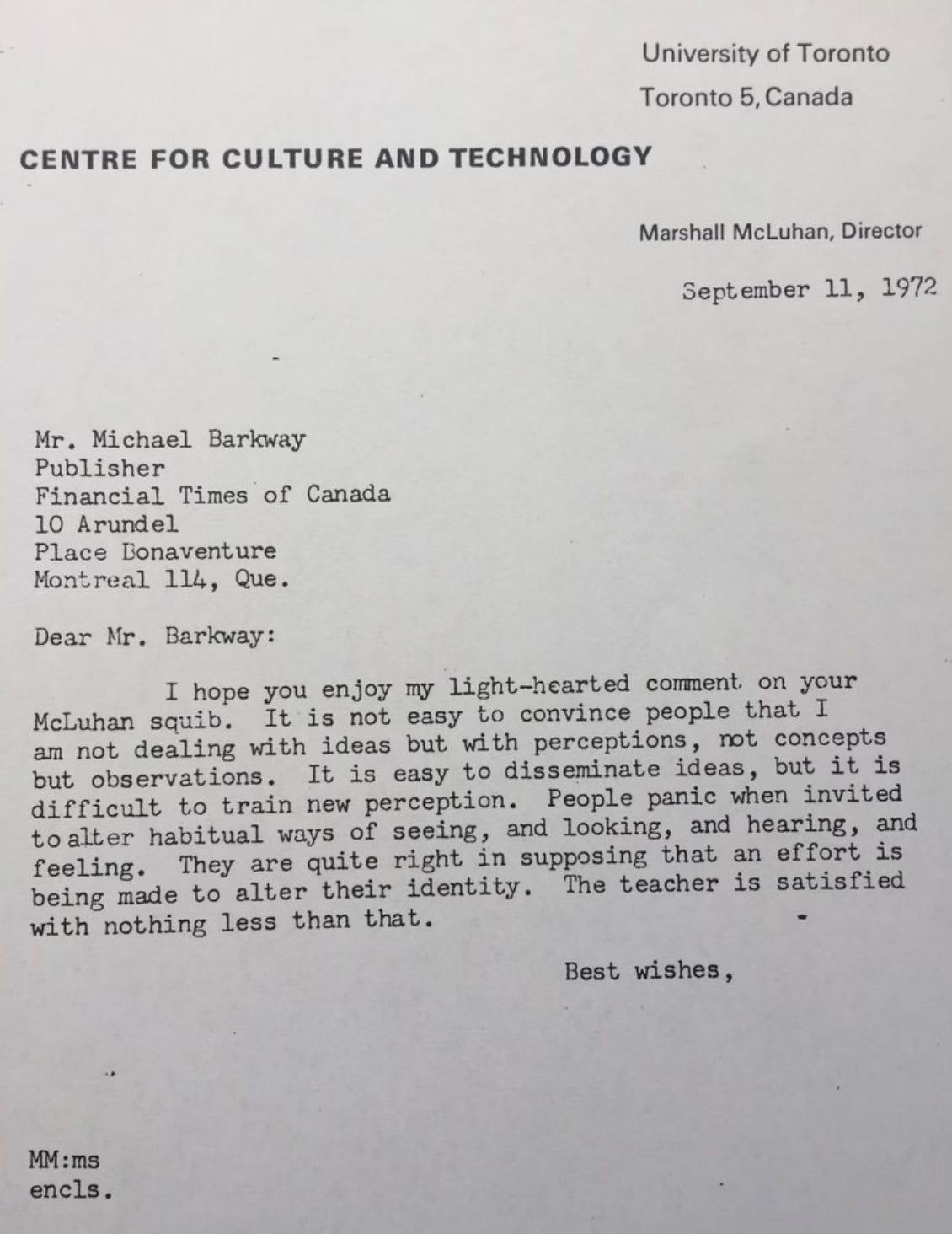
The Convivial Society: Vol. 7, No. 5

Tech sector says only carbon-emitting gas plants are reliable enough today to power the EU’s AI goals.

J.P. Morgan hits photographer with cane This is just a brief post to explain to my old boss, Eric Schmidt , why he and his ilk are getting ...