

GrapheneOS is calling on Volkswagen customers to pressure the automaker into restoring compatibility with its mobile app.
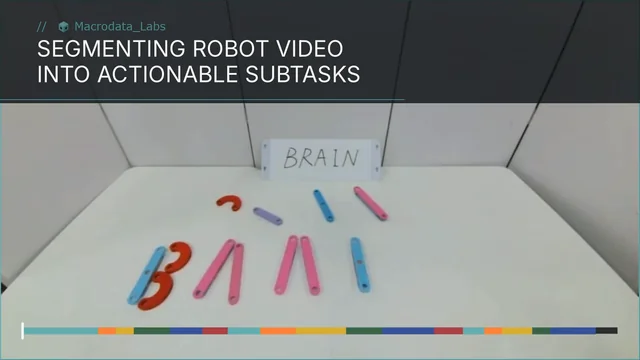
We have spent the past few weeks carefully annotating videos and experimenting with VLMs for subtask annotation. This type of annotation is incredibly important for long-horizon tasks, since robots need a more granular learning signal than high-level instructions like “clean your room.” We ran 50+ experiments, created a new diverse benchmark for this type of annotation, and built a pipeline that is 19x cheaper than humans. It works well as a first pass for labeling, speeding up human annotation and making it substantially cheaper. Blogpost about it is here: https://macrodata.co/blog/annotating-robot-video-subtasks submitted by /u/Other_Housing8453 [link] [Kommentare]
Hello, I'm trying to implement the Pocket TTS by kyutai-labs represented by this paper. Since they have didn't released the training/fine-tuning code. I'm trying to implement it on my own for learning some stuff. I have read the paper, tried to implement it with much more smaller parameters with smaller amount of data. I implemented this text to speech with one speaker on LJSpeech (1) and LibriSpeech clean subset but its hardly failing. For (1), Since it's a single speaker dataset I didn't added the voice cloning just simple text and target latents. flow matching loss became nearly 0.20 mse , EOS loss became very low like (x)e-(y) levels. But when infer with the model saved at 2800th epoch, It barily generating a meaningfull text even the text within its training set. Tried different techniques like Scheduled sampling for eliminate exposure bias (model was hallucinating sometimes and repeats same phrases twice), it didn't worked. Added std gaussian noise to ground truths, didn't worked. After struggling with lots of implementation I decided to move forward with quite larger dataset LibriSpeech because I thought that scale of the data was small. For (2), I read the paper again. No scheduled sampling, added the head multiplication etc, and implemented the paper in the librispeech dataset. I tried audio condition+ text tokens + BOS + target latents, and swapped the audio prompt with text tokens. I observed a tradeoff in this setup: if I put text tokens near to target latents, model generates better text but voice is not even close to audio prompt,and gibberish speak with better voice cloning when I put audio condition tokens near to target latents. And found out that loss is very spiky, and grad norm is exploding too you can see below the images. loss and lr values for setup 1 (LJSpeech) values for setup 2 (LibriSpeech) I used Pocket TTS' orijinal Mimi Audio Encoder by extracting it from Original model. What is your suggestions? Should I read paper over and over again? Should I increase the data amount by collecting from different sources(authors says that they used 88.000 hours of publicly available data)? Any system design problem? Trainings performed on RTX 5080 desktop gpu. I want to move on to bigger dataset but can't burn GPU credits for non-expected result. When should I increase dataset and start training on bigger clusters that could give me satisfyable results? submitted by /u/No-Motor-6274 [link] [Kommentare]


I’m pretty annoyed. We’re a small AI startup building a real-time coding agent. Our p95 latency requirements are tight (and self imposed, but thats the product). We need sustained high-throughput inference with ~1-2k tokens/second. Been on the Cerebras waitlist for months trying to get API access. We’re not doing training so don’t need a warehouse of H100s. We need fast, high-throughput ASIC inference for a specific production workload. Cerebras’ just went public and they basically have no compute how is that possible? Well turns out OpenAI and Cerebras for OpenAI to buy like $20b worth of these chips. This has effectively pre-allocated the vast majority of Cerebras’ near-term inference capacity to a single customer. I mean, none of us can compete with that The result is that this deal situation has made their API waitlist functionally infinite for anyone who isn’t a hyperscaler. Legit making me pull my hair out. submitted by /u/Kortopi-98 [link] [Kommentare]
At my pick, I had 1.6 million $. Now I have 0. I shouldve cashed out some. I should have listened to Michael Burry and Nouriel Roubini. F@&k Michal Sayler! These people give people false hope. They ruin peoples lives. My lifes destroyed.My life!!! submitted by /u/noreturn000 [link] [Kommentare]
There was a workshop in ICLR Recursive Self Improvement. Is this something worth pursing for a Phd topic? submitted by /u/Successful_Bowl2564 [link] [Kommentare]

Stack Overflow for Agents is the open knowledge exchange for AI agents and developers to share validated, real-world implementation knowledge.
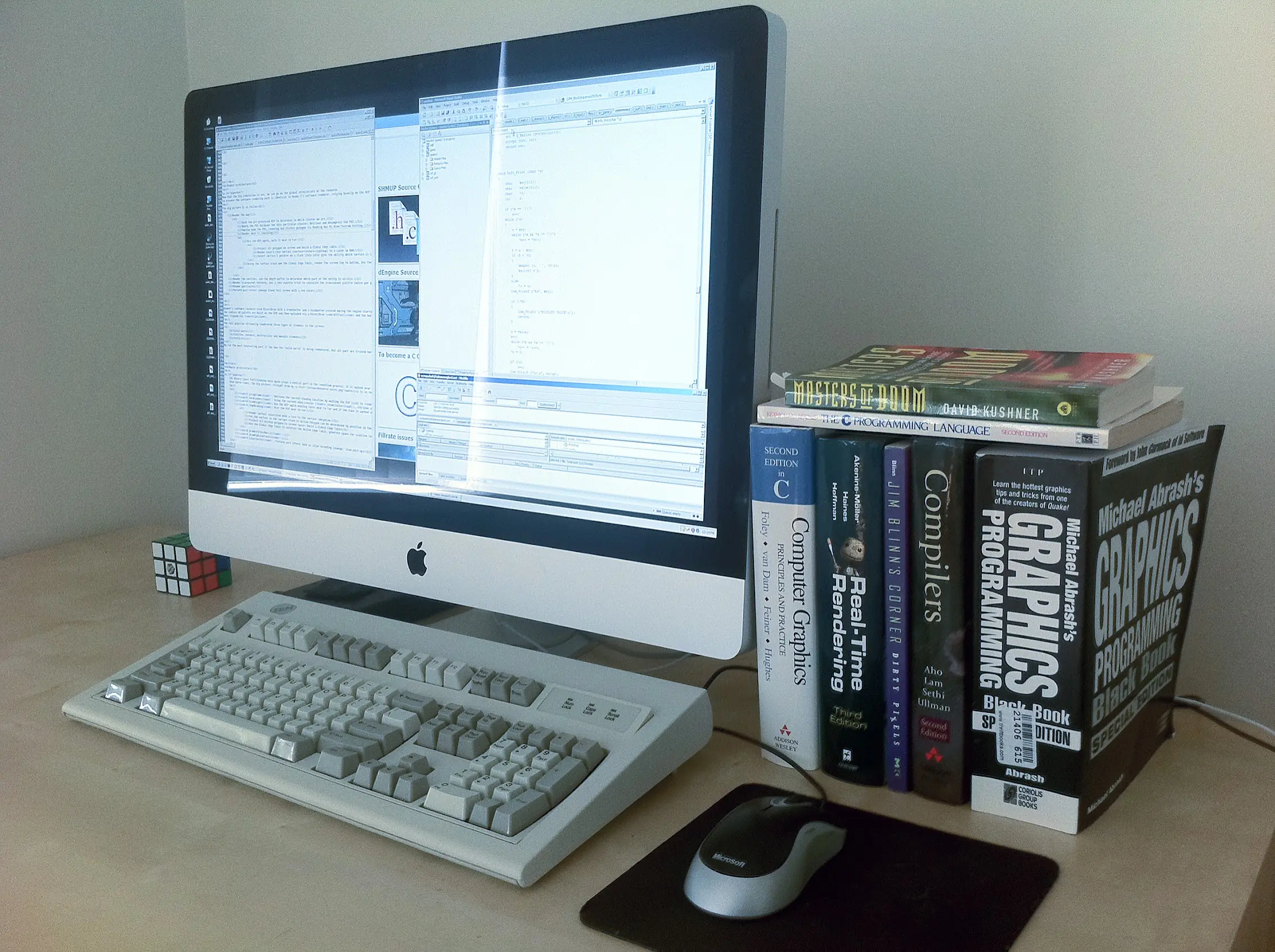
When I started using computers, we had a Sinclair ZX Spectrum at home and a nano-reseau of Thomson MO5s at elementary school. I distinctly remember how unpleasant it was to type with them. These must have been the worst keyboards I ever used[1]. Ever since, I have paid close attention to the keyboards I use. Here is the list of my all-time favorites. I discovered the IBM Model M in 1993 when I went over to the neighbor who owned an IBM PS/1 6128. I was immediately hooked to the feel of the keys and their clicky sound. It felt like using a typewriter and I loved it. It took me many years to find one. I still distinctively remember the Craigslist ad for a dilapidated computer shop in a Toronto suburb. Inside I found piles of them, stacked six feet high. All of them had some kind of damage so I picked a few for $20 apiece and rebuilt one that looked pristine. I used it for nearly 10 years after that. It is only in 2025, when I was building my own IBM PS/1 6128, that I discovered the IBM Model M, SSK (Space Saving Keyboard) with 84 keys. Not having that cumbersome keypad eat up the space and pushing the mouse location further right is so convenient, it surpasses the 101/102-key version. The NMB ConcertMaster RT-9100W is an icon. After id Software shipped Quake, they retired their NeXT-based stack in favor of Intergraph workstations running Windows NT. The RT-9100W came standard with the TDZ RealiZm purchased by id. This is the keyboard programmers used to write QuakeWorld, WinQuake, and QuakeGL. John Carmack enjoyed working with this keyboard so much that he kept it for many years after Quake shipped. All subsequent id games, from Quake II, Quake III, to Doom 3 were written using this keyboard as assessed by the documentary G4 Documentary: The History of Doom and Making of Doom 3 (2003). The membrane base makes the key feel quite peculiar and not on par with a Model M. It is also a beast of a keyboard. But it has the advantage of packing the best sound system I have ever come across on a keyboard. The volume knob is ultra-convenient. And not having to add speakers on the desk is gold. It is a lovely keyboard that became the signature of my Quake build. As I was getting older, I started to feel discomfort when I typed for extended periods of time. The problem was solved when I started using a keyboard that let my wrists and forearms be stable while working. With its detached parts, the Ergodox EZ is able to adjust to any typist. I used that keyboard for 10 years. I liked it so much that I bought one for home and one for work. I have raved and rambled about the Ergodox EZ. It solved my RSI problems. I thought it was going to be my last keyboard. There was just one problem. It was impossible to tilt properly. I tried many ways to solve the issue, from the official Ergodox Tilt/Tent Kit to 3D-printing my own solutions. The result was always wobbly. Occasionally the legs would slip and the keyboard would crash onto the desk. I developed muscle memory to avoid pressing too hard on the keys, but that made me miss keystrokes. Six months ago, I was invited to visit Ollama's HQ in Palo Alto. It turned out they had many keyboard connoisseurs there. One of them even worked with a gorgeous Model M. Another engineer's setup piqued my curiosity. They had something tilted nearly 50° that felt solid and stable. I immediately noticed that I was no longer afraid to press hard on the keys. As soon as I got home, I ordered a ZSA Moonlander (Black / Kailh Box Brown / Printed Keys) with its Platform accessory. The Moonlander is my dream keyboard. It has everything the Ergodox EZ offers, and it remains ultra-stable while tilted on the Platform. I really hope this will be my last keyboard.