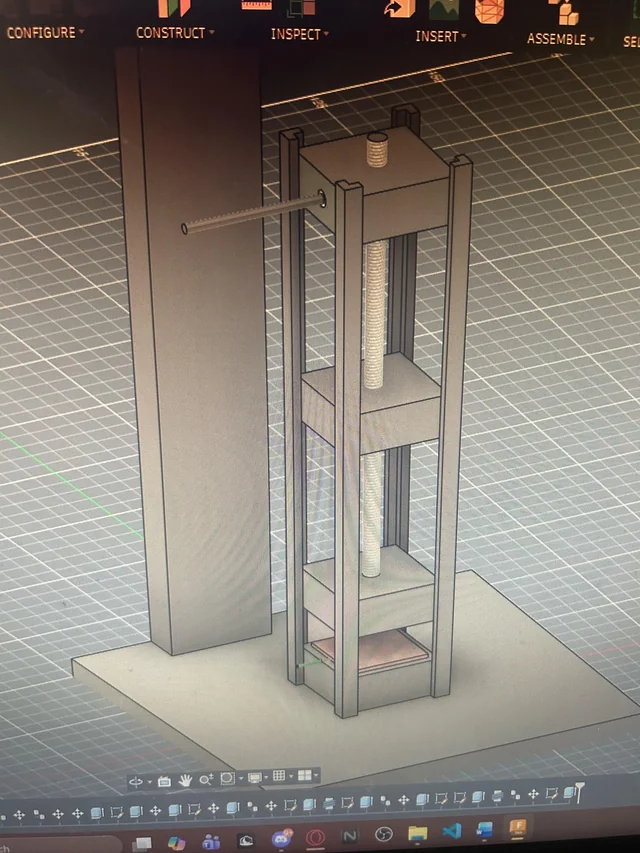
So I want to perform a material characterization study on a material where I need to put it under pressure. I’m in high school and don’t have a mentor or time to ask for access to university labs so I want to make something that can help me get data for cheap. I’m trying to make a linear actuator design and physically build all the parts myself (except for the motor and leadscrew system obviously) but I don’t extensively know how these types of things work. If I was to build something like this (pictures) would there be any significant issues? The cylinder (of which I don’t know what material to make out of) protruding out from the side would be directly connected to the sliding block part of my linear actuator so it pushes that down onto my material. I’m going to be pushing with 50lbs ish max so I’m making the majority of this out of wood. Any tips on making sure it doesn’t get worn out by some slight imperfection over the thousands of trials I’m going to need it for? And also any tips to make it work if something is seriously wrong 😭 And lastly any other tips about doing research studies like this without lab access or a significant mentor would be greatly appreciated. submitted by /u/bount_ [link] [Kommentare]
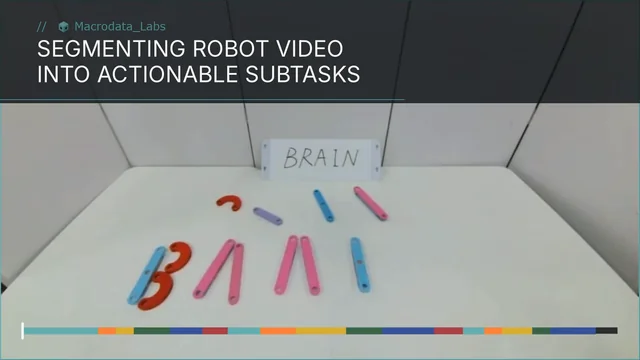
We have spent the past few weeks carefully annotating videos and experimenting with VLMs for subtask annotation. This type of annotation is incredibly important for long-horizon tasks, since robots need a more granular learning signal than high-level instructions like “clean your room.” We ran 50+ experiments, created a new diverse benchmark for this type of annotation, and built a pipeline that is 19x cheaper than humans. It works well as a first pass for labeling, speeding up human annotation and making it substantially cheaper. Blogpost about it is here: https://macrodata.co/blog/annotating-robot-video-subtasks submitted by /u/Other_Housing8453 [link] [Kommentare]
Hello, I'm trying to implement the Pocket TTS by kyutai-labs represented by this paper. Since they have didn't released the training/fine-tuning code. I'm trying to implement it on my own for learning some stuff. I have read the paper, tried to implement it with much more smaller parameters with smaller amount of data. I implemented this text to speech with one speaker on LJSpeech (1) and LibriSpeech clean subset but its hardly failing. For (1), Since it's a single speaker dataset I didn't added the voice cloning just simple text and target latents. flow matching loss became nearly 0.20 mse , EOS loss became very low like (x)e-(y) levels. But when infer with the model saved at 2800th epoch, It barily generating a meaningfull text even the text within its training set. Tried different techniques like Scheduled sampling for eliminate exposure bias (model was hallucinating sometimes and repeats same phrases twice), it didn't worked. Added std gaussian noise to ground truths, didn't worked. After struggling with lots of implementation I decided to move forward with quite larger dataset LibriSpeech because I thought that scale of the data was small. For (2), I read the paper again. No scheduled sampling, added the head multiplication etc, and implemented the paper in the librispeech dataset. I tried audio condition+ text tokens + BOS + target latents, and swapped the audio prompt with text tokens. I observed a tradeoff in this setup: if I put text tokens near to target latents, model generates better text but voice is not even close to audio prompt,and gibberish speak with better voice cloning when I put audio condition tokens near to target latents. And found out that loss is very spiky, and grad norm is exploding too you can see below the images. loss and lr values for setup 1 (LJSpeech) values for setup 2 (LibriSpeech) I used Pocket TTS' orijinal Mimi Audio Encoder by extracting it from Original model. What is your suggestions? Should I read paper over and over again? Should I increase the data amount by collecting from different sources(authors says that they used 88.000 hours of publicly available data)? Any system design problem? Trainings performed on RTX 5080 desktop gpu. I want to move on to bigger dataset but can't burn GPU credits for non-expected result. When should I increase dataset and start training on bigger clusters that could give me satisfyable results? submitted by /u/No-Motor-6274 [link] [Kommentare]
I’m pretty annoyed. We’re a small AI startup building a real-time coding agent. Our p95 latency requirements are tight (and self imposed, but thats the product). We need sustained high-throughput inference with ~1-2k tokens/second. Been on the Cerebras waitlist for months trying to get API access. We’re not doing training so don’t need a warehouse of H100s. We need fast, high-throughput ASIC inference for a specific production workload. Cerebras’ just went public and they basically have no compute how is that possible? Well turns out OpenAI and Cerebras for OpenAI to buy like $20b worth of these chips. This has effectively pre-allocated the vast majority of Cerebras’ near-term inference capacity to a single customer. I mean, none of us can compete with that The result is that this deal situation has made their API waitlist functionally infinite for anyone who isn’t a hyperscaler. Legit making me pull my hair out. submitted by /u/Kortopi-98 [link] [Kommentare]
There was a workshop in ICLR Recursive Self Improvement. Is this something worth pursing for a Phd topic? submitted by /u/Successful_Bowl2564 [link] [Kommentare]
Hey all, a bit of background - I'm an ex Amateur MMA fighter and BJJ brown belt and am also in the AI/ML space ... weird combo but wanted to know if anyone else was at the intersection of ML/AI and MMA/BJJ. In short, I'm building AI models that "watch" fights and are able to detect positions and moments throughout the fights - things like standing vs clinching vs ground (with intention of becoming more granular in time) along with detecting knockdowns, takedowns, etc. There's a timeline at the bottom of each fight with markers for different moments so you can jump straight to them. Anyway this is where my worlds collide and was curious for thoughts for anyone who wants to check it out. If you do, it's at https://cagesight.ai. All feedback welcome. Thanks all. submitted by /u/UnholyCathedral [link] [Kommentare]
Hi everyone! I have just completed my 2nd year of BS Computer Science and my long-term goal is to pursue an MS/PhD in CS/AI/ML abroad (USA, Canada, Europe, or Australia). To strengthen my profile, I want to get involved in AI/ML research and hopefully publish a research paper during my undergraduate studies. I recently started learning Machine Learning and plan to build a strong foundation first. The challenge is that I'm from a Tier-3 university and unfortunately we don't have any research labs, active research groups, or professors working in AI/ML research. Because of this, I'm not sure how to take my first steps into research. I would appreciate advice from students, researchers, or professionals who have been in a similar situation: How did you get started in AI/ML research? How can an undergraduate student find research opportunities without a research lab at their university? Is it realistic to publish a paper independently or through remote collaboration? What skills should I focus on first (math, ML, programming, reading papers, etc.)? Are there any communities, programs, or platforms where students can connect with researchers? Any guidance, personal experiences, or roadmaps would be greatly appreciated. Thank you! submitted by /u/ComfortableBeing7017 [link] [Kommentare]
Since the steam sale is live I wanted to post a Dev log on my personal project https://nextsteamgame.com/ sharing some outcomes from the web traffic and how I changed the project from the great feedback I got! I made a post about a month ago explaining how I made this opensource explainable search engine built around steam reviews to people find new video games, Not through Relevancy but through aspect based similarity. Check out the old post for a better explanation if you want! https://www.reddit.com/r/MachineLearning/comments/1tb8k3n/steam_recommender_using_similarity_undergraduate/ I wanted to say thank you to all the people of r/datascience and r/MachineLearning that gave me feedback and tried out my tool! I improved the UI/UX of the website to make the vectors more clear and controllable, I Implemented a thumbs up and down feature on recommendations to see if users even like the tool. I also wanted to share the after effects of promoting this tool on reddit! from the 2,652 searches I got in the website 913 of them resulted in steam clicks! the games that were discovered were all in a uniform distribution and did not share much of a pattern showing me that the engine did its job in helping people find niche games across all genres! (More images attached to post to see data viz) I wanted to disclose that I made this tool to not make any profit of some kind, but it does use posthog so I can collect diagnostics now. submitted by /u/Expensive-Ad8916 [link] [Kommentare]
In the recent Springer/Meteor email, it says: The deadline for the upload of the camera-ready manuscripts and source files is 30 June. This is a hard deadline and will not be extended. However, in the same email, the Meteor submission line for my paper says: submission due: June 27, 2026 A previous email from the ECCV Program Chairs also stated that the camera-ready deadline had been extended to 30.06 AoE and that this deadline is final. Does anyone know whether June 27 is just an internal/default Meteor due date, or whether it is the actual deadline for uploading in Meteor? Since the email says there is only one upload and the first upload is final, I want to avoid uploading too early if June 30 is the correct deadline. this is really confusing. submitted by /u/National-Resident244 [link] [Kommentare]
Hey everyone, I'm a stats student and I'm struggling to come up with a personal machine learning project. I just can't seem to find an idea that genuinely sparks my curiosity, and that's usually how I learn best. For example, back when I was learning SQL, I got so obsessed with a specific idea that I built a complete database from scratch and actually put it into production. It was a project I genuinely cared about—even though I find SQL itself pretty boring, the project was fun. Now, with machine learning, I actually think the subject is amazing. I love coding simple ML algorithms just to see how they work under the hood. But when it comes to building a personal project to actually deepen my knowledge, I draw a complete blank. Does anyone have any suggestions for cool, hands-on personal ML projects, or any advice on how to find an idea that clicks? Nothing too complex, just looking for something a little different from the usual stuff submitted by /u/luanx96 [link] [Kommentare]
Hi, I really really need access to Xperience-10M for a deadline which is very soon. https://huggingface.co/datasets/ropedia-ai/xperience-10m Unfortunately, it looks like the owners have stopped approving people to download the dataset. I filled out the form a few weeks ago but have heard nothing back. Several others have also commented on the HF saying the same thing. If anyone's account has access to this dataset and are willing to make me an API key for a day or two, I would really really appreciate it :) Know it's a long shot but doesn't hurt to try. submitted by /u/PatientWrongdoer9257 [link] [Kommentare]

Hi everyone, For the past couple of weeks I have been working on a simulator project considering the shortcomings of MuJoCo. There are things that people like and also don't like about MuJoCo, like the CPU dependency on MuJoCo which makes the simulation not parallelizable beyond a certain limit (depending on the hardware). I know there exists MJX which is GPU accelerated, however, it is not really made for vision based RL pipelines and training. There is also NVIDIA Isaac ecosystem, but that requires a powerful GPU, thus making it limited in terms of accessibility, let alone it requires license. This is why I worked out this new simulator (still working on it, so there will be significant bugs which require fixing). I call it **MuJoFil** \- MuJoCo + Google's Filament Render Engine. Basically I used Nvidia's Newton Physics Engine (which itself is based on MuJoCo's physics engine but is GPU native), clubbed it with Google's Filament render engine (both of these are open-source), modified Filament significantly to support working natively on GPU to render multiple simulations in parallel, and worked on optimizing it for performance. So what is MuJoFil? It is supposed to be an open-source high visual fidelity simulator optimised for a highly parallelized RL training pipeline so that users can use it to train Vision based Policies. Besides, it offers PBR textures support and also a simple to use plug and play functionality, where you can use any environments available online and support formats such as GLB, OpenUSD, etc. for setting environments for your robots. Basically, now you aren't just limited to environments native to MuJoCo, but rather you can use any environments available online from sketchfab, polyhaven, etc. and use it as a practical robot simulation environment. Check it out for yourself in the video. I would really appreciate it if you guys could tell how you feel about it and suggest ideas for what all things I can incorporate into it as this is going to be a fully open-source and free to use simulator that I have been working on for weeks. PS: While I have a couple of published research papers at top RL and AI/ML venues in the field of RL, I still consider myself a learner in this field who is continuously trying, learning, and building stuff, so there will be things in this hugely ambitious project which I might have missed to work on, and that is where I want help from you people who understand this field well. Sorry for this lengthy post and thanks if you read it till here🙇🙇🙏, I would really appreciate if you could share your thoughts on it. Also, I will make its code repo public on GitHub, but till then you can definitely check it out on PyPI. There are 2 separate packages, one can be installed using: "pip install mujofil" This is the CPU based variant, whereas there is a CUDA supporting GPU native variant about which I mentioned above, you can currently install it using: "pip install mujofil-warp" I am planning on changing its name to mujofil-cuda instead of mujofil-warp as that apparently sounds more intuitive to my direct peers but you can suggest this name as well. Thank you for the support❤️. submitted by /u/MT1699 [link] [Kommentare]
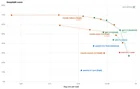
DeepSWE delivers four advances over existing public benchmarks: Contamination free: Tasks are written from scratch, not adapted from existing commits or PRs, so no model has seen the solution during pretraining. High diversity: Tasks span a broad pool of 91 repositories across 5 languages. Real-world complexity: Prompts are ~half the length of SWE-bench Pro's, yet solutions require 5.5x more code and ~2x more output tokens. Reliable verification: Verifiers are hand-written to test software behavior rather than implementation details. The result is a benchmark that reflects how today's frontier coding agents actually perform in software engineering work. https://preview.redd.it/lacvagyr159h1.png?width=1373&format=png&auto=webp&s=6514340a15d51d7f03da733f08fb3f6a302cac75 It's open-source: https://github.com/datacurve-ai/deep-swe submitted by /u/we_are_mammals [link] [Kommentare]