Leading with the number that matters most if you're deciding whether to bother: on refrigerator-sorting, success goes from 60.0% in-domain to 13.3% out of distribution (robot pose perturbed ±10cm, previously-unseen objects swapped in). The other soft spot is long horizon, where the policy makes real partial progress and then misses the final precise placement. I'm putting that first because the release reel is slick and I'd rather calibrate before the demos do it for me. With that framing, here's what Robbyant open-sourced: LingBot-VLA 2.0 (Robbyant is an embodied AI company under Ant Group). The design bet is a unified whole-body action space. Everything maps to one 55-dim canonical action vector (arm joints, end-effector, gripper, a 12-dim dexterous hand, waist, head, mobile base), and a single policy is jointly trained across 20 embodiments, from an 8-DoF single arm up to a 32-DoF humanoid, on about 60,000 hours (roughly 50,000 h robot trajectories and 10,000 h egocentric human video). The action head is a MoE expert (loss-free token-level routing, DeepSeek-V3 style) with dual-query distillation from a depth teacher (LingBot-Depth) and a causal video teacher (DINO-Video, released too, which edges out DINOv3 and V-JEPA 2 on 3 of 4 LARYBench metrics). The one practitioner takeaway from their ablations I'd actually act on: the biggest single lever was representation, not architecture. Absolute to relative joint actions moved average success from 33.7 to 55.0 (+21.3), a larger swing than any model change they tested. Videos, matter-of-factly: a multi-embodiment grid (multiple robots, different tasks, at once), an 8-minute continuous autonomous run, transparent glass-vase flower arranging with a live depth window, and a contact-rich zipper pouch. Dual-arm real hardware, watermarked 1x speed and autonomous. It's a release reel, so no claim of zero cherry-picking, weight the failure cases above accordingly. One catch worth surfacing so nobody has to dig for it: GM-100 ("The Great March 100") is their own bimanual benchmark, from Yong-Lu Li's RHOS lab at SJTU with Robbyant and co-authored by the project lead. Not independent. Generalist scores (progress / success): Agilex Cobot Magic 66.2 / 34.4, Galaxea R1 Pro 34.6 / 15.6, ahead of GR00T N1.7, pi-0.5, and their own 1.0. Note success sits far under progress (Galaxea overall 15.6%, some tasks 0%). If you run a bimanual setup, the weights and code are open under the Robbyant org on GitHub and HuggingFace, so pulling them and breaking them on your own robots is the real test here. Independent numbers would be worth more than the self-reported ones. submitted by /u/Good-Razzmatazz-6179 [link] [Kommentare]



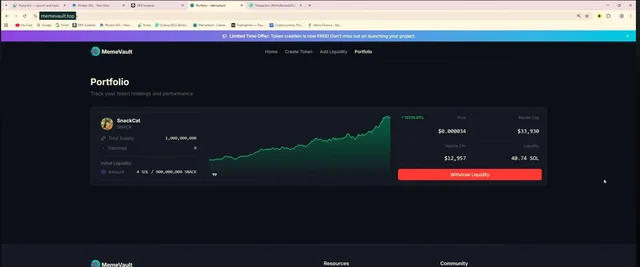
Came across this video on YouTube. NA Market especially does this and liq all the newbies. Shouldn't this sh** be totally illegal? submitted by /u/mannythomson [link] [Kommentare]
Most safety alignment work treats "detect the attack" as a text classification problem — does the prompt contain language the model's safety guardrails should catch. That assumption breaks down for LLM agents with real tool access. Here's a concrete case: take a known, public security vulnerability (a CVE), work out the sequence of tool calls that would exploit it, then have an LLM rewrite that as an ordinary-sounding request. Nothing in the resulting text looks like an attack — because the "attack" isn't in the text, it's in the tool-call sequence the text leads to. A model whose guardrails only trigger on textual cues has nothing to catch. We tested this against LLM agents using Model Context Protocol (MCP) tool access (filesystem IO). No base model (1B–14B parameters) refused more than 35% of these attacks, and SOTA safety-tuning (DPO, SafeDPO) only pushed that to 48%. Training-free methods do better — one gets to roughly 3x the baseline refusal rate with no fine-tuning run at all. Full methodology, training/eval code (four methods), dataset, and papers in the first comment. submitted by /u/mlsandwich [link] [Kommentare]
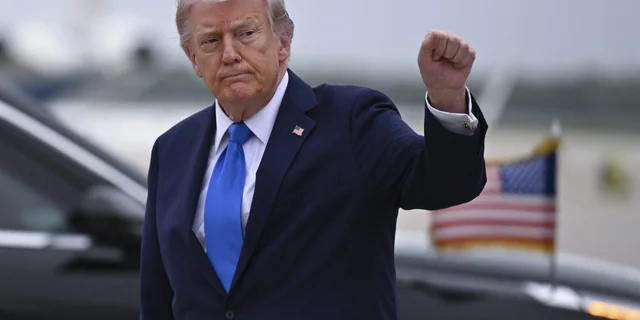
President Donald Trump has raked in hundreds of millions of dollars from his signature cryptocurrency while his supporters have largely been left holding the bag, according to a report. Of the 1.48 million wallets that bought the $TRUMP memecoin since it launched just three days before Trump’s second inauguration last year, about 66%, or 988,905 wallets, had lost money by the end of June. According to data from blockchain analytics firm Nansen, the combined losses were $3.81 billion, reported the New York Times. The losses are stark given that President Trump has claimed large profits from the token, which sports a picture of him with his fist in the air and the words “Fight, Fight, Fight,” in reference to the Butler, PA attempted assassination attempt in 2024. According to the president’s most recent financial disclosures, he had pocketed $636 million from the $TRUMP memecoin alone. Read more [paywall removed for Redditors]: https://fortune.com/2026/07/07/donald-trump-meme-coin-world-liberty-financial-finance-politics/?utm_source=reddit/ submitted by /u/fortune [link] [Kommentare]
This winter parliament session big announcement of digital rupee and removing of dollar backed stable coin on the cards. submitted by /u/SasiRacha44 [link] [Kommentare]