
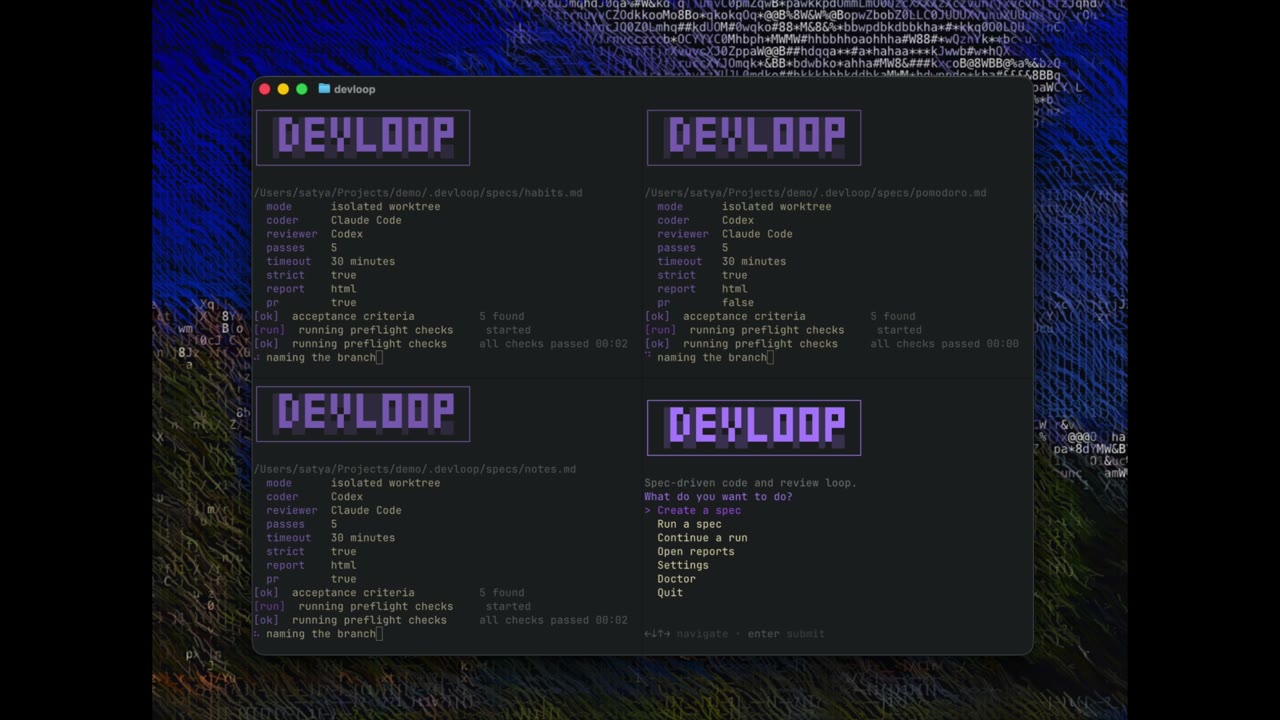
Spec-driven local agent loop: Codex implements, Claude Code reviews, and retries until all acceptance criteria are met.


I've been reading more about AMMs recently, and one thing that caught my attention is the growing number of platforms experimenting with single-sided liquidity instead of the traditional two-token model. Most of us are familiar with providing liquidity by depositing a pair of assets, but that can be a bit intimidating for newer users. You need to own both assets, decide how much of each to contribute, and keep track of how the pool changes over time. Single-sided liquidity seems to take a different approach by allowing users to contribute just one asset while still participating in the liquidity pool. On paper, that sounds like it lowers the barrier to entry, especially for people who aren't comfortable managing multiple tokens. That got me wondering: Do you think single-sided liquidity is actually a better experience for everyday users, or is it just simplifying things without solving the real challenges? Are there trade-offs compared to the traditional dual-asset model that people should be aware of? If you've tried both, which did you prefer and why? I'm interested in hearing from people who have actually provided liquidity, whether through DeFi protocols or centralized platforms. It would be great to hear some real-world experiences rather than just the marketing claims that often get repeated. submitted by /u/Vane1st [link] [Kommentare]


Browser System With Zero HTML/CSS/JS. Contribute to nz366/zero_browser development by creating an account on GitHub.



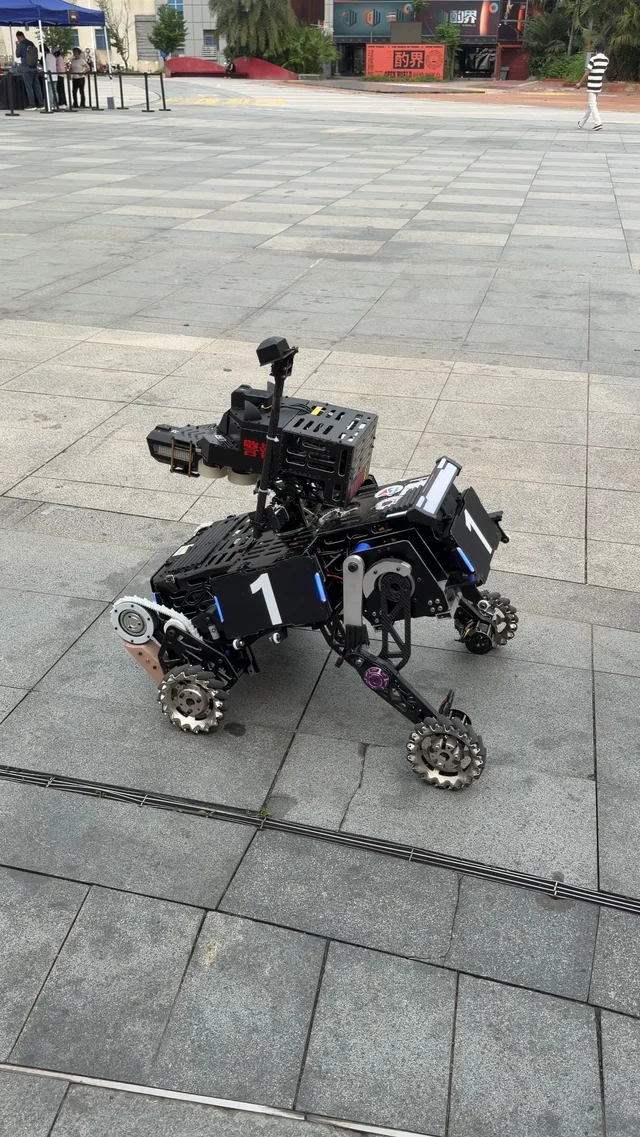
The robot behaved long enough for us to record this video. This robot was developed for the RoboMaster competition and powered by us. submitted by /u/Cubemars [link] [Kommentare]

Lotteries and tickets are often used as a didactical analogy to explain the success of overparameterized neural networks: “larger networks succeed because they more likely contain a well-initialized subnetwork that can learn the task in isolation, much like buying more tickets increases the chances of winning a lottery.” This explanation is intuitive but misleading: it suggests that subnetworks can be treated in isolation from the rest of the network. Following this reasoning leads to interpreting learning in wide networks as a multi-start optimization process, where gradient descent simply conducts a parallel search over subnetworks. We argue that this view is flawed since, among other reasons, winning tickets can be made to fail by perturbing the rest of the network. We put forward a more accurate intuitive picture for the success of overparameterization based on the geometry of loss landscapes: increasing width expands the set of available dimensions for optimization, making it easier to escape bad local minima. Moreover, as width grows, bad minima become increasingly rare relative to good minima. As the field grows mature, it is important to refine the analogies we use to explain foundational phenomena, such as the apparent redundancy of large networks, reconciling practitioners' intuitions with modern theoretical insights.