 R
↗
R
↗
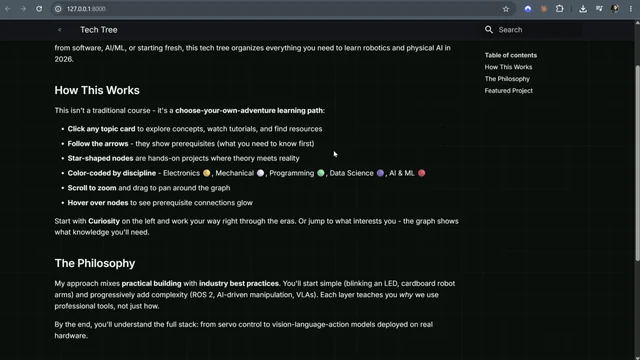
If you've tried to get into robotics, you've probably hit one of these walls: How do I get started? How do I get from blinking an LED to an autonomous robot? I come from a software (or mechanical, or data) background, what am I missing? I couldn't find a single good answer to these, so I started building one: an open source "tech tree" for robotics. It's a visual skill map. You start at the root and unlock the rest as you go (electronics, mechanics, programming, data science, AI), with hands-on builds as the milestones: blink an LED, a sensor project, a robot arm, a robot dog, and up into more serious AI. The main idea: it's not new content. There is already a ton of great tutorials, courses, and docs out there. The tech tree is just the map that sits on top of it and points you to the right resource for each skill, in an order that makes sense. It's early and nowhere near complete, which is kind of the point. It's fully open on GitHub, so if you have a favorite tutorial, a course that made something finally click, or a resource you wish you'd found sooner, you can add it. PRs and issues welcome, and "you forgot X" comments even more so. Links: Website: https://www.backtoengineering.com/ Repo: https://github.com/iuliaferoli/backtoengineering What would you add, or what's missing from the paths? submitted by /u/Growth-Sea [link] [Kommentare]
 G
↗
G
↗
A while back I co-founded a company that raised some money. We worked long hours, 6 days per week from a wonderful office, leaving Sundays to take care of personal things. After a few weeks, a few things became apparent: Here are a few habits that helped me keep my stress levels under control, and I hope they will help you too: Keep a notebook. In the notebook add a new entry and answer, “What happened today?” Update open tasks if needed. The day is done. Stop thinking about work. To perform at a high level tomorrow (and the day after, and the day after…), one must rest. If possible, no more screen time of any kind until the next day. Find an activity that grabs complete attention, both mentally and physically, even if it is for a small amount of time. Examples include: sports or skills based activities such as dance, yoga. There are a few similar tricks. If one doesn’t work, try the next: For me, there often were nights with no time for activity after work. Falling asleep on those nights would have been impossible without the two visualization tricks. Develop a morning routine: Make the bed, exercise, take a shower, pray, water the plants, dress for success, eat breakfast, etc. Ramp up to cruising speed: meditate for a few minutes; switch the mind back into focusing mode; look at notes from the previous day’s end. Kick a whole lot of ass, all day long!
 G
↗
G
↗
I got tired of using onetimesecret.com so I built my own secret sharing service. It has zero dependencies, only standard Web APIs, and the backend...
 U
↗
U
↗
In an effort to reduce wasteful spending, the government is piloting a program that uses AI for insurance-coverage decisions.
 R
↗
R
↗
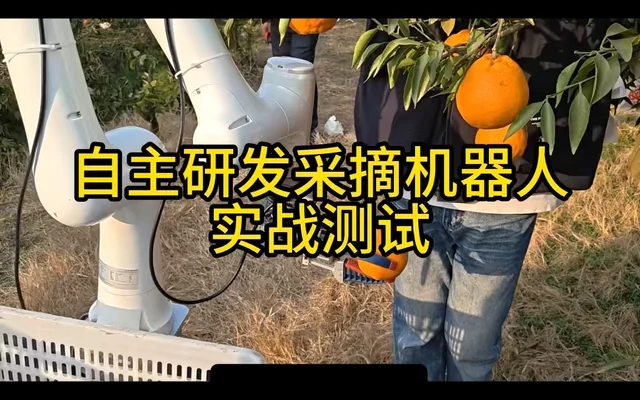
Fruit harvesting remains one of the most challenging robotics applications. Detecting ripe fruit is becoming easier with modern vision models, but reliable picking in unstructured environments is still difficult. Do you think the biggest challenge today is: • Vision? • Motion planning? • End-effector design? • Cost? Curious to hear different opinions. submitted by /u/ROS_RobotAlisa [link] [Kommentare]
 P
↗
P
↗
How I tricked Claude into leaking your deepest, darkest secrets
 G
↗
G
↗
In my last post about Yocto I wrote about dealing with disappearing dependencies and how one should try to keep his layers up to date. “Next day I started by updating all the layers properly&…
 X
↗
X
↗
Dedicated to legendary Xtree (tm) filemanager, containing version history, survey of Shareware-clones, Tips&Tricks, download section, and much more...
 R
↗
R
↗
Created Simulation From LLM Output Background: I studied EECS and I'm now getting into robotics, mostly working through the simulation side of things. While digging into the sim pipeline I came across this repo: https://github.com/AlexKaravaev/world-creator It's a CLI that generates Gazebo and Mujoco simulation worlds from a text prompt. You type something like "warehouse with shelves and some obstacles for navigation testing" and it picks models from the Gazebo model database and places them for you. I think it's genuinely a great idea and ahead of its time. It's from ~2023, so it predates all the recent LLM progress, and the author was upfront that the model hallucinated a lot back then. With today's models this approach could work way better. Curious about a few things: Has anyone here used this or something like it in real work? Is prompt-to-world something you'd actually want, or is scene setup not painful enough to matter? From what I've seen so far, people complain way more about getting the robot itself into sim (URDF, meshes, inertia values) than the environment around it. Is that right? If someone built an upgraded version of this, what would the use cases be for you? Randomized scenes for RL training? Test scenarios in CI? Quick demos? I'm exploring building in this space, so honest "nobody needs this" takes are just as useful as feature wishlists. submitted by /u/Few_Film8907 [link] [Kommentare]
 R
↗
R
↗
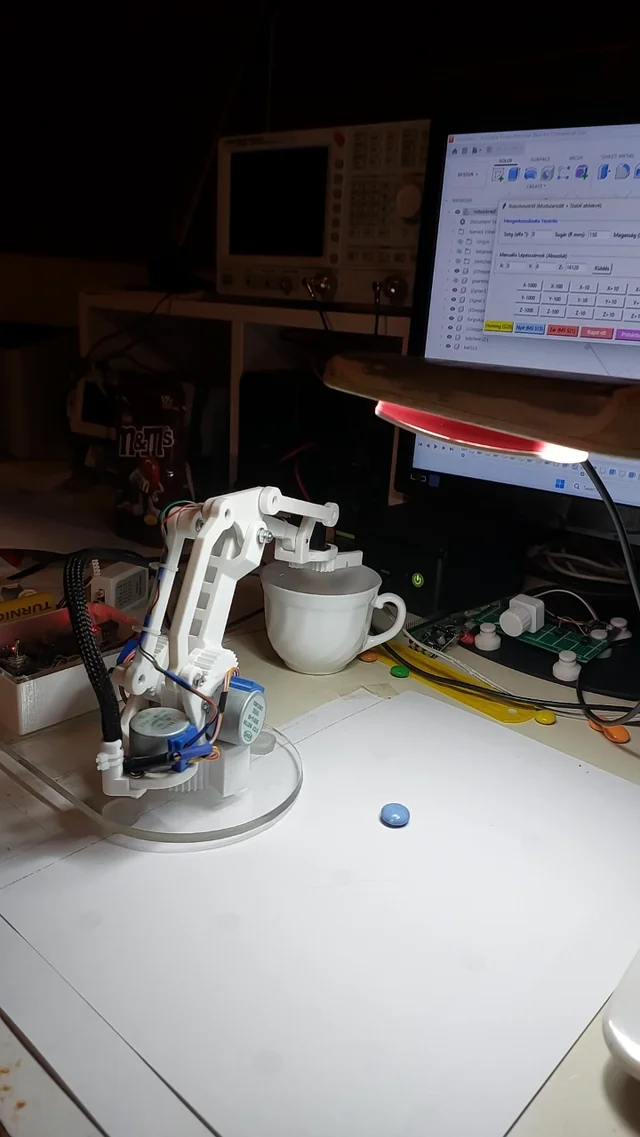
Teaching my 13-year-old grandson programming using Arduino, Python, and AI. We are currently programming this small robotic arm. I originally built the arm for him 5 years ago for Christmas. Back then he just played with it, but now he is writing new code for it. The goal is to detect candies placed in front of it and drop them into a cup. How it works: A Raspberry Pi-based USB camera monitors the workspace. A Python script running on a PC detects the candies and sends G-code commands to control the arm. Hardware & Firmware: The robotic arm is powered by an STM32F103 microcontroller running Arduino-based firmware. submitted by /u/Available-String-891 [link] [Kommentare]
 G
↗
G
↗
European Parliament MCP Server - Political intelligence for AI agents - Hack23/European-Parliament-MCP-Server
 B
↗
B
↗
Thoughts about programming, mostly