 G
↗
G
↗
You'd think that given the same bytes of input you'd get the same bytes of output. lol. lmao. No, you don't. It's complicated.
 X
↗
X
↗
Home prices will likely hit $1 million around the year 2050, when the millennial generation is hitting retirement, a top economist predicts.
 A
↗
A
↗
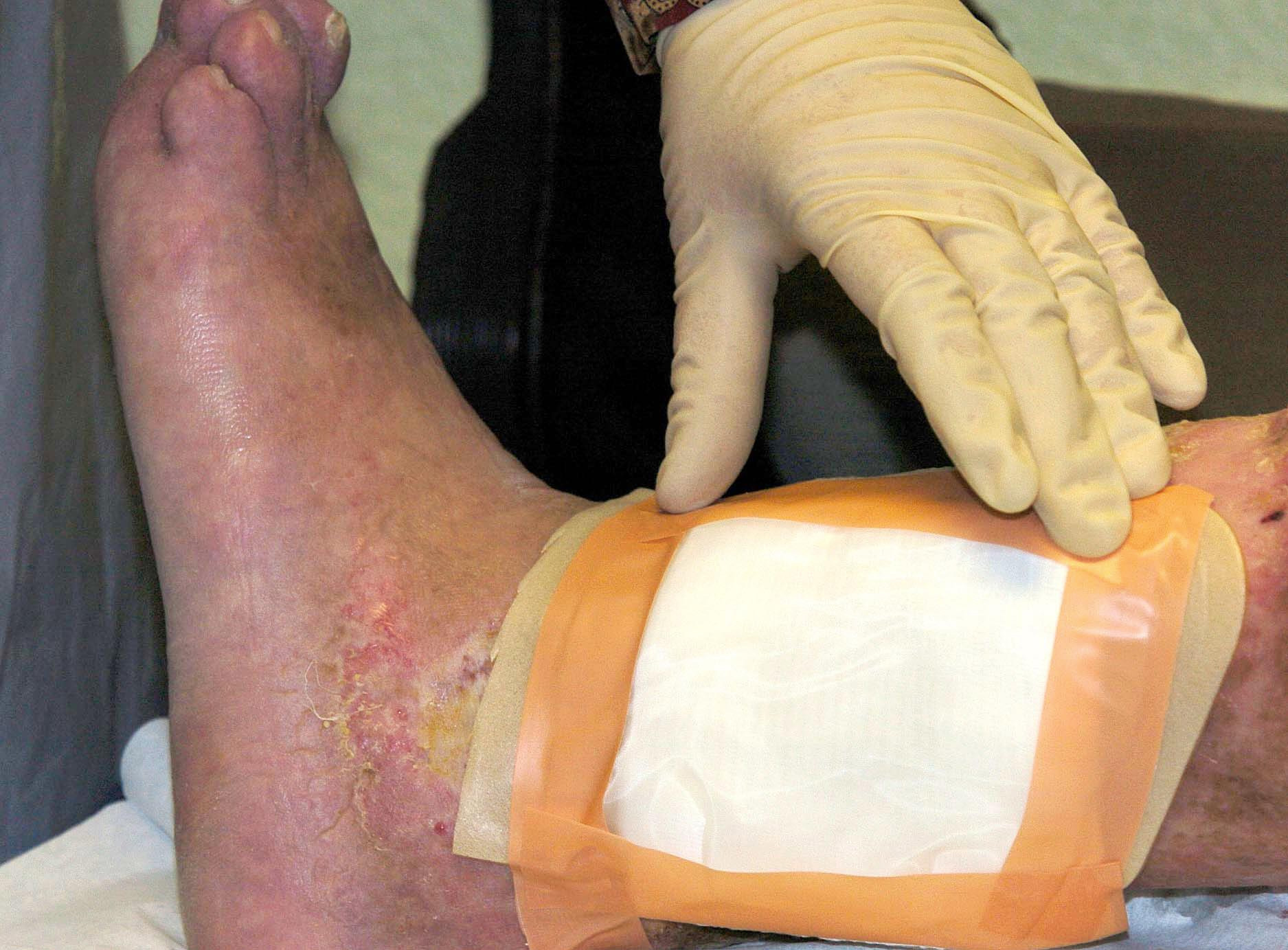
Maggot therapy lacks robust data, but it has fans and a fail-safe "bacon therapy."
 R
↗
R
↗
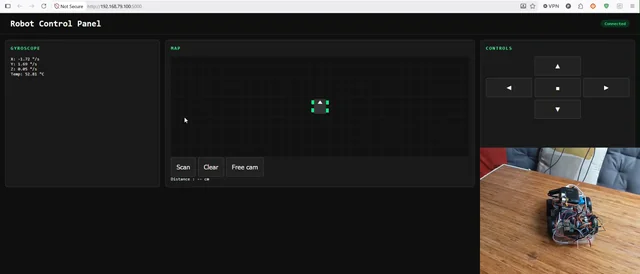
Hi r/robotics ! I’m currently working on a robotic car project for mapping, and I’d like to share my progress and get some feedback from the community. So far, the main issues I’ve encountered (and resolved) are as follows: - Synchronizing the car’s position on the map (as indicated by the gyroscope) with the position of the digitized image based on the car’s position - Managing the motors’ power supply (complex wiring) However, there are still a few issues for which I could use some advice. - It seems that over time, a discrepancy is developing between the robot’s position on the map and its actual position as measured by the gyroscope. Is this an inaccuracy in the gyroscope that could be corrected through code? - The scanner works but remains fairly inaccurate; any recommendations are welcome - The robot’s path tends to veer off course, so I’m considering adding speed encoders to implement a path correction system (I assume the problem stems from the fact that the speed of each motor isn’t always precise) My goal is to build a fully autonomous car capable of mapping its surroundings (I'll add a webcam). Feel free to share any ideas you might have. my target is build a full self driving car able to mapping his environment ( i will adding webcam). Github : https://github.com/enzocolombat/EC-Hub/ submitted by /u/Pasteque9000 [link] [Kommentare]
 R
↗
R
↗
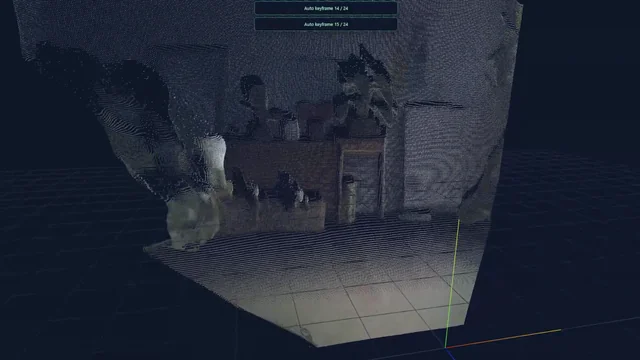
Hey everybody! Hobbyist here with an update on my cheap rover swarm project. I've been trying out Depth Anything 3 and wanted to share, because the results of such minimal hardware surprised me. The setup: each rover is just a XIAO ESP32-S3 Sense (~$15 board with a tiny onboard camera) in a 3D printed body. The ESP32 is basically a sender, it streams the camera over WiFi and reports temperature/battery/telemetry. All the heavy lifting (DA3 inference, navigation) runs on a PC that acts as the brain. No lidar, no depth sensor, one cheap RGB camera. DA3 gives me a point cloud per frame and can merge multiple frames into a larger cloud. Seeing a $15 camera produce a usable 3D-ish image of the room is still kind of wild to me. Eventually I want to use it for navigation - a kind of "poor man's lidar". It estimates what's near at three heights (eye level, above, below) to give a rough obstacle sense without a dedicated sensor. Secondly for visualization at the moment, but the goal is to stitch frames into an environment map. Positioning is currently handled by ArUco markers around the room (solvePnP). Still early and held together with hope, but it's been fun pushing this hardware further than it wamts to go. :-) submitted by /u/monkeydance26 [link] [Kommentare]
R
↗
HalfwiredTV is a community for people who want to learn robotics, build projects, and collaborate with others. Our long-term goal is simple: Get everyone to a level where they can confidently learn, build and collaborate on robotics projects together in livestreams. What You'll Find Here -- People learning together teaching each other on calls in dedicated channels for topics (created as per demand) Project teammates Livestream collaborations and study sessions (uhm.. with meme songs) , also whenever anyone has something interesting to talk and show regardless of their skill level. We recently had our first livestream on a member's lazer scanning workflow for their robocar Robotics discussions ranging from complete beginners to advanced builders Your skill level doesn't matter. If you're curious, willing to learn, and willing to build, you're in the right place. Come join us : https://discord.com/channels/1514229376152113172/1514973636258172949 submitted by /u/SundeepKuPanigrahi [link] [Kommentare]
 M
↗
M
↗
Access a subscriber-only eBook of a collection of stories about how militaries are using Al models to make decisions.
 G
↗
G
↗
Our quest to build a scalable, LLM-safe design system
 T
↗
T
↗
The Justice department says the Pentagon needs xAI to keep using its unpermitted gas turbines.
 C
↗
C
↗
Cursor disclosed at its June 16 Compile event that a 1.5 trillion parameter coding model is training across 100,000 GPUs and is weeks from launch.
 Q
↗
Q
↗
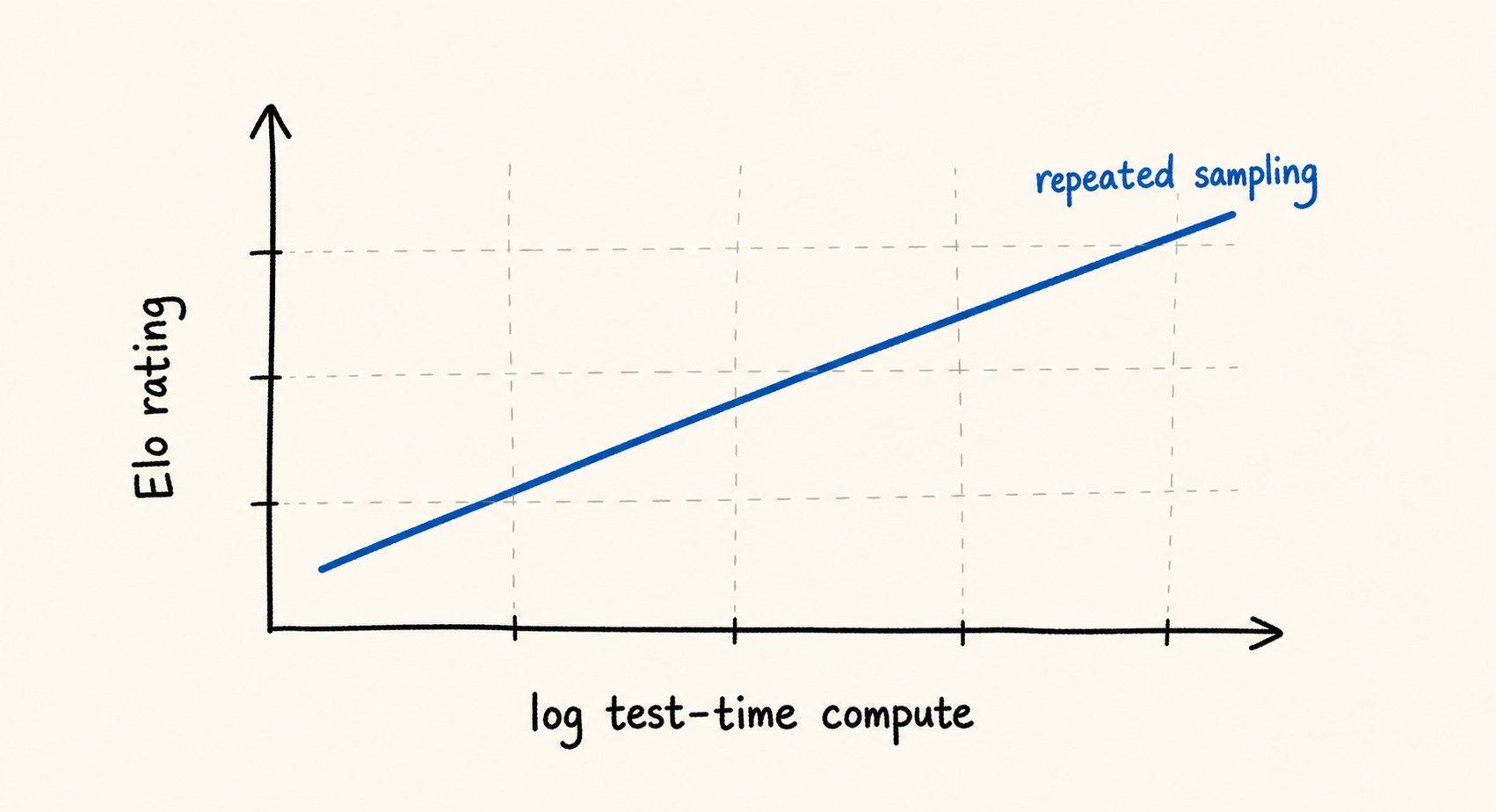
Agents can spend test-time compute by trying, observing, and revising. We derive an Elo reference for repeated sampling, then show that in a 2022 two-week coding marathon, current agents plateau within 24 hours while top humans keep improving.
R
↗
Hey everyone, I've been talking to a lot of robot engineers and kept hearing the same frustrations: - Debugging ROS2 errors takes hours - Setting up proper logging is painful - Writing boilerplate nodes wastes expert time So I built **Mechis** — a free AI co-pilot specifically for robot engineers. **What it does:** - 🐛 **Debug** — paste your error or stack trace, get the exact fix - 📋 **Logging** — describe your robot setup, get a complete ROS2 logging config - ⚙️ **Code Gen** — describe what you want in plain English, get clean ROS2 Python code **Try it free here:*\* mechis-neon.vercel.app No signup needed. Just open and use. --- **I'd genuinely love your feedback:** Did it actually help or was the answer generic? What's missing that you wish it had? What's the #1 ROS2 problem you face daily that a tool like this should solve? Would you pay for this? submitted by /u/According_Koala4857 [link] [Kommentare]
 Y
↗
Y
↗
A data leak has exposed private data on billionaire Peter Thiel’s “Dialog,” an invitation-only network of high-profile figures.