This happened a few months ago when I was working on an analysis project that dealt with time-series data. The dataset was large (10 years of data). I was using a standard profiling tool to check the pipeline. Everything looked fine because the tool reported 3% missing data rate for volume columns. I didn't think much about it because I thought it was noise, as this was my first time working with time-series data, but the downstream models weren't acting right. That's when I thought something was off, and I actually looked at the data and found the 3% missing data was not noise; in fact, it was a 6-day worth of missing data. It didn't stop here, though, as the data also had leakage, and the model hit 99% accuracy. The rolling windows and lag features were also messed up, as the chronological sequence was broken. Looking back, if I had done proper EDA, this would not have happened. But I decided to make a small validation tool called tsauditor that catches chronological breaks, leakage, and sudden sequential spikes present in global boundaries. It also adds a description along with evidence on why the data point is faulty and suggests fixes It's open source, lightweight, and on PyPI. I also added an example notebook, which has a side-by-side comparison of tsauditor with a standard profiling tool. You can also check out the comparison notebook on NBViewer. I wanted to simplify the EDA process and reduce the number of custom scripts for a dataset. Link in comments submitted by /u/severecaseofsarcarsm [link] [Kommentare]


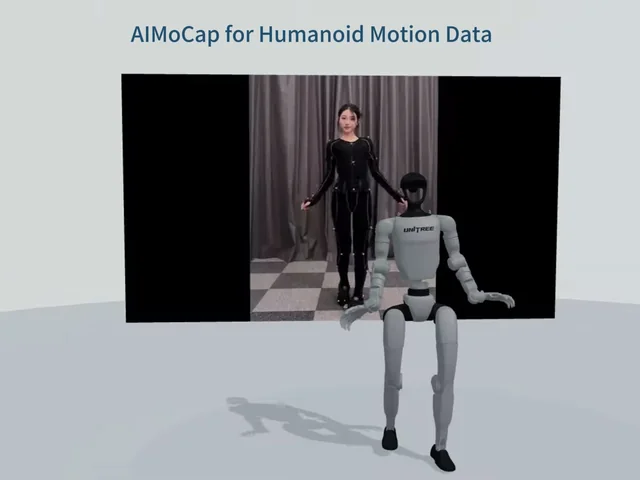
I've been experimenting with converting ordinary third-person videos into humanoid motion data. This demo includes several motion categories: • Acting • Sports • Combat • Dance The motivation is not animation alone. Recent humanoid robotics work increasingly relies on large-scale motion datasets and motion priors to improve movement quality, robustness, and generalization. Projects such as NVIDIA KIMODO also show the value of scaling high-quality motion data for downstream humanoid motion generation and control. This made me wonder whether ordinary videos could become a low-cost source of motion data for humanoid systems. There is already a massive amount of human motion available in online videos. If useful motion can be extracted reliably, it may help expand humanoid motion datasets beyond traditional mocap pipelines. For this experiment, I focused on: • Foot contact stability • Reduced foot sliding • Natural balance and movement dynamics • Consistency across different motion styles The long-term idea is: Video → Motion Data → Motion Models → Humanoid Control For anyone interested in testing their own clips, I made a public demo available here: huggingface demo I'd love to hear thoughts from people working on humanoid robotics, motion generation, imitation learning, or robot locomotion. submitted by /u/AIMoCap [link] [Kommentare]



As soon as we started doing any operations above Europe, we noticed that there was really something going on there.

On a sound bath at the edge of a lake, the word for melting what has frozen, and the oldest medicine there is.



Owners of affected iPhones can stop checking for patches now: the fix for this SecureROM bug comes in a new handset

Despite all his wealth, Musk’s existence is a cautionary tale.

Moji ist eine persönliche KI, die in WhatsApp, Telegram und LINE lebt — ein echter Agent mit eigenem Computer. Erinnerungen, Pläne, Antworten und Infos, genau dort, wo du eh schon chattest.

Today, on my final day as Director of National Intelligence, I’m releasing never-before-seen communications and documents exposing how Dr. Fauci provided millions in US taxpayer dollars to fund dangerous gain-of-function research at the Wuhan lab, worked with politicized elements https://t.co/ZMdliW4zyS