 D
↗
D
↗
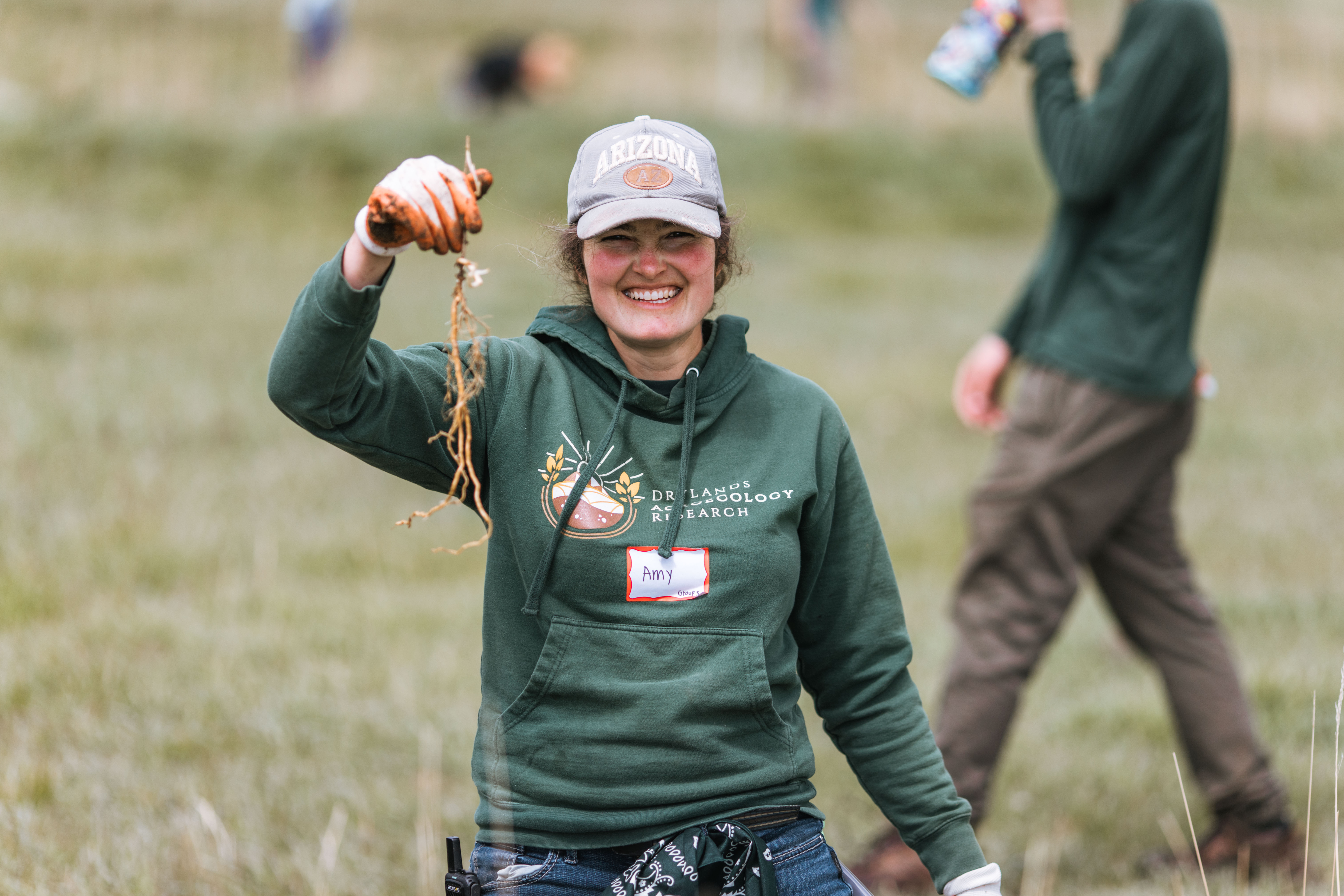
Data-Informed DecisionsCASCADE StudyContour Agroforestry Systems for Climate Adaptation and Dryland EcosystemsCASCADE is DAR's embedded research program, developed in partnership with Colorado State University. It generates the field data that grounds both the Soil–Water Stewardship Pilot and the Perennial Integration Pilot. At each study site, networks of sensors installed in the soil continuously record moisture levels, temperature, and infiltration rates. This data streams in real time and builds a picture of how the land is responding to specific management over time. Combined with periodic field measurements of vegetation cover, surface condition, and forage productivity, the sensor data allows DAR and CSU researchers to observe how grazing, terracing, and agroforestry interact across different site conditions, and to identify what combinations of practices produce the most meaningful hydrologic improvements.Why Dryland Research?Across the Front Range and throughout the American West, soils that once absorbed seasonal precipitation are losing that capacity as drought cycles intensify. The question facing land managers is how to adapt and what combinations of practices actually improve land function under these conditions. CASCADE is DAR's attempt to generate honest, field-based answers in the landscapes where it matters most.Pilot ObjectivesWorking across a growing set of sites in Colorado, CASCADE quantifies how rainwater harvesting terraces and silvopastoral systems affect soil moisture, forage productivity, and carbon storage. IoT sensor arrays and a formal CSU research partnership ensure the data is rigorous enough to inform both management decisions and broader policy.Learning & AccountabilityCASCADE produces peer-reviewed findings, not internal reports. Results will be shared as transferable design frameworks for land managers across U.S. drylands. Where interventions underperform, that record matters too — honest field data under real conditions is what makes the findings usable by others.CASCADE PartnersComing SoonPartner With Us
 O
↗
O
↗
Resumable, steerable agent sessions with your own model keys. Run Claude Agent SDK or Codex, stream to the browser, resume from any seq, get Standard Webhooks. The model-agnostic alternative to Claude Managed Agents, by OpenComputer.
R
↗
Binance has been banned or restricted from operating in the uk since 2021, when the fca found it wasnt meeting basic registration requirements and had run ins with dutch and belgian regulators around the same period. It pled guilty in the US in 2023 to aml and sanctions violations with over $4 billion in penalties, and its founder did prison time as part of that and now in 2026, its the one major exchange that couldnt get licensed under MiCA while coinbase, bitpanda ,kraken, all did Individually, any one of these could be regulator being overly cautious with a new industry but stacked up over five years, it stops looking like bad luck and starts looking like a company that keeps failing the exact same category of test proving to regulators that its structure and leadership meet a basic compliance bar.. Its specifically a trust problem, recurring across multiple independent jurisdictions. something surprising is that none of this has actually dented binance's volume dominance. It's still the largest exchange by a wide margin, in spite of a track record that would sink most companies in most other industries. Which either means crypto users genuinely dont weight this kind of risk very heavily or means theres no real alternative with the same liquidity so people stay regardless. Small side note its probably not a coincidence that the onchain RWA perps corner like ostium and hyperliquid has been growing precisely in the gap this kind of recurring regulatory risk leaves open coz that doesnt need a specific company to hold a specific license in any country to let keep a position open. So does a pattern like this change anything about where people choose to trade or does liquidity and habit just override it every time? submitted by /u/Personal_Brilliant39 [link] [Kommentare]
 R
↗
R
↗
We just open-sourced MOTHRAG, a multi-hop RAG framework that skips the knowledge graph entirely. We kept hitting the same wall building multi-hop RAG: the systems with the best accuracy (GraphRAG, HippoRAG, RAPTOR) all lean on a knowledge graph built offline, and that’s great numbers, until the moment your data changes! Every single update means re-running a heavy LLM indexing pass to rebuild the graph. If your corpus updates daily (prices, internal filings, support tickets, news), you're paying a constant, brutal re-indexing bill. MOTHRAG uses a graph-free dense index with query-time orchestration (with no graph, no GPU) instead. Every component behind a commodity API. We benchmarked it against the heavy graph-based systems on HotpotQA, 2WikiMultiHopQA, and MuSiQue (Accuracy / F1): Benchmark MOTHRAG (ours) GraphRAG HippoRAG RAPTOR HotpotQA 78.1 68.6 75.5 69.5 2WikiMultiHop 76.3 58.6 71.0 52.1 MuSiQue 50.5 38.5 48.6 28.9 And updates are just embed-and-append, with no need in rebuild, and retraining. Cost is ~$0.03/query on commodity APIs, no GPU anywhere. Against GPU-bound systems that use constrained decoding (NeocorRAG), it's not a clean win. We match them on HotpotQA (78.1 vs 78.3) and 2Wiki (76.3 vs 76.1), but we lose on MuSiQue (50.5 vs 52.6). MuSiQue is our weak spot (retrieval recall bottlenecks there), and we haven't solved it yet. The takeaway for us: for multi-hop over changing data, the graph overhead mostly buys you a rebuild bill, not accuracy. A graph-free index with good query-time orchestration held up. It’s Apache-2.0, standard pip install + API keys to run. Repo link is in the comments. Would love to get feedback from anyone running RAG on frequently changing data in production! submitted by /u/Annual-Commercial563 [link] [Kommentare]
R
↗
Why don't bitcoin nodes produce snapshots of their current utxo database, so that a new node does not have to download everything first? What is the size of the current utxo database? Small block proponents gave up cheap transactions in order to keep the blockchain small, but this argument seems bogus. submitted by /u/bunky_bunk [link] [Kommentare]
 A
↗
A
↗
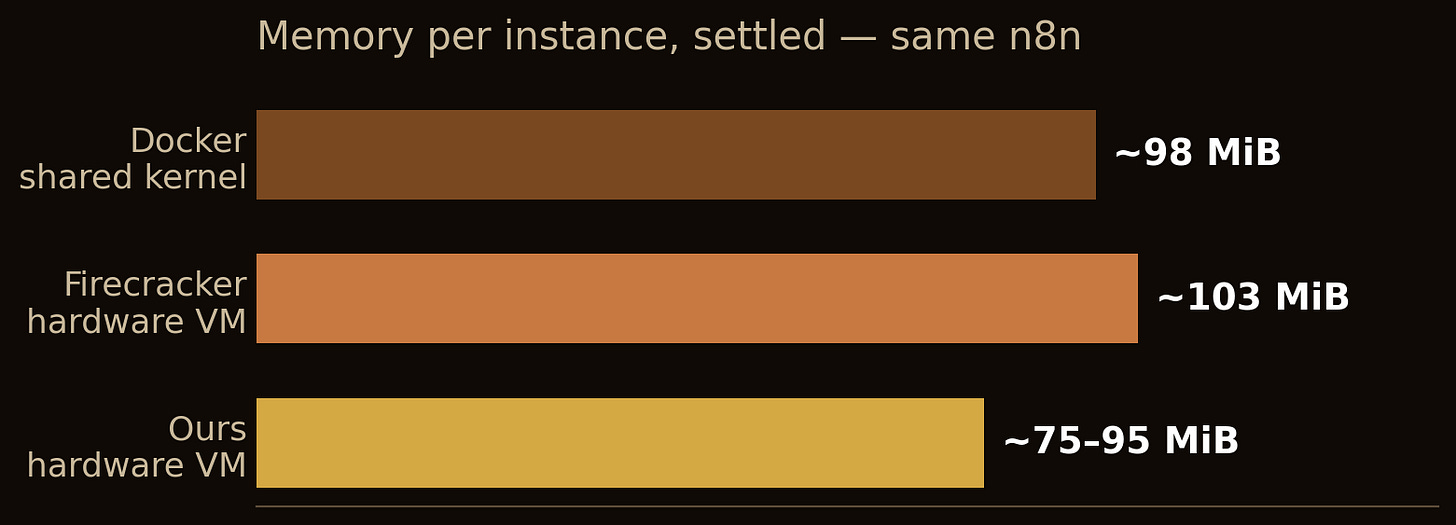
1,500 Real Apps on One Box — and Where Docker and Firecracker Tap Out
 G
↗
G
↗
A deterministic coding-agent runtime for repeatable, auditable AI software engineering. - arman-jalili/rigorix-oss