A 32-bit float pipeline with color management, eleven new nodes across color, compositing, lighting, and texturing, and a one-time commercial license.


Beautifully designed, copy-paste UI components for AI agent conversations: thinking states, tool calls, streaming text, citations, tables and more. Ships in React, Vue and Svelte with plain CSS and no Tailwind.



Test-first fundamentalism is like abstinence-only sex ed: An unrealistic, ineffective morality campaign for self-loathing and shaming. It didn't start out like that. When I first discovered TDD, it was like a courteous invitation to a better world of writing software. A mind hack to get you going with the practice of testing where no testing had happened before. It opened my eyes to the tranquility of a well-tested code base, and the bliss of confidence it grants those making changes to software. The test-first part was a wonderful set of training wheels that taught me how to think about testing at a deeper level, but also some I quickly left behind. Over the years, the test-first rhetoric got louder and angrier, though. More mean-spirited. And at times I got sucked into that fundamentalist vortex, feeling bad about not following the true gospel. Then I'd try test-first for a few weeks, only to drop it again when it started hurting my designs. It was yoyo cycle of pride, when I was able to adhere to the literal letter of the teachings, and a crash of despair, when I wasn't. It felt like falling off the wagon. Sometime to keep quiet about. Certainly not something to admit in public. In public, I at best just alluded to not doing test-first all the time, and at worst continued to support the practice as "the right way". I regret that now. Maybe it was necessary to use test-first as the counterintuitive ram for breaking down the industry's sorry lack of automated, regression testing. Maybe it was a parable that just wasn't intended to be a literal description of the day-to-day workings of software writing. But whatever it started out as, it was soon since corrupted. Used as a hammer to beat down the nonbelievers, declare them unprofessional and unfit for writing software. A litmus test. Enough. No more. My name is David, and I do not write software test-first. I refuse to apologize for that any more, much less hide it. I'm grateful for what TDD did to open my eyes to automated regression testing, but I've long since moved on from the design dogma. I suggest you take a hard look at what that approach is doing to the integrity of your system design as well. If you're willing to honestly consider the possibility that it's not an unqualified good, it'll be like taking the red pill. You may not like what you see after that. So where do we go from here? Step one is admitting there's a problem. I think we've taken that now. Step two is to rebalance the testing spectrum from unit to system. The current fanatical TDD experience leads to a primary focus on the unit tests, because those are the tests capable of driving the code design (the original justification for test-first). I don't think that's healthy. Test-first units leads to an overly complex web of intermediary objects and indirection in order to avoid doing anything that's "slow". Like hitting the database. Or file IO. Or going through the browser to test the whole system. It's given birth to some truly horrendous monstrosities of architecture. A dense jungle of service objects, command patterns, and worse. I rarely unit test in the traditional sense of the word, where all dependencies are mocked out, and thousands of tests can close in seconds. It just hasn't been a useful way of dealing with the testing of Rails applications. I test active record models directly, letting them hit the database, and through the use of fixtures. Then layered on top is currently a set of controller tests, but I'd much rather replace those with even higher level system tests through Capybara or similar. I think that's the direction we're heading. Less emphasis on unit tests, because we're no longer doing test-first as a design practice, and more emphasis on, yes, slow, system tests. (Which btw do not need to be so slow any more, thanks to advances in parallelization and cloud runner infrastructure). Rails can help with this transition. Today we do nothing to encourage full system tests. There's no default answer in the stack. That's a mistake we're going to fix. But you don't have to wait until that's happening. Give Capybara a spin today, and you'll have a good idea of where we're heading tomorrow. But first of all take a deep breath. We're herding some sacred cows to the slaughter right now. That's painful and bloody. TDD has been so successful that it's interwoven in a lot of programmer identities. TDD is not just what they do, it's who they are. We have some serious deprogramming ahead of us as a community to get out from under that, and it's going to take some time. The worst thing we can do is just rush into another testing religion. I can just imagine the golden calf of "system tests only!" right now. Please don't go there. Yes, test-first is dead to me. But rather than dance on its grave, I'd rather honor its contributions than linger on the travesties. It marked an important phase in our history, yet it's time to move on. Long live testing. Continue down the rabbit hole with Why Most Unit Testing is Waste by James Coplien and my RailsConf keynote on Writing Software: Part 1 (starts at 11:00), Part 2.

Something happened in the last year that most people haven't fully processed. The models got superhuman at programming, genuinely superhuman right now.
I built a free Bitcoin dashboard,,live price, halving countdown, fees, hashrate, Fear & Greed. No login, no ads, no noise. I got tired of checking five different sites (and closing five cookie banners) to see the state of Bitcoin, so I built one clean page that shows everything: btcdash.org Live price with moving averages, Mayer Multiple, rainbow chart, Pi Cycle Halving countdown, hashrate & difficulty, fee market, mempool Fear & Greed, dominance, Lightning network stats A TV mode if you want it running on a wall screen Optional stack tracker that stores everything in your browser only ,, nothing is uploaded anywhere It's completely free, no account, no ads. Data comes straight from public APIs (mempool.space, exchanges, CoinMetrics) into your browser. Honest disclosure: I made this. Happy to answer anything, and genuinely looking for suggestions on what to add. submitted by /u/No_Significance8319 [link] [Kommentare]
Hey everyone, We've been building Miu — an embodied AI agent on a Yahboom Raspbot-style platform (Raspberry Pi, mecanum wheels, RPLidar C1, PTZ camera, ultrasonic bumpers). After a lot of wiring and debugging, V2 is working enough that he can autonomously drive around inside a room without us manually joysticking every move. What's working: • LiDAR-based room scanning + obstacle avoidance • Holonomic mecanum control (strafe, not just diff-drive spin-in-place) • Ultrasonic as a "digital bumper" for stuff LiDAR misses (cables, furniture edges) • Live 3D viewer (Rerun) so we can actually see what the robot thinks • Backend orchestration: LLM plans missions, a separate executor drives the motors Nav2 / ROS 2 helped a lot as a reference stack and for A/B testing navigation — though our production path on the Pi is leaner (FastAPI + custom holonomic controller). Nav2 taught us the patterns; shipping meant ripping out a lot of complexity. What almost killed the project (real talk): Too many cooks on cmd_vel — vision pipeline, proximity reflex, room scan thread, teleop, and agent tools all wanted to move the robot at once. Classic race conditions. LiDAR serial lock — Nav2 container + our own LiDAR reader + live viewer polling the same serial port = chaos. Had to enforce one LiDAR reader and stop competing services. Control-loop bug — we were doing LiDAR HTTP calls inside the 10 Hz drive loop. Robot spun in circles after ~2 ticks. Decoupled sensor thread (LidarScanBuffer) from control thread — fixed immediately. Observability nightmare — logs split across Pi journal, movement_log, PM2 JSON (multi-GB…), Discord, activity stream. Couldn't answer "why did it turn left?" until we built a unified observability endpoint. Battery — still an issue. Continuous LiDAR + movement + inference drains faster than we'd like. Low-battery caps on movement duration for now. V2 architecture (what we changed): • One motion supervisor — single authority on motors • Mission FSM — vacuum / explore / find_person / teleop, one active job at a time • Planner vs executor split — the LLM picks what to do; it doesn't fire raw motor pulses every turn Next steps: • IMU + wheel odometry fusion (EKF) → AMCL for proper pose • Persistent room memory (episodes, obstacle map, cascade/EOD summaries) • Click-to-nav in the live viewer • Battery / power management tuning Happy to answer questions about the stack, Nav2 vs custom control, or mecanum on a Pi. Still very much work in progress — would love tips from anyone who's shipped a home robot without it becoming a full-time ROS babysitting job. Stack (rough): Pi 4/5 · Yahboom chassis · RPLidar C1 · FastAPI on Pi · Mac mini backend (Postgres, agent loop) · ROS2 Nav2 (research/A-B) · Python holonomic controller · Rerun for viz submitted by /u/Spinning-Complex [link] [Kommentare]
I have a technical interview for a machine learning position coming up, and I'm really nervous. Can you tell me about your experiences with this process? It's my first technical interview, and I don't know what to expect submitted by /u/Abatistta [link] [Kommentare]
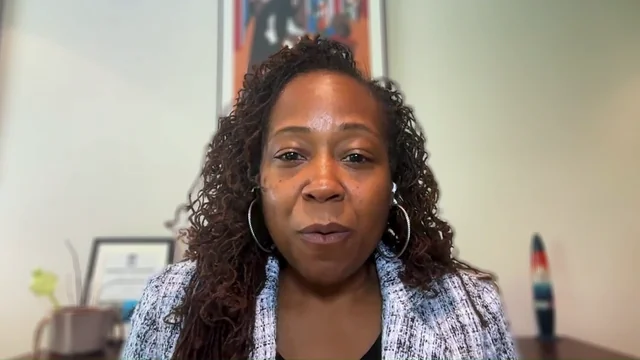
Dr. Ayanna Howard, dean of The Ohio State University College of Engineering, former NASA roboticist and founder of Zyrobotics, explains why both universities and startups are necessary to advance robotics. Universities support foundational research that may not produce a commercial return for many years. Startups take that research and try to connect it to an immediate market need, moving quickly and changing direction when the technology or business model does not work. Howard also discusses the difficulty of building startups within universities because academic incentives are centered on research, publications and grants rather than developing products for customers. She sees the strongest model as faculty providing technical guidance while students lead the work of turning research into a viable company. Full convo: https://www.youtube.com/watch?v=lis9e9L4ScU submitted by /u/Responsible-Grass452 [link] [Kommentare]