I'm researching how teams build datasets for robot learning and I'm curious what the biggest challenges are in practice. From what I've seen so far, collecting robotics data seems very different from standard computer vision datasets because you have to deal with sensor synchronization, demonstrations, real-world edge cases, and often much smaller datasets. One thing I'm still trying to understand is where most teams spend the majority of their time. For people working on robot learning, manipulation, navigation, or autonomous systems: Is data collection the main bottleneck? Is annotation and labeling the difficult part? Do you rely more on simulation or real-world data? What would you improve if you could rebuild your data pipeline from scratch? I'd love to hear some real-world experiences. submitted by /u/Vane1st [link] [Kommentare]
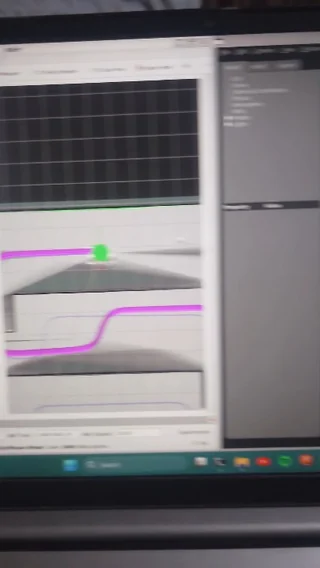
In my previous post was a little showcase of my implementation of the pure pursuit path tracking algorithm for omni-directional robots. One of the missing features is the safe curve approaching. The robot doesn't know the upcoming curve and it won't slow down (enough, at least in the previous implementation). Now I added the feed-forward lookahead that will calculate the slowdown cost based on the total sum of the angle differences of every three pose points in a small set of lookahead points. And the slowdown cost then plugged into the e^-x function and used it to scale the maximum velocity. Now it seems that the robot approaches the curve more smoothly. Additional stuff still needs to be added such as the acceleration limit and the better last pose point brake. If you are interested, you can check it out here over GitHub : https://github.com/E12-CO/iRob_bot_ros2 submitted by /u/TinLethax [link] [Kommentare]
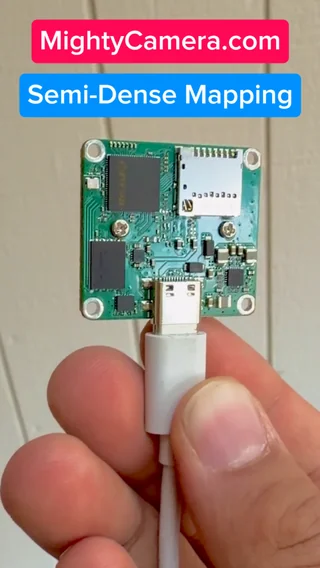
Posting an update here with simplified PCB and robustness. Mighty Camera runs VIO on-device in a tiny package. But for it to be useful, you need things like mapping (and later occupancy, loop closure etc). Here is a demo of lightweight mapping which uses VIO pose from Mighty and generates a semi-dense map on host-side in realtime. It’s early but this will be part of the SDK along with other goodies. submitted by /u/twokiloballs [link] [Kommentare]