Hey everyone, looking for some genuine opinions here. I’m currently a second-year Software Engineering student in Australia and I’ve been seriously considering switching to Mechanical Engineering with a Mechatronics & Robotics major, followed by a Master of Professional Engineering (Mechatronic). That’s a 4 year undergrad plus 2 year masters A few things I’d love honest input on: Is a Mechanical Engineering degree still worth pursuing in 2026 with AI moving so fast, or will a lot of that work get automated too? For those already working in robotics or mechatronics does your degree actually reflect what you do day to day? Was the Masters worth it or could you have gotten into the industry with just the undergrad? Any regrets about the path you took? Appreciate any input from people actually in the industry or going through something similar. submitted by /u/sussypanduh [link] [Kommentare]
46K likes, 939 comments - k3nnygray am June 2, 2026: "I DONT LIKE COMPUTER ANYMORE 🔨 💻 collab with @wgianetta #punk #punkrock #funnysong #musicalcomedy #garagerock".
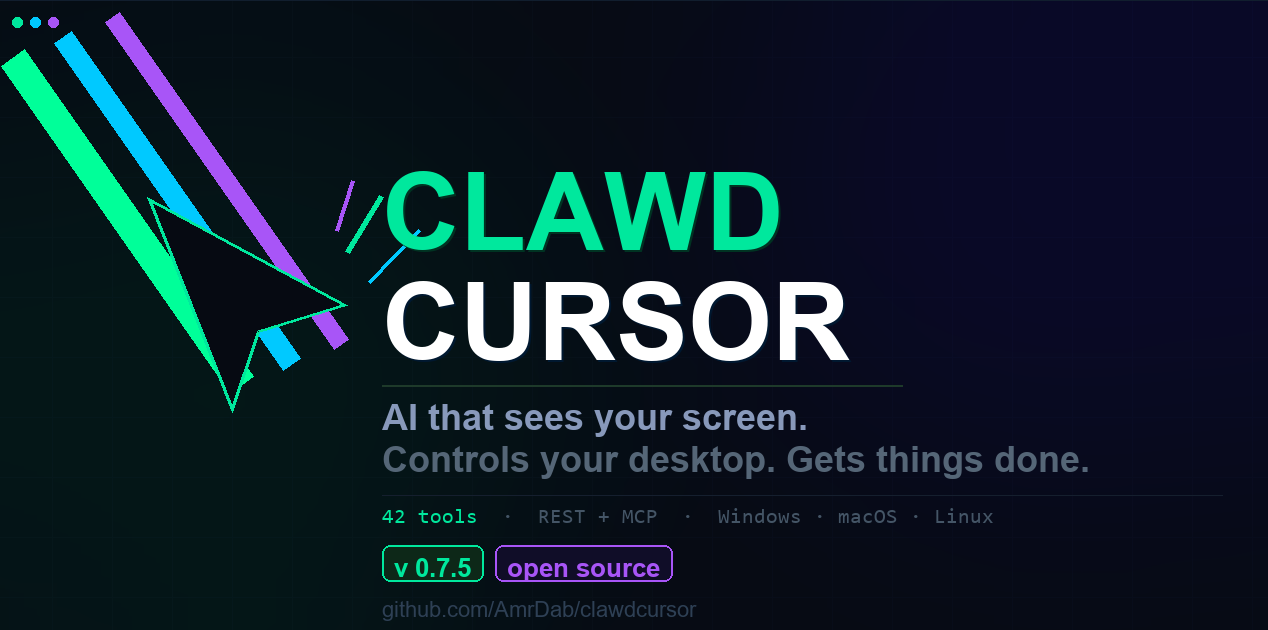
The local MCP server that gives any agent safe desktop control. Any model. Any app. One MCP entry. Local-only. 6 compact tools, single safety chokepoint, no telemetry.


Computer

This is an automated check to get rid of most bots. If you have JavaScript enabled, it should redirect to the real page soon. If you don't, it still should redirect soon, but you can click here if you're fast.

And just like that—surprise!—one AI company bails out another AI company's grift. Google agreeing to rent compute from xAI (cough, "SpaceX") magically makes them eligible for inclusion in the S&P500. Americans, they are looting your life savings, the ones you earned through labour that they are gleefully replacing. Your descendants will never have the chance you had. https://techcrunch.com/2026/06/05/google-will-pay-spacex-920m-per-month-for-compute/

Article highlight. The conclusion frames Bitcoin as capable of serving many roles without belonging to one constituency. It can be money for individuals, capital for companies, collateral for banks, reserves for nations, property for families, infrastructure for markets, and *hope" for people facing economic misery. The preferred path treats the base layer as sacred infrastructure while pushing most innovation into higher layers, applications, custody systems, credit instruments, and capital markets. submitted by /u/zesushv [link] [Kommentare]
If you're still chasing yield in liquid restaking protocols, you're stacking risks like a terrifying game of financial Jenga. The recent Kelp DAO exploit didn't require some nation-state level of cryptographic genius to execute. The attacker simply spotted that the smart contract's withdrawal logic relied on a completely manipulatable spot-price oracle from a single decentralized exchange. I've spent time looking at the raw transaction logs, and the sheer laziness of the math is breathtaking. The attacker flash-loaned millions, artificially pumped the collateral's price in a single block, and the Kelp contract blindly accepted this manipulated, sky-high valuation as gospel truth because it wasn't even built to calculate a time-weighted average price (TWAP). Relying on spot-price valuations inside a single transaction block is like asking a bank robber to appraise the contents of the vault while he's stuffing the cash into a duffel bag. This isn't an isolated incident—it's the exact same architectural rot I see across the entire cross-chain bridge landscape, where a single misconfigured smart contract parameter, a slightly flawed Merkle tree proof implementation, or a lazy developer forgetting to update a simple state machine variable can instantly invalidate the entire security model and allow a malicious actor to mint an infinite supply of counterfeit tokens on the destination chain while the original assets sit completely frozen and useless in the source vault. Complete architectural failure. If you want to stop getting rugged by sleep-deprived devs copy-pasting code, you need to start reading the actual execution traces and mathematical models behind these failures. I've published the full technical autopsy, showing the exact function failures, the exploit payloads, and how this compares to the consensus-level cryptographic proofs used by the Verus Bridge. Stop trusting the dashboards. Start auditing the logic. -James McCabe (ModernCYPH3R) submitted by /u/ModernCYPH3R [link] [Kommentare]