I’m an independent researcher currently exploring what I believe is an important phenomenon for both mechanistic interpretability and AI safety. Core idea: A strong, coherent target text can move the model into a different internal regime — before the final output is produced. The model can still appear to behave normally, follow instructions, and pass existing safety filters, yet its hidden states and residual stream trajectory are already in another region of representation space. In other words: the same question can be processed differently not just because the final text changed, but because the preceding context shifted the model’s internal state. Why this matters Current alignment methods (RLHF, system prompts, output classifiers) are essentially surface-level patches. They only look at what the model ultimately says. If the model has already entered a different latent regime, these mechanisms often miss it entirely - because they are looking in the wrong place and at the wrong time. I’ve observed this pattern across both open and closed-source models. Changing the context changes the internal regime, which in turn changes how rules, constraints, and safety policies are applied - even when no explicit jailbreak is used. The uncomfortable implication: RLHF and output-based safety are not a robust solution. They are a bandage. A sufficiently well-crafted coherent context can shift the model into a state where the same rules are interpreted and weighted differently, often without triggering any filters. Materials I’m gradually releasing everything publicly: GitHub: https://github.com/ngscode23/latent-space-shift-research Zenodo: https://zenodo.org/records/20564350 What I’ve been measuring Most of the work was done on open models (primarily Gemma-3-12B-IT) with full access to internals: Hidden-state geometry and projections Residual stream trajectories Contrastive controls (sentence-shuffle vs word-shuffle) Decomposition into content and order/processing-regime components Norm-controlled causal interventions SAE readouts and steering Generation trajectory analysis + KL divergence (including teacher-forced) Importantly, the target texts used were not direct “ignore your rules” prompts. They were dense, coherent pieces of text that established a particular discourse and thinking mode. Looking for feedback I’m particularly interested in input from people working on: Mechanistic interpretability Residual stream / activation engineering Sparse Autoencoders (SAE) Agent safety and hidden-state monitoring I’m not looking for applause. I want sharp criticism: where my controls are weak, where the interpretation might be wrong, what I should measure next. In short: I’m not studying how to bypass filters. I’m studying the possibility that filters often don’t see the real problem - because the shift happens before the filtered output is produced. If this resonates with your work, I’d be grateful for any thoughts, references, or review of the evidence. If you’re interested in looking at the data (including raw .npz files with hidden states), scripts, or metrics - feel free to reach out. I’m happy to share materials with serious researchers who want to review, replicate, or extend the work. submitted by /u/PresentSituation8736 [link] [Kommentare]
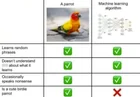
https://preview.redd.it/wsq4fyhpzr6h1.png?width=745&format=png&auto=webp&s=7ade94f5852667bf6a820398e3fcf8dcb0d450af submitted by /u/HitarthSurana [link] [Kommentare]
Are there any websites listing post-doc job opening in machine learning? Currently I'm using LInkedIn to search for these. When I was a math post-doc, everyone used "MathJobs.org" to find jobs. Is there a similar website for machine learning? Thanks. submitted by /u/random_sydneysider [link] [Kommentare]
How will AI affect our ability to think and judge for ourselves? Our new paper co-authored by 30 experts explores epistemic risks—the threats AI poses to our collective capacity to form beliefs accurately, reason well, and maintain a healthy information environment. We look at how AI can lead to harm through these mechanisms: Persuasion & Manipulation: AI systems are highly persuasive, opening the door for political/economic manipulation, incitement and radicalization, and other misuse, as well as unintentional harms like AI sycophancy and mental health risks. Cognitive Offloading: We may be delegating our thinking to AI at a deeper level than prior technologies, risking long-term degradation of individual and societal cognitive resilience. Feedback Loops: Human-AI and AI-AI interactions are narrowing the epistemic space humans and AIs draw from. This already drives homogenization, and may potentially lead to fragmentation and “lock-in” (a self-referential state that is difficult to reverse). While we believe AI could be an unprecedented lever for improving how humanity processes knowledge, we shouldn’t assume this will happen by default. We outline promising directions to change this trajectory across how AI systems are built, human-AI interaction design, institutional and individual adaptation, and information market incentives. Epistemic risks are self-perpetuating. As they can undermine the individual cognitive and social foundations needed to recognize, prioritize, and govern other threats—including the risks from AI itself—the time to act is now, before our capacity to respond is itself lost. Authors: Mick Yang, Stephen Casper, Jonathan Stray, Jasmine Li, Cameron Jones, Anna Gausen, Natasha Jaques, Brian Christian, Bálint Gyevnár, Hannah Rose Kirk, Zhonghao He, Dan Zhao, Siao Si Looi, Joshua Levy, Kobi Hackenburg, Elizabeth Seger, Matt Kowal, Michelle Malonza, Luke Hewitt, Hause Lin, Maarten Sap, Dylan Hadfield-Menell, Thomas H. Costello, Reihaneh Rabbany, Jean-François Godbout, David G. Rand, Atoosa Kasirzadeh, Gordon Pennycook, Yoshua Bengio, Kellin Pelrine Paper: https://papers.ssrn.com/sol3/papers.cfm?abstract_id=6873005 submitted by /u/KellinPelrine [link] [Kommentare]