We can have shared prosperity to a degree that seems unimaginable today.
Frequently asked questions, answered

For 15 years, Steve Braithwaite has driven a 23-foot banana across the country and, on Wednesday, just like hundreds of times before, he was pulled over…

Model any business process as a state machine, collect structured stakeholder feedback, and iterate toward an accurate shared model with any LLM. 100% client-side.

Start free with 600 credits. Generate studio-quality voiceovers with 70+ languages, private history, downloads, and top-up packs — built for creators and startups.

具備 Beam Search 候選排序、受管行動閘道、程序技能學習與後台技能策展守護程序的自律型 AI 代理人系統。
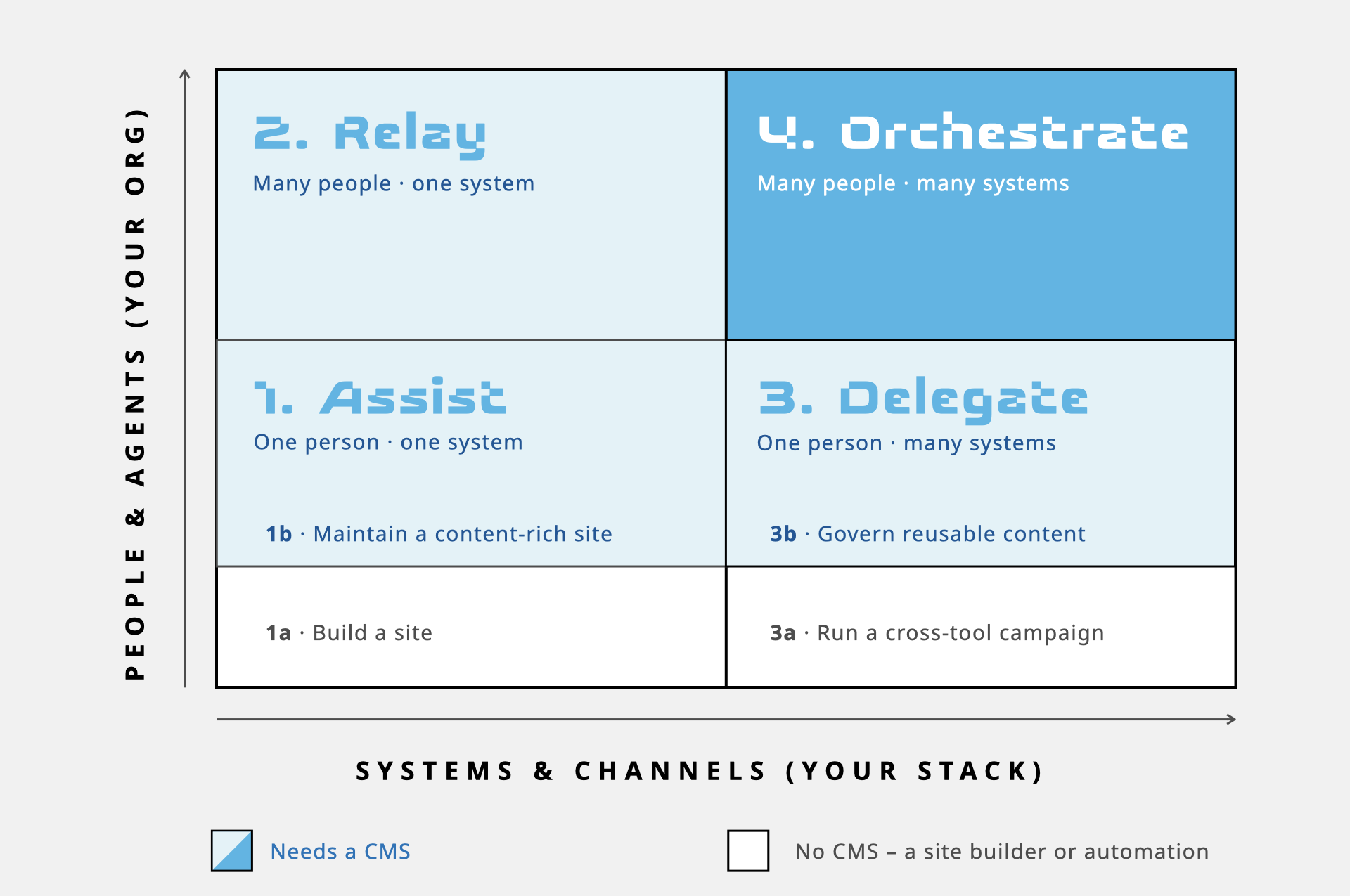
AI is not killing the CMS. It is unbundling creation from control. That may replace the CMS for simple publishing, but it makes the CMS more important wherever content is shared, reused, approved, or trusted across systems.
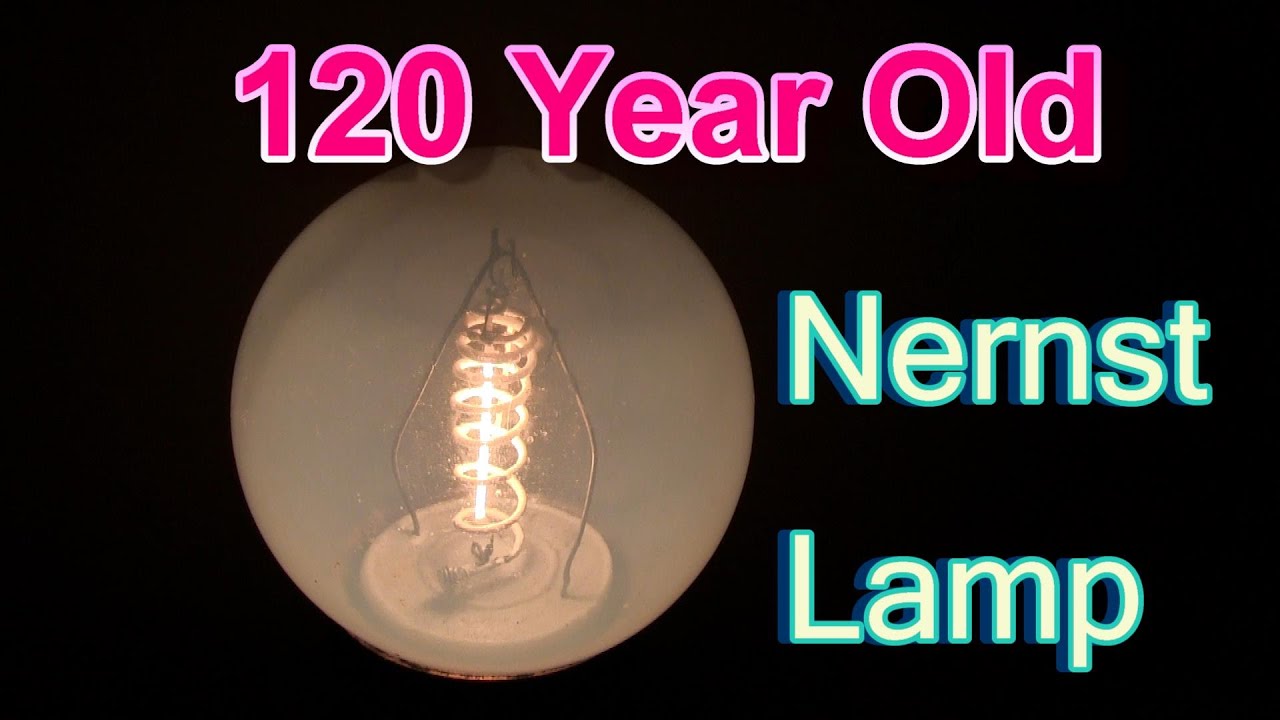
Glassblowing #2: Making a tungsten lamp and (bad) vacuum diode 2026-06-18 Now that I have a way to run electrodes through glass, it's time to do something with that. An old school lightbulb is rather simple: just a thin wire that gets hot enough to glow. However, to produce anything approaching white light, the wire must get to around 2500 C. While conductors like tungsten or graphite can survive those temperatures, they all burn on contact with air. To prevent this, I'll be sealing my lamp in glass under vacuum: no air, no problem. I lied. Some ceramics start conducting once heated, and being oxides, are completely unaffected by oxygen. Open air "Nernst lamps" did enjoy brief popularity in the 1890-1900s, but because of the added complexity of preheating the filament, they were replaced by filament lamps once vacuum pumps became good enough for commercial production. https://en.wikipedia.org/wiki/Nernst_lamp: those lamps. https://www.youtube.com/watch?v=-spTvp5-sf0: Using one. To start, I bent some some 0.3mm diameter tungsten wire into a "U" shape, and twisted a length of very fine 0.012 mm tungsten wire onto the free ends. I cut one side of the lead frame shorter so that the filament would sit diagonally: allowing it to be reasonably long without looping it around which could result in a short. To make the bulb, I partially inserted the lead frame into a glass tube, heated the end with an oxy-propane torch and pinched the glass onto the wires: Once one end was sealed, I connected the other to a rotary vane vacuum pump, and pumped it down while lightly heating the tube to remove moisture. After a few minutes, I headed the middle of the tube to sale the bulb, and pulled off the excess tubing. After the glass cooled, I cut the middle of the wire "U" to separate the leads: Glowing at 4 volts The finished lamp glows nicely between 200 and 400 mA (3-6 V and 0.5-2.5 W): I didn't stretch the filament tight enough and it ended up touching the glass, which creates a dim spot. The glass is borosilicate, so I'm not too worried about cracking, but it's still not ideal. I've tested the bulb up to 10 volts (~7 W), which is bright to light up a whole room, and the creates white light instead of the orange-ish color seen at low power — but it also gets very hot and won't last very long. In addition to color, the filament's temperature also affects the bulb's efficiency: a low temperature filament emits the vast majority of it's light in the infrared. A hot filament emits more visible light per watt, but tungsten evaporates faster leading to early failure. This tradeoff between lifespan and color/efficiency is why most light bulbs have rather short lifespans... or at least they did until we stopped using filaments. As an experiment, I ran a length of wire through a hole in the glass tube before evacuating it: When making seals like this, first melt a capillary tube (~1 mm) onto the tungsten wire before sealing it. This ensures good contact to the metal and protects the wire from the torch flame. The idea was to observe thermionic emission: when the filament is white hot, the atom's have enough kinetic energy to knock electrons into the vacuum. If the cold electrode is at a positive voltage, these electrons allow a small current to flow. If it's negative, the free electrons are repelled and nothing happens. While a diode isn't terribly exciting, it's the basis of more interesting devices like triodes, X-ray tubes and CRTs. ... and it's terrible: only conducting 1 uA with 700 V of bias between the filament and anode. Reverse biased, it conducts around 50 nA, mostly from the photoelectric effect. I suspect this is the result of two problems. Tungsten wire contains trapped gasses, which are released when it's heated. To avoid ruining the vacuum, the filament should be run while pumping down the tube, which I forgot to do. Second, the anode area is really small: Its ~6 mm of 0.3 mm wire, several centimeters away from the filament. Most emitted electrons will miss the anode and create a negative charge on the glass, which impedes current flow. Real vacuum diodes surrounding the filament in a metal tube, but I didn't do that because I wanted it to work as a light bulb. Just for fun, here's a photograph of my spool of filament wire, lit by the bulb made using it: Related: /projects/glass/1/: Considerations for sealing metal through glass http://www.rhunt.f9.co.uk/Glass_Blowing/Filament_Lamp_A/Filament_Lamp_A_Page1.htm: another homemade incandescent lamp
Hello I'm currently 26 I have 3 years of experience doing general IT help desk work and web development. I want to move on to having a deeper understanding of things and securing them. I have a undergrad in IT. I want to work with security but not only apps and networks yes this interests me but I'm also interested in the system or device itself how that's secured. Alternatively I am also interested in how a computer works, how to solve real problems with it, how a computer processes and sends data physically and then through a network and how to build computers themselves and as well as computers in bigger devices like robotics and how build bigger systems like a robotic arm. So I'm a little confused on if I should do my masters in computer engineering and add on cybersecurity electives or should I do computer science and on hardware or embedded systems electives. I do have the option at my school of double majoring as well but I think that would be to much work especially because if I do CE i have a big foundation to cover. https://catalog.uhcl.edu/preview\\\_program.php?catoid=25&poid=7072 https://catalog.uhcl.edu/preview\\\_program.php?catoid=25&poid=7074 submitted by /u/Colfuzi0 [link] [Kommentare]
...in which we find out how to make a sorted index when the data doesn't fit on a single DynamoDB partition.
The DARPA Lift Challenge aims to shatter the heavy lift bottleneck, seeking novel drone designs that can carry payloads more than four times their weight, which would revolutionize the way we use drones across all sectors.