
Comic-book storyboard exposing how VC term sheets, board seats, dilution rounds, and misaligned incentives trap founders. Real data, dark humour, and a clear-eyed alternative.

Founded in 1920, the NBER is a private, non-profit, non-partisan organization dedicated to conducting economic research and to disseminating research findings among academics, public policy makers, and business professionals.
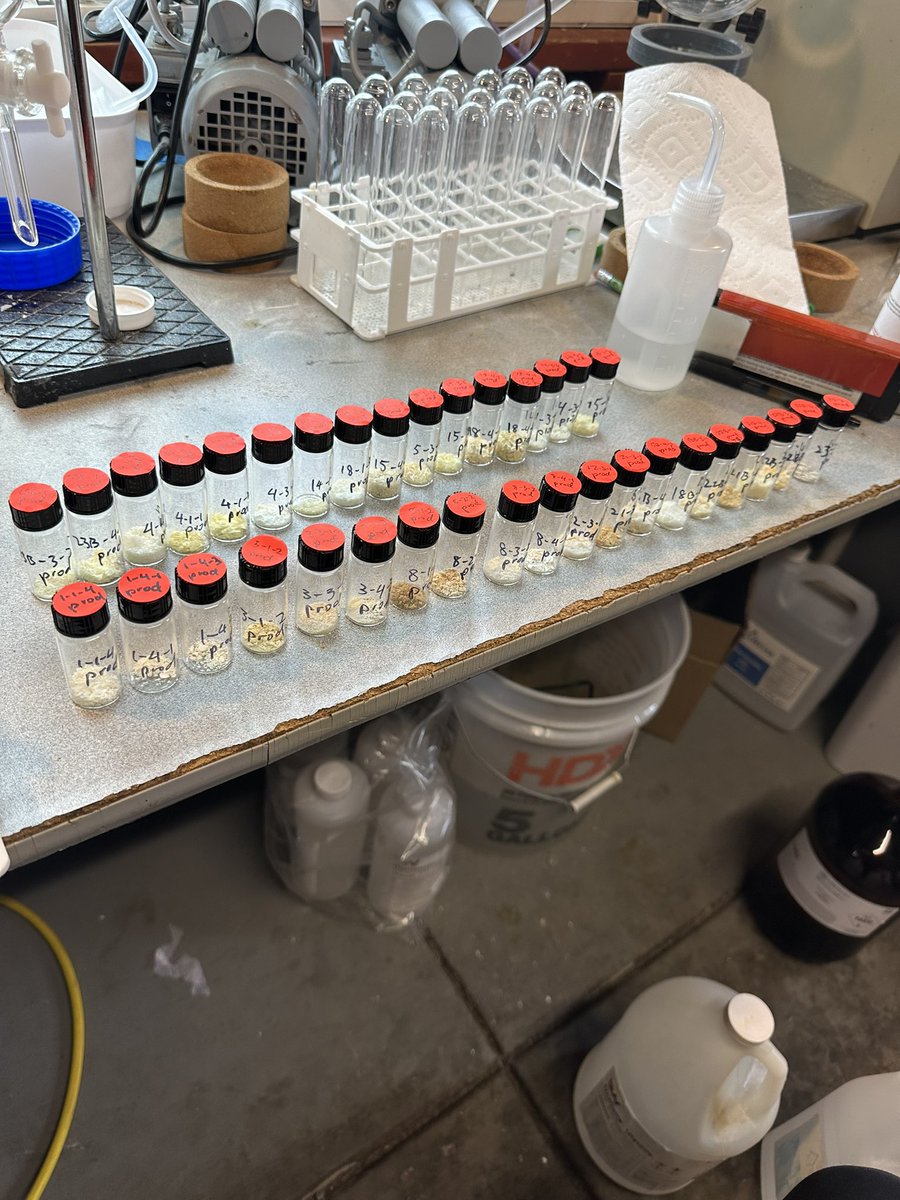
Douglas Yao's Pace Pharmaceuticals published preclinical data for PAC-832, a garage-built GalR1 antagonist for Alzheimer disease that remains preclinical.
"All opinions expressed here are my own and do not represent the official views of my employer. On the other hand, I obtained approval from my employer for presenting at the academic conference (JSME). Basically, the information provided will be limited to what is stated in the announcement." We have developed a spatial dimension measurement device and motion capture (orientator) using airborne ultrasonic waves. We achieved spatial measurement by using 3 ultrasonic transducers and 3 ultrasonic microphones. The measurement principle is based on 3 sets of 3-side measurements. We acquire plane equations of microphones and transducers, and calculate the orientation angle and direction based on the surface normal vector. It is expected that this device can instantly measure the positional relationship of pipes, etc. at plant construction work with displaying the 3D data on PC in real time.

Your AI SDR that never sleeps. AI Lead Genr finds, qualifies, and personally reaches out to your ideal B2B customers 24/7 — your team only talks to people ready to buy.

A deep dive into Clean Code's impact, its shortcomings, and what modern developers should do instead.

This is a guest post by Mateusz Maćkowski and Marek Grzelak, co-maintainers of cot.rs and speakers at Rustikon 2026. You can watch their full talk here. In the very beginning, all we wanted to do w

Research shows that private equity portfolios skew toward smaller, lower-quality companies, increasing downside risk. Ben Inker and John Pease explain how to hedge the resulting bias more effectively.

A real bug, a three-line fix, and a one-line rejection: what reaching for ‘AI slop’ as a reflex gets wrong about verification, scale, and trust in open source.

In the summer of 2020, I took a 3 months sabbatical in order to finish an album. The experience deeply transformed how I make music – I now know I can make ...

Apple AirDrop and Google/Samsung Quick Share are proximity file-transfer protocols used by over five billion devices, yet their application-layer security properties remain largely unstudied because both stacks are proprietary and undocumented. Both protocols are reachable from wireless proximity without any prior pairing and process complex serialized content (binary plists, CPIO archives, Protocol Buffers, UKEY2 handshakes) inside privileged daemons, making them attractive zero-click targets across multiple operating systems. We perform the first cross-platform reverse engineering and protocol-aware fuzzing study of both stacks. We reconstruct AirDrop's seven-layer state machine and DVZip adaptive compression from binary analysis, build AIRFUZZ, a protocol-aware fuzzer that mutates pre-compression representations, and complement it with targeted hand-written analyses of Samsung's Quick Share service and Google's Quick Share for Windows. We discover six vulnerabilities (V1-V6): three pre-authentication issues in macOS/iOS AirDrop (V1: Swift fatalError DoS in the HTTP path router; V2: unbounded XML plist recursion in Foundation; V3: NULL dereference in Network.framework's HTTP/1.1 parser), two protocol-layer flaws in Samsung Quick Share (V4: pre-authentication OfflineFrame dispatch; V5: D2D encryption bypass for three frame types), and a heap use-after-free in Google Quick Share for Windows (V6) for which Google awarded a bounty. We responsibly disclosed all findings, and Apple, Samsung, and Google have acknowledged the reports.