

New mortality data from the federal government suggests that life expectancy probably hit another record high in 2025, as death rates have continued to fall since the height of the Covid-19 pandemic.

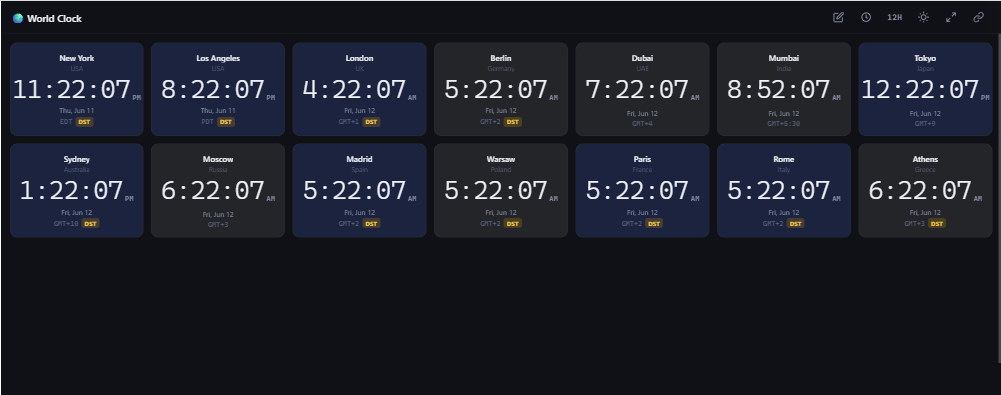
Flip clock, digital, and analog modes. Auto-detects your timezone. Great for TVs, second monitors, and ambient displays.



AI code completion tools, such as Github Copilot, provide students with code suggestions to help them write programs. However, recent qualitative studies suggest that students fail to critically evaluate these suggestions. We present Clover, a code completion tool that logs students' interactions with code suggestions and additionally offers attention checks to probe reflective engagement during programming tasks. We also develop a taxonomy of behavioral interaction metrics for AI-assisted programming, informed by literature. We analyzed relationships between interaction patterns, engagement with attention checks, and task performance. We observed that higher rates of tab accept were associated with lower attention check performance, while increased dwell time was associated with higher attention check performance. We conclude by discussing how programming process data and attention checks might support reflective engagement in AI-assisted programming.




For open-weight LLMs, how practical is it to study defenses against post-release fine-tuning that weakens refusal or safety behavior? I've been seeing “uncensored” or “heretic” variants of new models appear very quickly after release, which raises a question I’m curious about: is fine-tuning resistance a meaningful safety goal for open-weight releases, or is it too narrow because determined users can always modify weights, switch models, or use other workarounds? And to a larger extent, is current safety training even worth the cost and effort if it takes 30 minutes and an automated script to break the model? I’m not asking about a specific method, just the threat model. What would count as a useful practical win here? For example, would increasing attacker cost or making safety removal less reliable be valuable, even if perfect prevention is impossible? Curious how people think about this from a model release, governance, and AI safety perspective. submitted by /u/Aaron_Rock [link] [Kommentare]


There’s a key piece of magic in the engineering of the Internet which you rely on every single day. It happens in the TCP protocol, one of the fundamental building blocks of the Internet. TCP…