 P
↗
P
↗
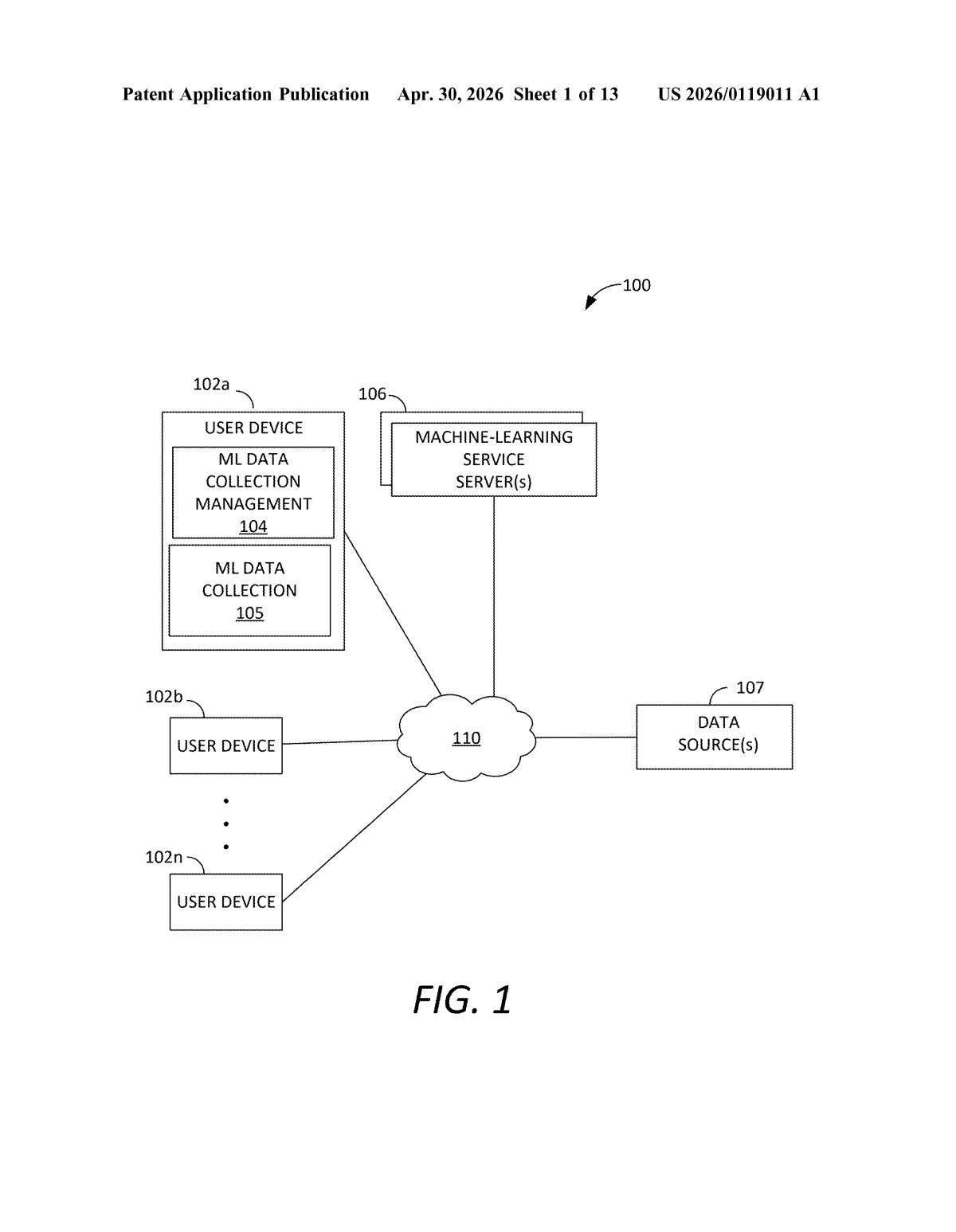
Microsoft has filed a patent for a built-in Windows toggle that lets users control, pause, and manage AI data collection. Here's what it means for your privacy.
 A
↗
A
↗
Excited to share some of my own work here :) KVarN is our new KV-Cache quantization method. In very brief, we combine Hadamard rotations with variance-normalization on both axes of the K and V matrices, then round to nearest. Simple, but works very well, especially for decode-heavy test-time-scaling settings (reasoning, code-gen, agentics). We get 3-4x compression at virtually no accuracy drop (mostly 0-1%) on tough benchmarks like AIME24 as well as a speed-up over fp16 baseline in vLLM (in contrast to other recent KV-Cache compression works). Behind it is an analysis of where quantization errors come from and have the biggest impact, especially in the error-accumulating decode setting: 1) fixing large errors is disproportionally useful (if you had a fixed MSE budget that you could ~fix, you should spend it on few big errors, rather than many small) 2) These big errors are mostly caused by bad token-scales (hence the normalization). Paper: vLLM implementation: https://github.com/huawei-csl/KVarN submitted by /u/intentionallyBlue [link] [Kommentare]
 R
↗
R
↗
Most explanations of TPUs and systolic arrays are either hand-wavy diagrams or papers. I wanted to see the thing actually run, so I built it. TinyTPU is a 4×4 weight-stationary systolic array in real SystemVerilog, compiled to WebAssembly, with a step-by-step browser visualization. You enter two matrices, hit run, and watch the actual hardware execute: weights loading into PEs, matrix A streaming in diagonally (the "skew" that makes systolic arrays work), partial sums accumulating down the grid, results draining from the bottom. It has three levels: L1 - isolate a single MAC cell, watch one multiply-accumulate happen L2 - the full 4×4 array executing a real matmul L3 - tiling: what happens when your matrix is bigger than the hardware Nothing on screen is faked. The visualization reads state directly from compiled RTL. If you're trying to understand how matrix multiply maps to hardware why TPUs are efficient, what "weight-stationary" actually means, why the diagonal stagger exists this might click it for you in a way papers don't. Repo: tiny-tpu Live demo: Live If this project interests you please do star the repo, if you find something needs improving open a PR, I hope ya'll check this out and give me some feedback 🙏 submitted by /u/Horror-Flamingo-2150 [link] [Kommentare]
 P
↗
P
↗
Build dynamic workflows from simple HTTP stages. Schedule execution, persist state, inspect every stage, and control workflows from the web or API.
 B
↗
B
↗
Nine banks have been offered access to GPT 5.5 Cyber, as fierce rival Anthropic has blocked previews of its tool.