

How did it happen? More information below! https://x.com/lookonchain/status/2074325873503986103 submitted by /u/b4basit [link] [Kommentare]


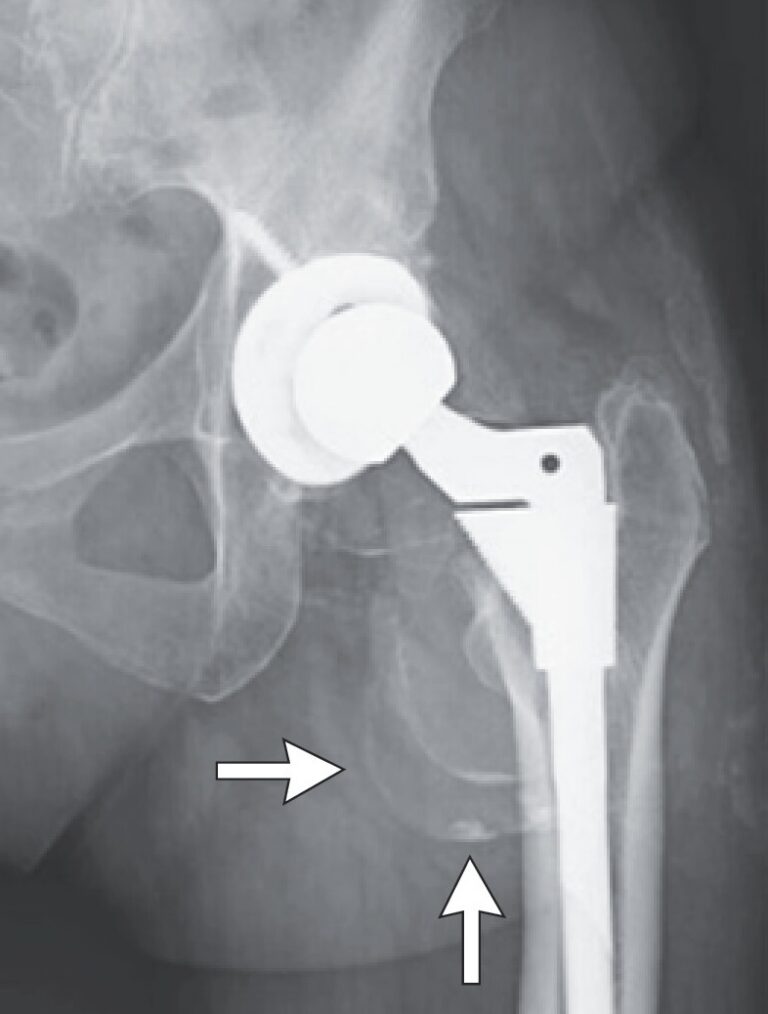
Doctors find grey fluid and dead, metallic flesh inside poisoned woman's hip.

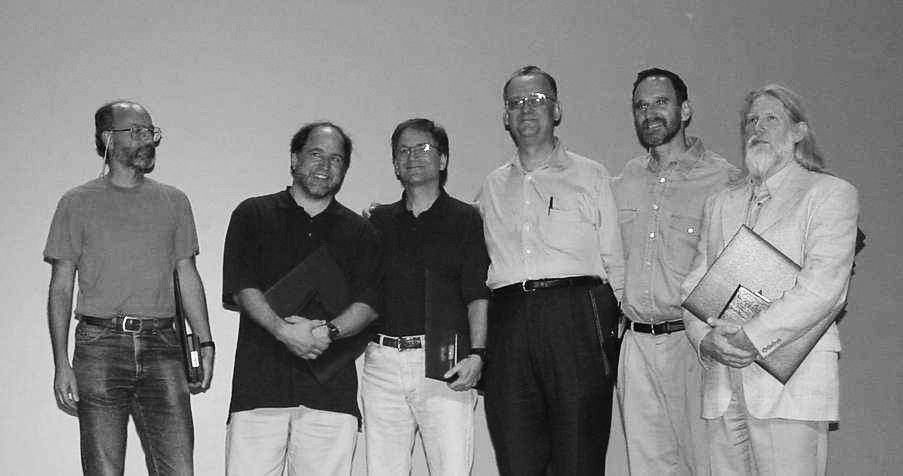
Contents Intro: The Day Cryptography Changed Forever Part I: How David Chaum’s eCash Spawned a Cypherpunk Dream Part II: Hashcash or How Adam Back Designed Bitcoin’s Motor Block Part III: If Bitcoin Had a First Draft, Wei Dai’s B-Money Was It Part IV: With Bit Gold, Szabo Was Inches Away From Inventing Bitcoin Part V: How Hal Finney’s Quest For Digital Cash Led To RPOW (And More) This article by Steven Ellis was published in his Medium blog.
This post is backported from my old personal blog, originally published 11 October, 2014. It's similar in theme but very different in focus than my r…
Today I was just casually browsing some jobs with tags [machine learning] on one of those large popular job-sites. What I am seeing really had me astonished. I want to check with Reddit whether I am hallucinating. A non-FAANG/non-Deepmind/.../non-Anthropic industrial automation company is hiring people to work on ML for robots (the latest hot topic). Fine. But then I saw their laundry list of job requirements ("you must meet these"), which include: Deep expertise in LLM, VLA, VLM, action transformers Deep expertise in robot dynamic and kinematic modelling (forward, inverse kinematics, trajectory generation, planning), sensor fusion, model predictive control, reinforcement learning Deep expertise in CUDA GPU programming, FPGA hardware acceleration Familiarity with latest software engineering best practices in Python3 and C++23 Familiarity in one or more of popular ML framework Have top publications in one or more typical ML and robotics conferences This is before they go off listing familiarity with a set of standard softwares/simulators, one of which is called RLib, something I've never heard of. Oh and of course they had these 3+, 5+ "non-academic" experience requirements. I forgot which is which. I was just sitting there confused. Then I checked several more jobs, and it was more of the same (except for some banks). I remember there was a talk by Terence Tao where he divided mathematician into two camps, the analysts and algebraists. He said even among top mathematicians, it is exceedingly rare to find someone who possess deep expertise in both, as each tends to require a different mode of thinking and each is infinitely deep in terms of specialization, theory and insights. And here we have a bunch of ML companies treating these infinitely deep academic fields ranging from robot dynamic and kinematic modelling to large language models like some bizarre MMORPG video-game scenario where you need to be a warrior archer who is also a priest mage. Who are they even hiring, lol? submitted by /u/NeighborhoodFatCat [link] [Kommentare]
After three straight red quarters and the worst monthly close since September 2024, BTC is back above $63K and stringing together green days. July has historically been one of Bitcoin's better recovery months: green in 9 of 13 years since 2013, with an average return of around 7%. But history also shows July often brings relief without a new bull leg following. The key variable this cycle that didn't exist in previous ones: ETF flows. US spot Bitcoin ETFs posted their worst month on record in June, with around $4.5 billion in net outflows. A green streak means less if institutions are still pulling capital out. So the debate is whether 5 green closes is momentum building or just the market catching its breath before the next leg down. What's your read? relief rally or real shift? submitted by /u/eToroTeam [link] [Kommentare]

Erstellen Sie professionelle Angebote und Verträge mit natürlicher Sprache. Drag-and-Drop-Bearbeitung, Ein-Klick-Freigabe, elektronische Signaturen und Zahlungen — für Freelancer und Studios.

Disguising information in plain view is a toy problem I'm regularly drawn to, usually by inventing ridiculous methods to store a key. I've tried many approaches, like repurposing the nanoseconds of ext4 timestamps, broadcasting via modified Bluetooth mouse firmware, modifying a home appliance, and recently by modifying Exif metadata. Rather than adding or modifying metadata or image noise, metadata can be reordered. Exif tags are encoded lowest-first, but readers do not enforce this. One Sony A7R photo includes 63 tags, offering log2(63!) order permutations, or 289 bits, larger than an AES-256 key, simply by rearranging existing content. In practice Exif reordering isn't great, as readers print warnings for misordered tags, and tags are constrained by groupings, but implementing it introduced me to Lehmer code, which offers a way to encode permutations, and revealed its applicability to "free storage" hiding in seemingly unordered collections appearing everywhere. Lehmer is straightforward to understand and easy to implement. For each position in a unique sequence, count later items smaller than the current item. The Lehmer digits for (A, B, C, D) are (0, 0, 0, 0), while for (D, C, A, B) they are (3, 2, 0, 0), with the maximum digit decreasing by one at each position, alongside its required storage. Here it is on a 13-item sequence, yielding enough digits to encode a 32-bit number: Anywhere a unique sequence can be recovered, Lehmer can extract a bitstream. Such a sequence occurs on this page, which contains unique sentences, or bits worth of Lehmer digits: It's difficult to avoid noticing these sequences after spotting one. In computing, most collections which are logically unordered assume some order during serialisation. Here is a CSS stylesheet: The order of the selector lists, properties, and rules is mostly ignored during evaluation for non-overlapping rules, yet a file order exists and can be queried via DOM. Wikipedia's stylesheet has 1,003 rules with 1,950 selectors and 2,731 properties. It is possible to embed over a kilobyte of data just by reordering the rules, and even more by reordering selectors and properties too. A kilobyte is enough to hide malware behind a tiny and innocuous decoder. Who said an Internet worm couldn't be written in CSS? Here's a benign demo encoded in this page's example CSS block: Lehmer coding seems to have a natural home in file watermarking. Otherwise identical tarballs and ZIP files might have their directories reordered in a manner easy to miss during extraction, and the watermark may even durably transfer to a target filesystem, such as by dictating the order of the ext4 birth timestamp. Transferability is possible in other ways. Consider how a browser might behave during printing when rendering HTML or an SVG where absolutely positioned elements have been reordered. At least with Firefox on Linux for SVG, the PDF output follows the input order (first, second). For program binaries, -ffunction-sections along with a GNU linker script could reorder functions in a binary, or perhaps transform a table of static strings used for rendering error messages. Imagine working with a backend API that appears to generate JSON properties or Protocol Buffer fields in a random order. A first thought might attribute this to a hash table in the implementation, but what if the ordering was instead exfiltrating data? In the case of Protocol Buffers, few engineers would even examine the physical representation. A spy armed with only a Javascript interpreter must derive a new mutable DHT key each day to which intelligence is published. Their handler instructs them to use Lehmar on the list of article titles appearing on the BBC News web site at midday, of which there are currently 76 (= 369 bits). The world is glad I don't write spy movies. A fun application might be to bridge Lehmer to the real world. Take this innocuous mug rack advertised on Amazon: Ignoring the non-unique nature of these particular mugs, a vision model could identify bounding boxes, and an order derived from the average lightness or hue of each box. Such a rack would offer 44 bits, not quite enough for a good password by itself. This would make a fun mobile app to build. Next time you visit someone's home, be sure to keep an eye out for any extra large racks filled with unique mugs. David Wilson · dw@hmmz.org · Sun 5 Jul 20:31:09 2026