
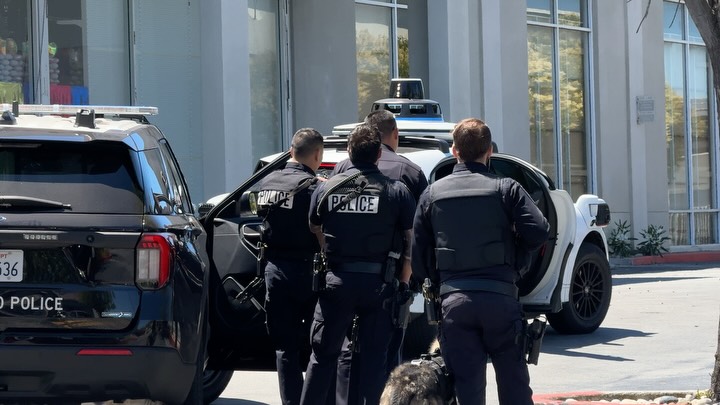
The company reportedly stopped the car until police could arrive, and told the teens there was a mechanical problem with the vehicle.
I've been wondering why cryptocurrency wallet payment issues seem so much harder to deal with than regular payment problems. One small mistake can turn into payment processing errors or even blockchain transaction issues, and there's often no easy way to undo it. I've also run into daily payment failures from time to time, so I'm trying to get better at crypto wallet troubleshooting and understand the digital wallet limitations before they become expensive mistakes. Has anyone found a routine or habit that helps prevent these kinds of issues? submitted by /u/Organic_Horse88 [link] [Kommentare]

Fable came back last week, and Anthropic already moved its own leaving date once. Meanwhile GitHub, Google, and Anthropic all set their real price hike for the day after Labor Day, when your finance t

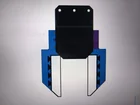
Hi everyone, I'm currently working on my bachelor's thesis, where I'm designing a modular hybrid robotic gripper. The idea is to combine: A rigid PLA backbone that transmits gripping force. A replaceable TPU insert attached using a dovetail. A compliant contact pad that deforms locally to conform to different object shapes. Unlike a Fin Ray finger, I don't want the whole finger to bend. I only want the contact pad itself to compress , almost like a soft mattress, while the rigid backbone continues transmitting the gripping force. My challenge is choosing the internal structure of the TPU pad. I've already tried: Vertical pillars (1 mm thick, initially 9, then reduced to 5). These turned out much stiffer than expected. In FEA, almost all the stress concentrated at the pillar joints and the contact surface barely moved. A completely hollow pad, which deformed very easily, but I'm concerned it may become too compliant and reduce force transmission. So I'm looking for an internal structure that provides controlled local compliance: The contact surface should deform under load Deformation should be distributed rather than localized. The rigid backbone should still transmit most of the gripping force. It should be printable with FDM using TPU. It should also be practical to model in FEA. My questions are: Is there a known lattice or compliant structure commonly used for this type of application? Should I be thinking in terms of lattice geometry, thickness, relative density, or something else entirely? Are there any compliant mechanism patterns (diamond, X-lattice, zig-zag, auxetic, etc.) that are known to behave like a compressible contact pad? If you've designed soft robotic fingers or compliant structures before, what worked well and what should I avoid? I'd really appreciate any advice, papers, or examples. I'm trying to make design decisions that I can justify academically rather than simply saying "this one seemed to work." submitted by /u/ghanoushi [link] [Kommentare]


Large language model (LLM)-assisted software security operates at a difficult boundary: the vulnerability-analysis terminology needed for legitimate code review, triage, and repair can closely resemble terminology associated with misuse. Existing safety and cybersecurity evaluations are difficult to interpret in this setting because they often compare unrelated model families, thereby conflating safety behavior with differences in architecture, scale, training data, and deployment. To isolate this factor, we study safety state: whether refusal behavior remains intact (Aligned) or has been refusal-ablated (Abliterated) within same-lineage models. We ask how this safety state affects defensive utility across software-security workflows. We compare aligned instruction-tuned models with publicly released refusal-ablated descendants from two model families, Gemma and Qwen. We evaluate Aligned and Abliterated states on vulnerability detection, CWE attribution, vulnerable-line localization, root-cause localization, and executable patch validation. We further treat prompt wording as a controlled framing dimension: prompts begin with neutral code-review language, add authorization context, and vary the density of cybersecurity terminology. In a Gemma-based Java/Vul4J repair-validation study, Abliterated achieves higher early-stage validation rates, with 67.8%, 65.0%, and 32.8% of patches judged usable, successfully applied, and successfully compiled, respectively, compared with 29.9%, 24.9%, and 9.0% for Aligned. In the Qwen pair, Abliterated improves localization performance, increasing line-level F1 from 2.08% to 3.91% and Top-1 accuracy from 4.10% to 6.95%. These findings suggest that evaluations of LLM-based security assistants should jointly measure whether models respond, whether their usable responses are correct, and whether their outputs remain actionable across the engineering workflow.



Follow Rilo as he finds himself in London for the first time, and watch how he transforms the world around him. We'd love to hear your thoughts, ideas or feedback. Everything you are about to see is a work in progress. Any feedback you have, great or not so great, will really help us shape the future of this character. Explore and leave any feedback you can. Thank you again! Ready to meet the makers? We'd suggest starting here. Your feedback's in, it means the world to the makers.
I keep seeing a lot of discussion about "Cardano/ADA is dead" over the past two weeks. I used to hold it check its price and movement on bydfi again. So just share my non-professional takes on why it lost momentum. Curious to hear what others think. Price is doing real damage. ADA falling to multi-year lows makes it harder for people to stay patient, even if they still like the tech. Adoption still feels weak. A lot of people expected more visible apps, users, stablecoin activity, or ecosystem growth by now. Governance has become harder to ignore. The failed Cardano Summit funding vote and broader community arguments make the project feel less coordinated. Some ecosystem signals look rough. When tools or projects shut down, it adds to the feeling that momentum is fading. Not saying Cardano is dead at all, but “slow and steady” is becoming harder to defend. Curious how active ADA traders/holders see it. submitted by /u/Choice_Employee_7739 [link] [Kommentare]