This question is related to topics like language+ models (including multimodal) and things like "circuit" analyses. I think something related might come up in my work (factuality guarantees for model outputs) and I'm trying to orient to the SoTA. I found this old post on trying to deduce, for instance, whether a Transformer-based model "knows" which word a token is in. Even in this simple example, I noticed some meaningful problems (I detail in a footnote1 to not derail my question) - and I've heard that circuit research is pretty fraught. The post claimed to train a logistic regression classifier. What I'm curious about is, how do you balance between the capacity of this probe, and the underlying network? Specifically, I would like to know: Is there theory which grounds inquiries of "what you can learn" in concrete terms? (Perhaps in terms of provable guarantees about overfitting? Or are there Nyquist-type guarantees available about sampling based on frequencies of patterns in language corpora - i.e., can we say we've "seen enough data" to know the network can reliably do something in all cases?) Has any of the existing work factored in attempts to label the "difficulty" of examples? (Perhaps by ensembling some training of models and looking at accuracy on them. I realize bootstrap is insanely expensive for language models due to training costs.) Problems - well, first of all, the number of possible words is so small that I suspect performance looks unrepresentatively good. The classifier seems to gain in performance for words 5/6 after weakening, but that might just be learning "all sufficiently 'extreme' tokens should be words 5 or 6." For another, despite the claim advanced in the article (Nanda concludes the network essentially does learn positions), I happen to have screenshots from recently playing with Google Gemini and asking it how many "r"s and other letters are in Google. Not only did it answer incorrectly - it claimed 1 - but more worryingly, it spelled out G-o-o-g-l-e in answering. This belies a hypothesis of "it's incapable of learning exactly how to decompose tokens, so this question was unfair from a model capacity standpoint" but *still* leads to an incorrect answer! submitted by /u/RepresentativeBee600 [link] [Kommentare]
Hi guys, today is the deadline for acceptance notification from NeurIPS. Has anyone hear back already? Do they send the rejection letter later? submitted by /u/LocksmithAlone242 [link] [Kommentare]

Hello, The problem looks simple at first, but it really isn't. Building a media stack that behaves the same whether it runs inside the robot, on your laptop, in simulation, on your phone, or on a distant powerful machine (all with short, repeatable delays) is anything but trivial! Sharing here the excellent blog post on the media stack behind Reachy Mini: https://huggingface.co/blog/pollen-robotics/reachy-mini-media-stack submitted by /u/LKama07 [link] [Kommentare]
How does the ML research community feel about evolutionary algorithms? Should I do a PhD in this area? Quick remark: I know some people in the ML community dunk on evolutionary algorithms because there’s often a better optimizer, but they do have their place, which is what researchers in my community aim to quantify. Background: I just finished my first year as a mathematics master’s student working on the theory of evolutionary algorithms (EAs)/randomized search heuristics. I’m fortunate to be on a research assistantship and have already coauthored several papers in strong conferences in our area. I’ve always been more interested in classical ML/deep learning theory but haven’t had anyone to work with. Researchers in my field, including my advisor, occasionally publish in mainstream ML venues such as AAAI and NeurIPS, but it’s primarily the EA venues. For a while now, I’ve been independently studying deep learning and statistical learning theory, and I have found intersections with my current research that I plan to pursue for my thesis. With my current CV, it’s looking like I could get into some of the best PhD programs in my area, but I’m wondering if I should try to go to a more ML-centric PhD, even if it means going to a less prestigious institution/group for the sake of my career. I’m not sure yet what I want to do after my PhD and a possible postdoc, but I want to keep myself competitive for top-tier opportunities. What implications might doing an EA PhD have for my career? With strong EA publications, could I get into a good ML PhD program if I pitch myself appropriately? Could staying somewhat outside mainstream ML actually be a good career move, given how competitive and crowded ML has become? submitted by /u/NullRecurrentDad [link] [Kommentare]
Hello everyone! I am trying to figure out if a main conference registration gives you access to the expo (companies booth) and the expo talks? Expo are happening on July 6th the same day as tutorials. But for tutorials you need to be registered. Do you also need to have a tutorial registration to be able to visit companies booth? Looked on the icml webpage but couldn’t find anything definitive( I did require a free expo badge when I registered ) Thanks submitted by /u/DazzlingPin3965 [link] [Kommentare]
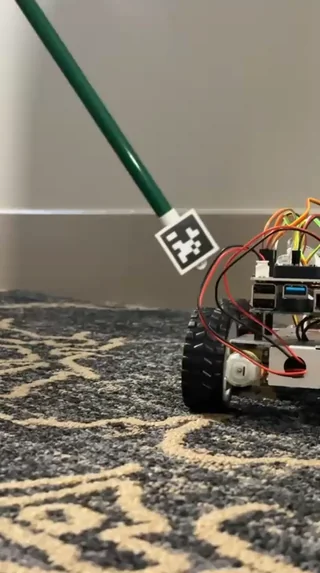
Been working on a PiCar-X build on a Raspberry Pi 4B. v1 goal: detect an AprilTag (36h11 family, ID 0), steer toward it with a PID controller, drive forward, and stop at a configured distance threshold. Toggle it on from a browser dashboard, 3-second countdown, and it goes. I built this entirely with Claude Code. It’s been a massive productivity boost while balancing a full-time job, and the process of building agentically has been a great learning experience. WebSocket concurrent send corruption The broadcast coroutine and the sensor push loop were both calling send_json() concurrently. At await boundaries they interleaved, Starlette threw, and the client was silently dropped from the send set — meaning the toggle-off confirmation never arrived and the button stayed stuck in active state even after the car stopped. Fixed by replacing the shared client set with a per-connection asyncio.Queue and a single drain task per connection. Camera color inversion that didn't respond to the obvious fixes BGR888 didn't fix it. RGB888 + cvtColor didn't fix it either. Root cause: capture_array() on this Pi hardware returns RGB regardless of the format name, and this platform's libjpeg encodes from RGB input correctly without any conversion. One-line fix once the actual data layout was confirmed via a frame diagnostic log. Had to fully remove Vilib It uses a Picamera2 internal API (allocator) removed in 0.3.36 — crashes on any camera restart after a chase session. Server now owns Picamera2 directly for the full session lifetime. What's next v2 candidates on the list: distance-proportional speed, latching stop behavior, camera tilt tracking, and operator override during chase. Stack: Raspberry Pi 4B · PiCar-X v2.0 · Picamera2 · pupil-apriltags · FastAPI · Python 3.13 submitted by /u/okineedaplan [link] [Kommentare]
Results are almost here. Good luck to everyone waiting for the final decision 🙂 submitted by /u/Sea_Muscle_4281 [link] [Kommentare]
Dear Folks, I have created multiple content on Machine Learning(work in progress), and they are free. I am a data scientist and a post grad degree holder in AI/ML. To help the machine learning community with important Machine Learning Concepts, I have created multiple long form videos, and structured topicwise digestible contents structured as playlists for learning. If you go through the first two playlists: Introductory Machine Learning Concepts Probability Foundations: Univariate Models You might find helpful content, I have tried explaining with intuitions, derivations, and this is work in progress. For code implementations, scikit learn website has great content on them as well. In total they have 60+ topicwise videos so far, and I think they have the potential to help folks a lot in starting with concepts, or getting with mathematical concepts, or whether you are preparing for an AI/ML/Data job interviews etc. When I sat for my interviews, I was grilled on my project, but majority of questions from my project tested more on foundational concepts and there know how’s. These are FREE content on youtube, and hope it benefits and helps the ML community. submitted by /u/Negative_War_65 [link] [Kommentare]

as in the title, my goal is to predicting failure and RUL of machine, dataset is timestamp and when machine is failure it will labeled with 1 that only have 56 https://preview.redd.it/plbydmenmm6h1.png?width=1205&format=png&auto=webp&s=2fefe3cc2e3fe554b81c9e0b4012c5345e73ec3f From this data im ditching operating hours and humidity because it didnt show correlation for machine failure, what algorithm or deeplearning suit for it? submitted by /u/False-Seesaw-1899 [link] [Kommentare]
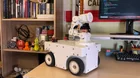
I designed and made a fully open-source mobile robotics platform for my robot arm, making it a whole robotics manipulator platform. The arm has 5 degrees of freedom, and the platform is 4WD with differential steering. The plan is to upgrade to mecanum wheels in the future. Current electronics are an NXP FRDM board controlling everything over WiFi, with an L298N Motor driver for the platform and off-the-shelf servo motors by DFROBOT. The idea was to use components that are easily available and easy to use! The plan is to continue working on it and upgrading it! submitted by /u/milosrasic98 [link] [Kommentare]
Im moving to my final year of engineering, im panicking scared everything but im confident in myself. I can read papers, understand the code go through the architectures and see them at scale (in my head), while i struggle to interpret all the dimensions and helper functions being coupled, i somehow get by hour an abnormal amount of time spent on it. I dont get what i should be doing next? i aspire to combine encoders for vision, audio and ofc text to build a model. but i dont see how that happens overnight, i wanna know what you all experienced folks did after reading papers. it makes me curious about the implications and applications, how real researchers are working on top of it. somewhat like the Big Bang Theory, where all the scientists just discuss ideas, I wish to reach out to researchers too, leave any suggestions on what would help me stand out among all these AI proposals. submitted by /u/EnchantedHawk [link] [Kommentare]
Hi everyone, I'm an undergraduate student and ML researcher at UC Berkeley. My colleagues and I are working on a project that hopes to fix some of the problems users face with Colab. What are the features you wish it had as an ML professional, researcher, or enthusiast? What're the biggest problems you've faced while using it? Some of the issues that everyone feels (including us) is environment management and kernel persistence. But we would love to hear more from the community. submitted by /u/myplstn [link] [Kommentare]
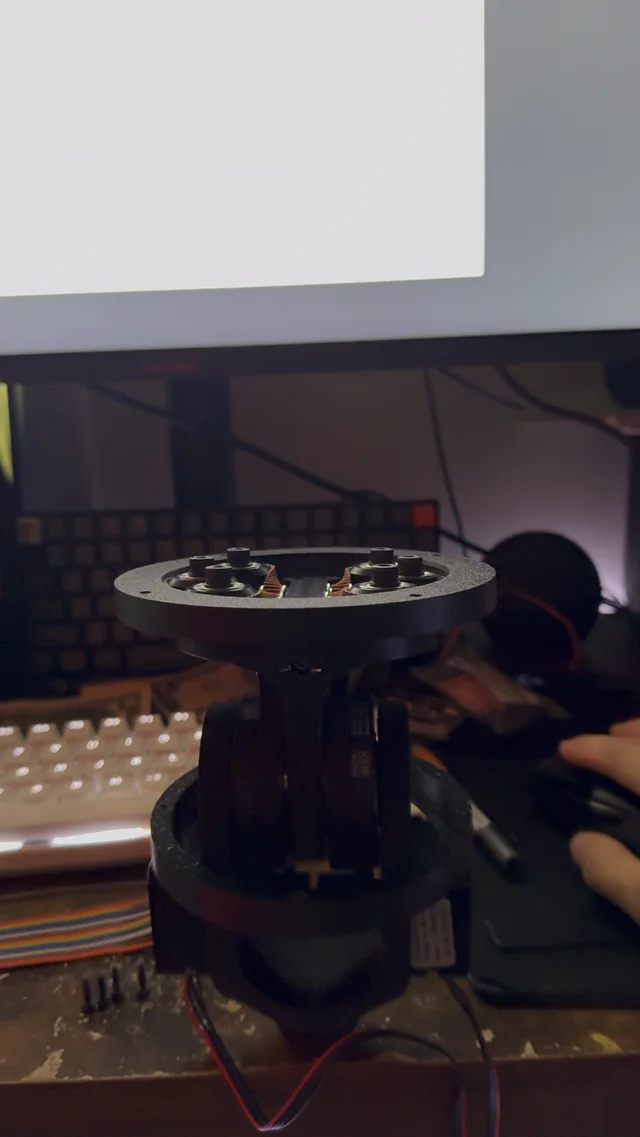
Has anyone received IROS results? The results are supposed to be out next week but I see my submission status currently changed to undisclosed, which, as far as I know, this happens usually at the day of sending out the notification. Any idea? Did anyone get any notification? submitted by /u/Street_Night_4344 [link] [Kommentare]