 K
↗
K
↗
Two posts ago I quoted a warning: an AI will find it easier to convince you it has a proof than to write one. A middling new paper finally put a number on that gap — 0.99 against 0.55.
 J
↗
J
↗
A technical deep-dive on the shared framework behind four niche AI companions — the serverless chat architecture, the cheap-Haiku/smart-Sonnet model split, curated web allowlists, and local knowledge bases (Wikipedia mirrors, a 33-million-row jazz discography, and my own book).
 R
↗
R
↗
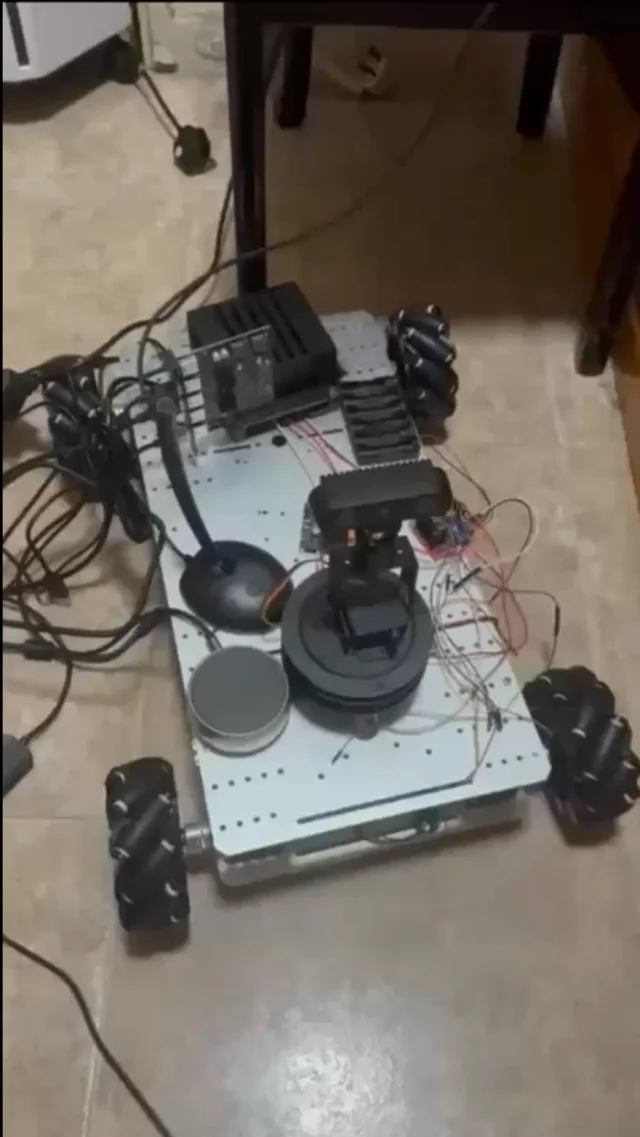
I haven't revealed her name in this video because I'd like to keep that private for now. XDXD As a first test, I successfully integrated an LLM, TTS, and ASR pipeline to enable voice conversations on the robotic car, even the response latency(LLM) is still slower. As a first test, I integrated a complete voice pipeline: → Microphone → Whisper Base (Speech-to-Text) → Ollama (LLM) → Kokoro TTS (Text-to-Speech) → Speaker The system runs locally on the Jetson AGX Xavier. Response latency is still slower... However, it is already capable of holding voice conversations while moving around autonomously. Current Stack(24 June 2025) Jetson AGX Xavier Ollama(LLM) Kokoro TTS Camera system orbbec camera Microphone and speakers(whisper base) Robotic car platform Until today, I am still improving the system. Future plans may include: Live2D avatar integration (will add later) Added VLM (Vision-Language Model) Shorter-latency LLM and VLM responses Improved voice interaction Update: The platform was later upgraded to a Jetson AGX Orin. submitted by /u/Tombother [link] [Kommentare]
 G
↗
G
↗
Trailing dots after hostnames in URLs remain my worst enemies. I wrote about several problems with them in the past that involved those nasty things. They are still painful. When we shipped curl 8.21.0 on June 24 2026 we fixed at least three brand new problems that involved trailing dots. C'mon, follow me down the … Continue reading Trailing dots are the worst →
 B
↗
B
↗
Point BetterAgent at your codebase. It reads your routes and server actions, generates the schemas, drops in the chat components — and your users get an agent that does real work inside the product you already shipped.
 S
↗
S
↗
This repository contains source codes of various techniques used by malware authors, red teamers, threat actors, state sponsored hacking groups etc. These techniques are well researched and implemented in Rust.
 S
↗
S
↗
HAMILTON, ON – Hamilton Health Sciences (HHS) burn experts are the first in the world to use a novel biological...
 A
↗
A
↗
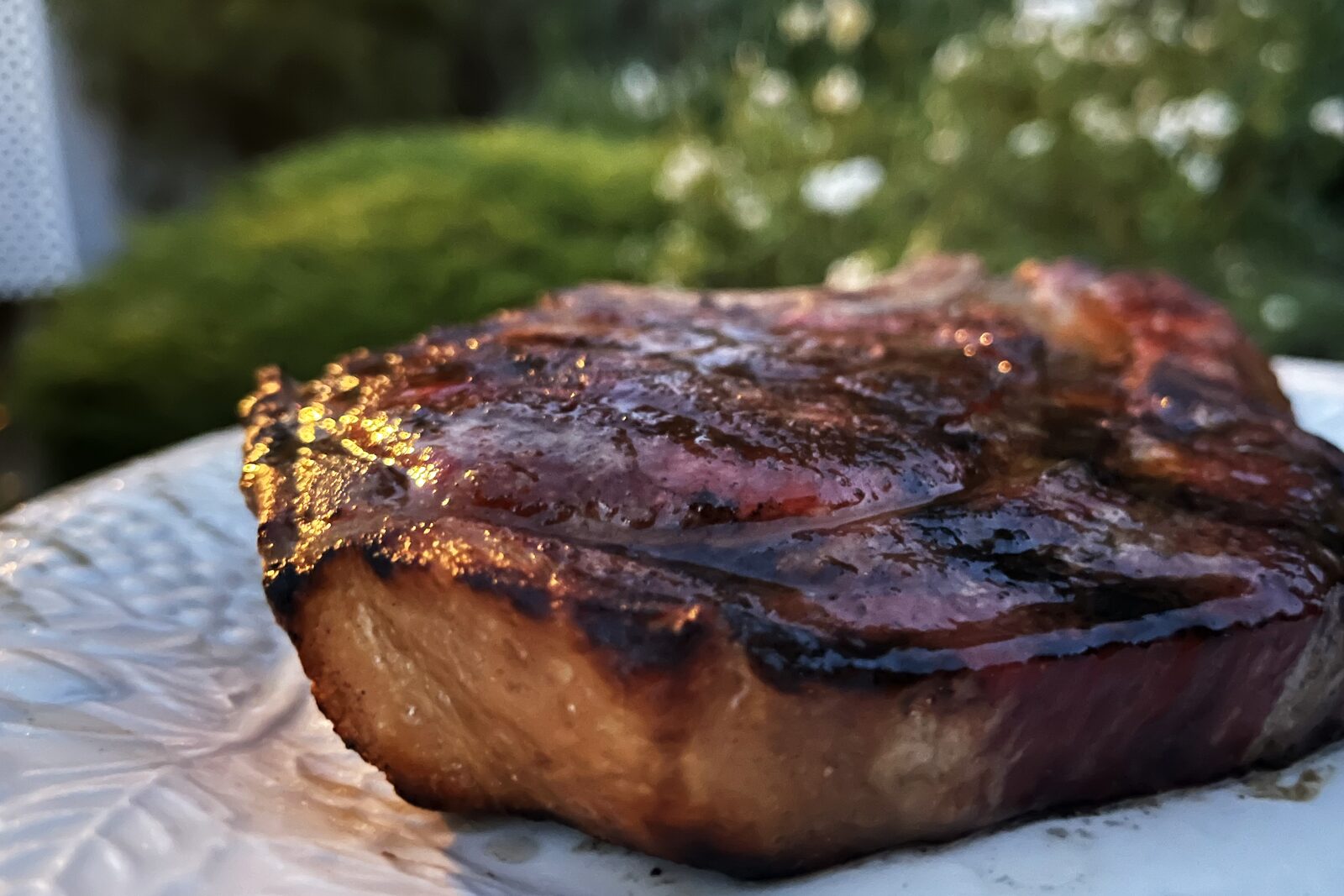
Systematic reviews of things that do not need systematic reviews. We read the papers, run the numbers, and spend an indefensible amount of time on each of these so you do not have to.
 G
↗
G
↗
Recent large language models (LLMs) have demonstrated strong capabilities in understanding and generating code, from competitive programming to repository-level software engineering. In emerging agentic systems, code is no longer only a target output. It increasingly serves as an operational substrate for agent reasoning, acting, environment modeling, and execution-based verification. We frame this shift through the lens of agent harnesses and introduce code as agent harness: a unified view that centers code as the basis for agent infrastructure. To systematically study this perspective, we organize the survey around three connected layers. First, we study the harness interface, where code connects agents to reasoning, action, and environment modeling. Second, we examine harness mechanisms: planning, memory, and tool use for long-horizon execution, together with feedback-driven control and optimization that make harness reliable and adaptive. Third, we discuss scaling the harness from single-agent systems to multi-agent settings, where shared code artifacts support multi-agent coordination, review, and verification. Across these layers, we summarize representative methods and practical applications of code as agent harness, spanning coding assistants, GUI/OS automation, embodied agents, scientific discovery, personalization and recommendation, DevOps, and enterprise workflows. We further outline open challenges for harness engineering, including evaluation beyond final task success, verification under incomplete feedback, regression-free harness improvement, consistent shared state across multiple agents, human oversight for safety-critical actions, and extensions to multimodal environments. By centering code as the harness of agentic AI, this survey provides a unified roadmap toward executable, verifiable, and stateful AI agent systems.
 M
↗
M
↗
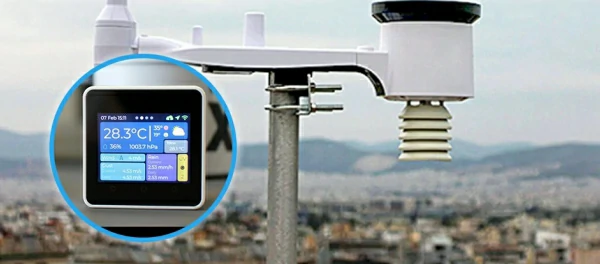
StackChan: Cute AI desktop robot with CoreS3 ESP32-S3, touch display, camera, servos & NFC. Supports AI Agent, animations, OTA and custom programming.