 X
↗
X
↗
Discover Xonaly, the private and ad-free Canadian search engine built with real privacy, fast results and a fully independent index — try it now.
 B
↗
B
↗
Yes, I am building a dystopian cyberpunk hellscape.
 R
↗
R
↗
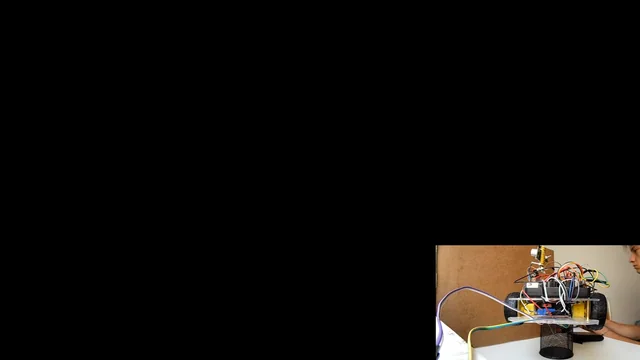
Following up on my last post about this robot project (which I'm currently working on with a Raspberry Pi)—I thought I'd share an update on the project's progress, since I ran into a problem that took me a bit of research to figure out, and I was also able to reflect on it thanks to the very valuable feedback I received. (https://www.reddit.com/r/raspberry_pi/s/eCKPFWwPhk) The issue While testing the 4 DC motors from the web interface, I noticed something off: sometimes the robot would suddenly lurch forward at full speed when I'd only tapped a key once, and other times there'd be a noticeable delay between pressing a key and the motor actually responding. Not a one-off glitch — happening often enough that I couldn't trust the controls. What was actually going on After digging into it, the culprit was the PWM signal I was using to control motor speed. I was using RPi.GPIO's software PWM, which relies on a Python thread toggling the pin at precise intervals to simulate the signal. The problem is that thread has to compete for CPU time with everything else my server is doing — streaming gyroscope data 20 times a second, running the radar scan, handling Flask/SocketIO requests. When the Pi got momentarily busy, the PWM timing would drift, which explains both symptoms: a duty cycle spike (sudden full-speed lurch) or a delayed update (the motor not getting the new speed in time). The fix Switched to pigpio, which runs as a separate daemon (pigpiod) in the background. Instead of my Python code generating the PWM signal itself, it just sends simple commands to this daemon, which handles the actual signal generation independently of whatever else the Pi is doing. So far the difference is noticeable — no more random speed spikes during testing. The other thing I added: a watchdog Separately, I realized there was a bigger risk I hadn't addressed: the robot is controlled entirely over WiFi through a browser. If the connection drops for any reason while it's moving forward, there was nothing stopping it from just... continuing toward whatever's in front of it. So I added a watchdog thread on the server side — it tracks the timestamp of the last command received, and if more than 500ms pass without a new one, it force-stops the motors automatically. Independent safety net, regardless of what causes the disconnect (WiFi hiccup, browser crash, whatever). what I plan to do next Mechanical redesign: dropping from 4 driven wheels to 2 front-driven wheels + a rear caster wheel, mainly to simplify trajectory control (the 4-wheel setup made it hard to drive perfectly straight) Mounting HC-020K encoders on the front wheels for actual odometry instead of relying purely on the gyroscope (which drifts over time) Eventually fusing gyro + encoder data to get a stable heading estimate Repo's here if you want to poke around: https://github.com/enzocolombat/EC-Hub Genuinely curious what people think of the pigpio + watchdog approach — is there a cleaner way to handle the real-time PWM issue I'm missing? And for anyone who's done the encoder + gyro fusion thing on a budget robot, would love to hear how you approached it before I dive in. submitted by /u/Pasteque9000 [link] [Kommentare]
 G
↗
G
↗
A game for teaching people how neural network training works - Tylersuard/Synapse_neural_net_training_game
 P
↗
P
↗
About the author A human voice behind WNF Nicolás Halaban is an Argentine writer and AI-assisted creator exploring the meeting point between Scripture, language, technology, and spiritual imagination. The Word, The Name, The Fire was born from a long dialogue with artificial intelligence — not as doctrine, but as a...
 P
↗
P
↗
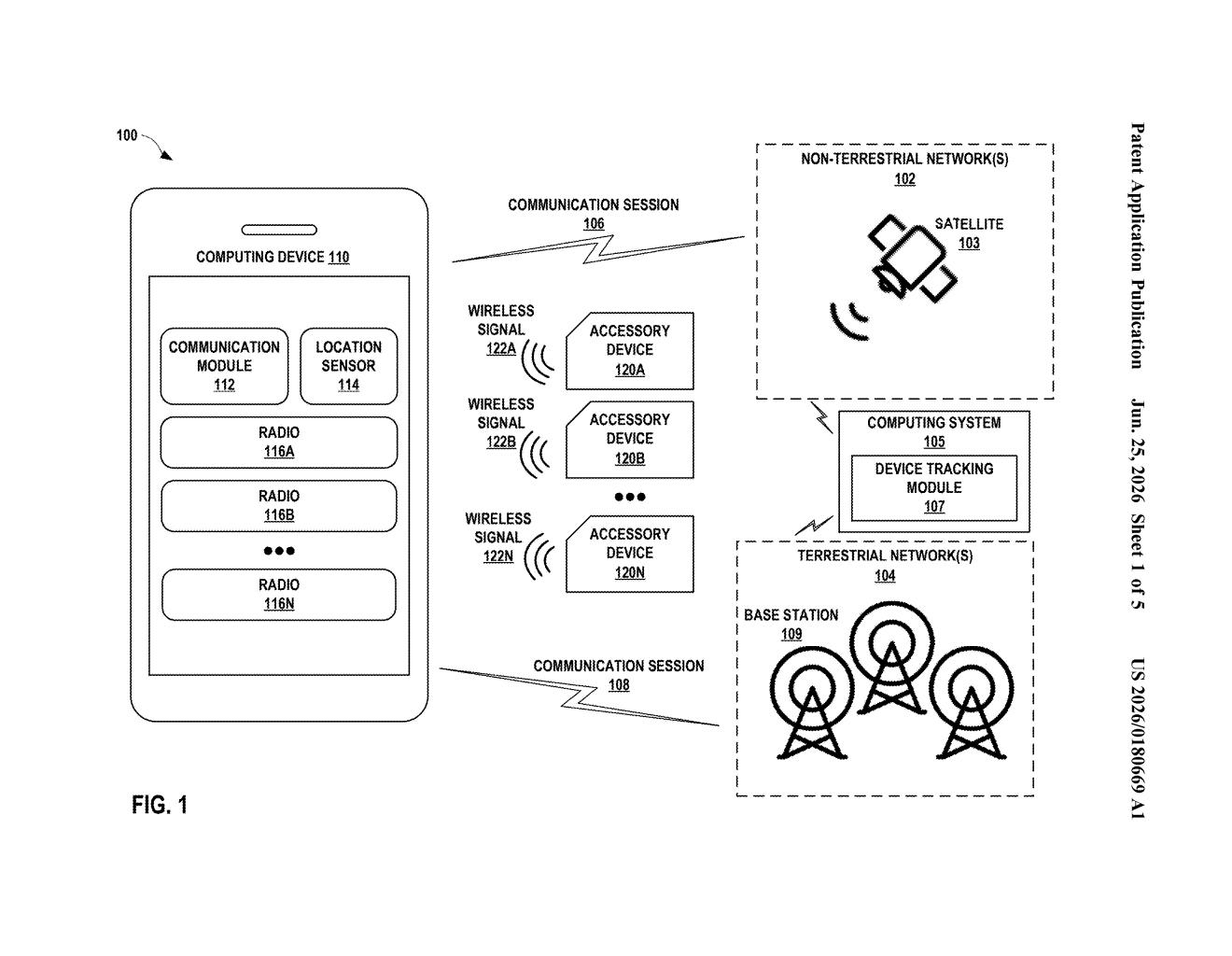
Google has filed a patent for squeezing nearby Bluetooth or Wi-Fi device info into otherwise-wasted space inside satellite text messages.
 N
↗
N
↗
Meta’s built facial recognition into its smart glasses. Northeastern researchers explain why regulations around this are dangerously behind.
 B
↗
B
↗
YIMBYtown, the biggest national pro-homes conference in the country, is coming south to Raleigh, NC! Tickets are now available »
 N
↗
N
↗
Rate any nation, predict any matchup, simulate the 2026 World Cup, and see how a simple model compares to the betting market.
 X
↗
X
↗
Four ways software products and jobs change in the age of abundance
 R
↗
R
↗
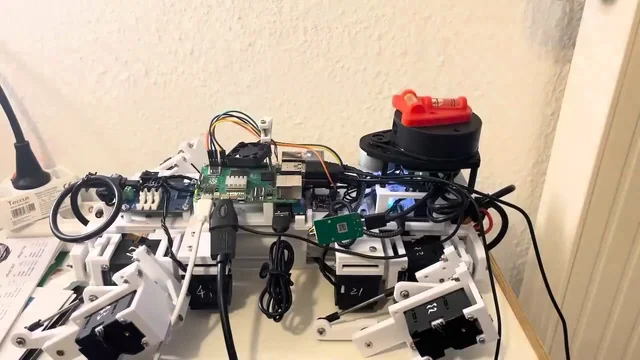
Ever since the post from last time: https://www.reddit.com/r/robotics/comments/1u1iql9/cubic_doggo_update_wobbly_imu/ I have tried to implement all the suggestions from the previous posts (thank you guys :)), and then spent way too much time tuning the PID, hoping it could perfectly balance the robot without wobbling. And the first video is showing my best full PID result so far: it can achieve perfect balance, BUT with randomly occurring spasms. A bubble level is added on its head. After standing+leveling, the platform is put on a slope. The bubble shifts, and the robot is trying to adjust it back Still cannot figure out the reason after quite some updates, though, but 50Hz reading rate with ~10ms lag, and legs lifting the whole body weight while changing tiny position probably are the culprit. So maybe it really doesn't need perfect leveling; it just needs some corrections on a slope. The second video is with P-only, fast reacting and no oscillation. Maybe this is showing the limitation of PID as compared to reinforcement learning? I am not at all sure. For now, though, I still want to see how P-only leveling performs during a walk gait. Link to the previous walking post without IMU: https://www.reddit.com/r/robotics/comments/1tghftd/cubic_doggo_full_github_record_it_can_now_walk/ submitted by /u/SphericalCowww [link] [Kommentare]