Boa pessoal tudo bem? Contar aqui um pouco da minha carreira. 6 anos de xp na área de distribuição de energia, me formei em eng elétrica em 2019 em faculdade particular não tradicional(). Comecei na ENEL SP como analista Jr, na área de perdas, no desenvolvimento de algoritmos preditores para descobrir potenciais furtos de energia, foi ali que me apaixonei por data Science, e comecei estudar por conta proporia para me aprofundar em Python / ML afins, não fiz pós na área pois consegui aprender tudo via livros/ YouTube / ChatGPT, talvez seja importante fazer algo mais pra frente… mas enfim.. fui até o cargo de analista Sr.. na mesma área.. depois surgiu a oportunidade para migrar para a distribuidora de Goiás.. que é a Equatorial , onde fui como Engenheiro, trabalhando em um dos processos mais críticos do setor elétrico de distribuição, que é a apuração de indicadores e etc… com meus conhecimentos em ML , consegui desenvolver alguns algoritmos lá que trouxeram ganhos significativos para o processo como um todo que abrangia toda área de concessão da equatorial no pais(7 distribuidoras)…. Faz uns 3 meses que voltei para SP, pois sou daqui e estava sentindo falta da família, pois lá em Goiânia estava morando sozinho.. (fiquei quase 4 anos la)… Atualmente trabalho como engenheiro em uma grande transmissora de energia daqui. Ganho na faixa de 15k bruto. Tenho bons benefícios 2k de VR… PLR.. plano de saúde bom.. etc.. Porem tem um problema, já estou cansado do presencial, o setor de energia elétrica é um setor que paga bem, mas ainda é um setor muito arcaico em algumas coisas, principalmente em modelo de trabalho.. eu tenho 2 dias de home office, mas eu queria algo full remoto… Venho pensando seriamente em migrar para área de AÍ Eng.. para galera que está na área, a pista está salgada ? E como está essa questão da transição de carreira? Hoje eu tenho 33 anos, e até cogito perder um pouco de remuneração por esse benefício do full remoto… e quais seria o roadmap para uma transição mais tranquila? Visto que já domino um pouco de programaçao… em linhas gerais são isso, procuro mais flexibilidade na minha vida. Sei que se quiser ficar onde estou vou ganhar bem e conseguir me aposentar lá, que em tese é um setor que sofre menos com layoff e tal… mas aí está a questão. Vale a pena a longo prazo ? Mentalmente falando. submitted by /u/ExpertTangerine6080 [link] [Kommentare]
Hi everyone,Our paper was recently provisionally accepted to ECCV 2026! However, our team is facing an issue regarding attendance and the ECCV 2026 Submission Policies. The official guidelines state: "We expect each paper to be presented in person by an author (or an authorized delegate)."None of the listed co-authors can travel to present the paper in-person due to pending immigration status (USA). I need some advice on what exactly counts as an authorized delegate and how to handle this safely without getting our paper pulled from the Springer proceedings.Who qualifies? Can it be anyone, a colleague from my lab who is already going to ECCV, or does it have to be someone specifically registered under our paper's ID? Registration policy: According to the ECCV 2026 Registration Info, every paper must be covered by a full (non-student, non-virtual) author registration by July 17, 2026. If we pay for the full author registration but a "delegate" presents it, does that delegate also need their own separate registration? How to notify: What is the formal process to authorize a delegate? Do we need to email the Program Chairs in advance? If anyone has designated a delegate for ECCV or similar computer vision conferences (CVPR/ICCV) in the past, how did you handle it? TL;DR: No authors can attend ECCV 2026 in-person. Need to know how to legally assign an "authorized delegate" to present our paper so it doesn't get removed from the proceedings. submitted by /u/Latter-Sympathy7767 [link] [Kommentare]
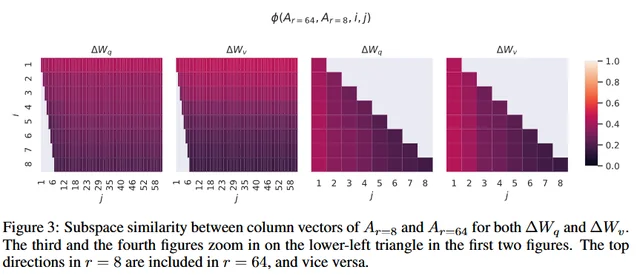
I am studying the LoRA paper and have trouble understanding this figure. The function essentially measures how much of the subspace spanned by the top i vectors is contained in the subspace spanned by the top j vectors in the higher rank matrix. Therefore, j can not be lower than i. So when they say the 3rd and 4th figure zoom in on the lower-left triangle of the 2 left-most figures, how are there values for j=1 and i equals 2 to 8? I dont understand what kind of y-axis the 2 right figures are supposed to be using. Thanks in advance! submitted by /u/BelzebubReincarnated [link] [Kommentare]
Today I was just casually browsing some jobs with tags [machine learning] on one of those large popular job-sites. What I am seeing really had me astonished. I want to check with Reddit whether I am hallucinating. A non-FAANG/non-Deepmind/.../non-Anthropic industrial automation company is hiring people to work on ML for robots (the latest hot topic). Fine. But then I saw their laundry list of job requirements ("you must meet these"), which include: Deep expertise in LLM, VLA, VLM, action transformers Deep expertise in robot dynamic and kinematic modelling (forward, inverse kinematics, trajectory generation, planning), sensor fusion, model predictive control, reinforcement learning Deep expertise in CUDA GPU programming, FPGA hardware acceleration Familiarity with latest software engineering best practices in Python3 and C++23 Familiarity in one or more of popular ML framework Have top publications in one or more typical ML and robotics conferences This is before they go off listing familiarity with a set of standard softwares/simulators, one of which is called RLib, something I've never heard of. Oh and of course they had these 3+, 5+ "non-academic" experience requirements. I forgot which is which. I was just sitting there confused. Then I checked several more jobs, and it was more of the same (except for some banks). I remember there was a talk by Terence Tao where he divided mathematician into two camps, the analysts and algebraists. He said even among top mathematicians, it is exceedingly rare to find someone who possess deep expertise in both, as each tends to require a different mode of thinking and each is infinitely deep in terms of specialization, theory and insights. And here we have a bunch of ML companies treating these infinitely deep academic fields ranging from robot dynamic and kinematic modelling to large language models like some bizarre MMORPG video-game scenario where you need to be a warrior archer who is also a priest mage. Who are they even hiring, lol? submitted by /u/NeighborhoodFatCat [link] [Kommentare]
Hi. I have a question, could this plan and pipeline work?. I will be attending university master's classes on AI (thankfully got accepted a few days ago) and computers in a few months. There will be university lectures on machine learning, computer vision, robotics, video games and AI etc, i wanted to take notes using my laptop instead of the classical approach of pen and paper. i have a 500$ hp laptop (it doesnt have touch screen though so it's screen is not reactive) and chatgpt proposed i install Xournal++ and also get a Huion H640P graphics tablet that i plug to the laptop and i will be writting with the pen/screen of Huion H640P. chatgpt proposed the Huion graphics tablet/pen because it is hard to write and especially draw grapghs/plot on a laptop using the mouse only so a pen would be better. it said i could just plug the Huion pen to the laptop and with it i could write directly on Xournal++. Looking forward to your thoughts. Im tired of the usual pen and paper approach to taking notes. i want to make the process digital and since i have this good laptop why not use it? after all i bought it 2 years ago solely for university and work use. submitted by /u/AncientGearAI [link] [Kommentare]
I have building alternative ways explore scientifc literature. The goal was to make the large number of papers published daily easier to keep up with by visualising the macro scopic trend. It is free to use at The Global Research Space for any one interested in giving it a try! How I built it I sourced the latest 11M papers from OpenAlex and Arxiv and ecoded them using SPECTER 2 on titles and abstracts then projecting it down to 2d using UMAP and creating labels within voronoi bounds around high density peaks at increasingly deep depths. There is also support for both keyword and semantic queries, and there's an analytics layer for ranking institutions, authors, and topics etc. I have also more recently added to ability to slide back and forth in time and a daily auto ingestion script to ensure the map is up to date. Feedback or suggestions is very welcome! submitted by /u/icannotchangethename [link] [Kommentare]
Hi everyone, Posted this a while back... a checklist I made while prepping for a CV internship (landed it, hence sharing). It's not a textbook, just a phase-by-phase map of what to actually study for CV/ML interviews: math → CNNs → ViTs → detection → tracking, plus specialization tracks you pick based on the role. After checking on it after a while it got a decent number of stars which surprised and made me happy that people found it useful to save it for later. I decided after that to add more in-demand tracks to help more people after doing some research of the basic internship requirements and maybe a little more. So, just added three new specialization tracks: Segmentation, OCR, and VLMs, on top of the existing ReID and Deployment tracks. Also cleaned up the structure a bit and added proper contributing guidelines if anyone wants to add their own track (3D vision, pose estimation, etc. are open). GitHub: https://github.com/David-Magdy/CVIL Feedback/PRs welcome, especially if something's outdated or miscategorized. And remember to keep it CVIL! submitted by /u/PolarIceBear_ [link] [Kommentare]
Worried recruiters see "ML/AI engineer" on a resume and assume zero security depth, even with real hands on work in the space. Anyone hired into security from a non-traditional background like this — how'd you frame it? submitted by /u/Xorphian [link] [Kommentare]
Trying to understand how other people make this decision. Do you compare $/hr, $/token, throughput, reliability? Is there a tool or resource you rely on, or are you just doing the math manually? Asking because I'm an ML engineer who's been doing this in spreadsheets and wondering if I'm missing something obvious. submitted by /u/Technomadlyf [link] [Kommentare]
Hi all, I'm looking for literature on relatively specific tooling. In autoregressive LLMs, there is substantial published work that used NLI on sub-claims produced by LLMs to gauge correctness of LLM answers. In diffusion (or D-) LLMs, the SoTA model generations that I see (outside of perhaps LLaDA) seem to struggle to be as correct syntactically as the generations from premier AR LLMs, in addition to the issue of semantic correctness. My intuition is that this complicates the usage of NLI (the syntactic noise). What is the SoTA on syntax-robust NLI? submitted by /u/RepresentativeBee600 [link] [Kommentare]
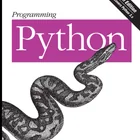
I've noticed something interesting while browsing ML, Data Science, and programming books. A surprising number of them have animals on the cover. Not just one or two books, but entire shelves full of them. Examples include books on Python, Machine Learning, Hadoop, Linux, Data Engineering, and many other technical topics. I was curious: - Is there any historical reason behind this? - Do the animals have some symbolic connection to the subject matter? - Did one publisher start the trend and others copied it? - Or is it purely a branding/design choice? I'm especially curious about whether specific animals were intentionally chosen to represent certain technologies or if they're mostly random. Would love to hear the story behind this from people who've been in tech longer than I have. submitted by /u/Rough-Usual-275 [link] [Kommentare]
I want to team up on a ML project, no fixed idea yet. Open to whatever's interesting: NLP, CV, time series, whatever you're into. Looking for: anyone with an idea (Or without, we can think about something togther) + ML engineer to build it with Goal: my goal is to strengthen my portfolio and collaborate Drop a comment or DM if you've got something brewing and want a hand. submitted by /u/Sea_Smile1129 [link] [Kommentare]
This question is related to topics like language+ models (including multimodal) and things like "circuit" analyses. I think something related might come up in my work (factuality guarantees for model outputs) and I'm trying to orient to the SoTA. I found this old post on trying to deduce, for instance, whether a Transformer-based model "knows" which word a token is in. Even in this simple example, I noticed some meaningful problems (I detail in a footnote1 to not derail my question) - and I've heard that circuit research is pretty fraught. The post claimed to train a logistic regression classifier. What I'm curious about is, how do you balance between the capacity of this probe, and the underlying network? Specifically, I would like to know: Is there theory which grounds inquiries of "what you can learn" in concrete terms? (Perhaps in terms of provable guarantees about overfitting? Or are there Nyquist-type guarantees available about sampling based on frequencies of patterns in language corpora - i.e., can we say we've "seen enough data" to know the network can reliably do something in all cases?) Has any of the existing work factored in attempts to label the "difficulty" of examples? (Perhaps by ensembling some training of models and looking at accuracy on them. I realize bootstrap is insanely expensive for language models due to training costs.) Problems - well, first of all, the number of possible words is so small that I suspect performance looks unrepresentatively good. The classifier seems to gain in performance for words 5/6 after weakening, but that might just be learning "all sufficiently 'extreme' tokens should be words 5 or 6." For another, despite the claim advanced in the article (Nanda concludes the network essentially does learn positions), I happen to have screenshots from recently playing with Google Gemini and asking it how many "r"s and other letters are in Google. Not only did it answer incorrectly - it claimed 1 - but more worryingly, it spelled out G-o-o-g-l-e in answering. This belies a hypothesis of "it's incapable of learning exactly how to decompose tokens, so this question was unfair from a model capacity standpoint" but *still* leads to an incorrect answer! submitted by /u/RepresentativeBee600 [link] [Kommentare]
Hi guys, today is the deadline for acceptance notification from NeurIPS. Has anyone hear back already? Do they send the rejection letter later? submitted by /u/LocksmithAlone242 [link] [Kommentare]
How does the ML research community feel about evolutionary algorithms? Should I do a PhD in this area? Quick remark: I know some people in the ML community dunk on evolutionary algorithms because there’s often a better optimizer, but they do have their place, which is what researchers in my community aim to quantify. Background: I just finished my first year as a mathematics master’s student working on the theory of evolutionary algorithms (EAs)/randomized search heuristics. I’m fortunate to be on a research assistantship and have already coauthored several papers in strong conferences in our area. I’ve always been more interested in classical ML/deep learning theory but haven’t had anyone to work with. Researchers in my field, including my advisor, occasionally publish in mainstream ML venues such as AAAI and NeurIPS, but it’s primarily the EA venues. For a while now, I’ve been independently studying deep learning and statistical learning theory, and I have found intersections with my current research that I plan to pursue for my thesis. With my current CV, it’s looking like I could get into some of the best PhD programs in my area, but I’m wondering if I should try to go to a more ML-centric PhD, even if it means going to a less prestigious institution/group for the sake of my career. I’m not sure yet what I want to do after my PhD and a possible postdoc, but I want to keep myself competitive for top-tier opportunities. What implications might doing an EA PhD have for my career? With strong EA publications, could I get into a good ML PhD program if I pitch myself appropriately? Could staying somewhat outside mainstream ML actually be a good career move, given how competitive and crowded ML has become? submitted by /u/NullRecurrentDad [link] [Kommentare]