Channels
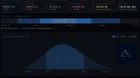
While doing my weekly research on what happened over the last week and how the market is currently pricing stuff, one thing that caught my eye this was Bitcoin's skew. BTC is pricing roughly a ±3.9% move for the coming week, but that's not really the interesting part. What's interesting is that puts are still trading a lot richer than calls. Downside protection is carrying about a 12 vol point premium over comparable upside exposure. It is normal that puts are more expensive than calls, but Deribit's pricing is quite substantial compared to the last few weeks. That surprised me. Bitcoin is down close to 18% just in the last week alone and traders are still paying up significantly for protection. So either traders remain genuinely worried about another leg lower, or nobody is in a hurry to sell that downside insurance. I'm not saying Bitcoin has to go down from here. Plenty of markets bottom while put skew remains elevated. But, the fear is quite clear on the options chain. I just think it's interesting that even after a meaningful selloff, the options market still seems a lot more concerned about downside than upside. Anyone else watching the skew or willing to sell some puts here? https://preview.redd.it/kfkg3ta00q5h1.png?width=1160&format=png&auto=webp&s=ab5da85d980d0cc1d18bc105b5137ca2be9172fb submitted by /u/DueDilligenceTrader [link] [Kommentare]
Is now a good time to buy BTC or shall I wait a little bit longer? submitted by /u/Original-Tackle988 [link] [Kommentare]
If you're still chasing yield in liquid restaking protocols, you're stacking risks like a terrifying game of financial Jenga. The recent Kelp DAO exploit didn't require some nation-state level of cryptographic genius to execute. The attacker simply spotted that the smart contract's withdrawal logic relied on a completely manipulatable spot-price oracle from a single decentralized exchange. I've spent time looking at the raw transaction logs, and the sheer laziness of the math is breathtaking. The attacker flash-loaned millions, artificially pumped the collateral's price in a single block, and the Kelp contract blindly accepted this manipulated, sky-high valuation as gospel truth because it wasn't even built to calculate a time-weighted average price (TWAP). Relying on spot-price valuations inside a single transaction block is like asking a bank robber to appraise the contents of the vault while he's stuffing the cash into a duffel bag. This isn't an isolated incident—it's the exact same architectural rot I see across the entire cross-chain bridge landscape, where a single misconfigured smart contract parameter, a slightly flawed Merkle tree proof implementation, or a lazy developer forgetting to update a simple state machine variable can instantly invalidate the entire security model and allow a malicious actor to mint an infinite supply of counterfeit tokens on the destination chain while the original assets sit completely frozen and useless in the source vault. Complete architectural failure. If you want to stop getting rugged by sleep-deprived devs copy-pasting code, you need to start reading the actual execution traces and mathematical models behind these failures. I've published the full technical autopsy, showing the exact function failures, the exploit payloads, and how this compares to the consensus-level cryptographic proofs used by the Verus Bridge. Stop trusting the dashboards. Start auditing the logic. -James McCabe (ModernCYPH3R) submitted by /u/ModernCYPH3R [link] [Kommentare]



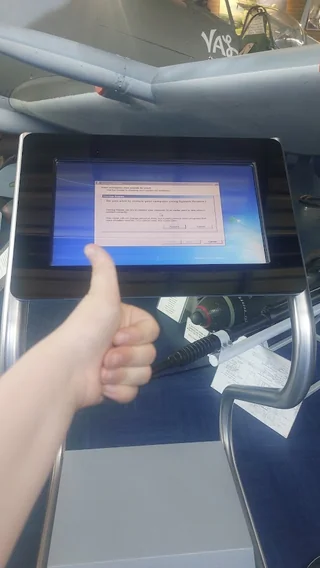
RAF Manston, Kent, England No idea what it was supposed to say, probably a video about the plane behind it! recover my spitfire submitted by /u/Piracy_Is_A_Right [link] [Kommentare]
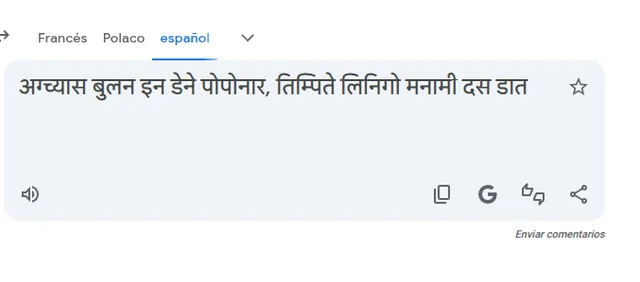
French | Polish | Spanish submitted by /u/marioooo06 [link] [Kommentare]