Channels

Found from iOS Simulator's files. Both of them are in espresso format There's also another compiled CoreML for concert ranking and based on the content inside of it looks like to be a simple logistic regression. See https://www.reddit.com/r/jailbreak/comments/1u1e1b4/access_to_simulators_root_files/?utm_source=share&utm_medium=web3x&utm_name=web3xcss&utm_term=1&utm_content=share_button Edit: Its the Siri's TTS submitted by /u/Actual_L0Ki [link] [Kommentare]

Noch mehr Erinnerungen? https://www.reddit.com/r/Erinnerungen/s/ooQplZobyV submitted by /u/Ok_Put967 [link] [Kommentare]
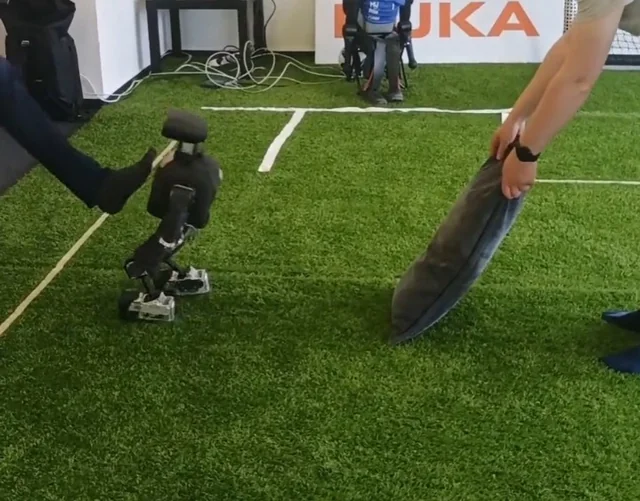
Just a machine that made you stop and think: "wow...somebody put a ridiculous amount of engineering into this". Could be anything.sometimes the most impressive machines are the ones that make incredibly difficult things look effortless. submitted by /u/hannimalki [link] [Kommentare]

Ursula von der Leyen: "For the first time, we will introduce a FULL third-country BAN for crypto asset services to make sure 🇷🇺 Russia can’t avoid sanctions.
...would use in energy [$] if it's kept on everyday every hour for a month in Colorado? submitted by /u/ToxicRoserade [link] [Kommentare]


And Charles Hoskinson is a snake oil salesman submitted by /u/LivingShine83 [link] [Kommentare]

How will AI affect our ability to think and judge for ourselves? Our new paper co-authored by 30 experts explores epistemic risks—the threats AI poses to our collective capacity to form beliefs accurately, reason well, and maintain a healthy information environment. We look at how AI can lead to harm through these mechanisms: Persuasion & Manipulation: AI systems are highly persuasive, opening the door for political/economic manipulation, incitement and radicalization, and other misuse, as well as unintentional harms like AI sycophancy and mental health risks. Cognitive Offloading: We may be delegating our thinking to AI at a deeper level than prior technologies, risking long-term degradation of individual and societal cognitive resilience. Feedback Loops: Human-AI and AI-AI interactions are narrowing the epistemic space humans and AIs draw from. This already drives homogenization, and may potentially lead to fragmentation and “lock-in” (a self-referential state that is difficult to reverse). While we believe AI could be an unprecedented lever for improving how humanity processes knowledge, we shouldn’t assume this will happen by default. We outline promising directions to change this trajectory across how AI systems are built, human-AI interaction design, institutional and individual adaptation, and information market incentives. Epistemic risks are self-perpetuating. As they can undermine the individual cognitive and social foundations needed to recognize, prioritize, and govern other threats—including the risks from AI itself—the time to act is now, before our capacity to respond is itself lost. Authors: Mick Yang, Stephen Casper, Jonathan Stray, Jasmine Li, Cameron Jones, Anna Gausen, Natasha Jaques, Brian Christian, Bálint Gyevnár, Hannah Rose Kirk, Zhonghao He, Dan Zhao, Siao Si Looi, Joshua Levy, Kobi Hackenburg, Elizabeth Seger, Matt Kowal, Michelle Malonza, Luke Hewitt, Hause Lin, Maarten Sap, Dylan Hadfield-Menell, Thomas H. Costello, Reihaneh Rabbany, Jean-François Godbout, David G. Rand, Atoosa Kasirzadeh, Gordon Pennycook, Yoshua Bengio, Kellin Pelrine Paper: https://papers.ssrn.com/sol3/papers.cfm?abstract_id=6873005 submitted by /u/KellinPelrine [link] [Kommentare]