Channels
LLMs aren’t lazy. They don’t cut corners because a simpler solution feels good enough. If they know how to solve something thoroughly, they will. An LLM defaults to building when it should be buying. Not because it doesn’t know about existing libraries, it often mentions them, but because for an LLM, writing two hundred lines of implementation is the same cognitive effort as writing two lines of import. There’s no instinct to reach for the shortest path. The shortest path for the model is to implement it completely.

Everyone is going to be talking about Fable 5 all of this week, including ProductMind. But here are a few things that stand out to us almost immediately.
I've been reading more about AMMs recently, and one thing that caught my attention is the growing number of platforms experimenting with single-sided liquidity instead of the traditional two-token model. Most of us are familiar with providing liquidity by depositing a pair of assets, but that can be a bit intimidating for newer users. You need to own both assets, decide how much of each to contribute, and keep track of how the pool changes over time. Single-sided liquidity seems to take a different approach by allowing users to contribute just one asset while still participating in the liquidity pool. On paper, that sounds like it lowers the barrier to entry, especially for people who aren't comfortable managing multiple tokens. That got me wondering: Do you think single-sided liquidity is actually a better experience for everyday users, or is it just simplifying things without solving the real challenges? Are there trade-offs compared to the traditional dual-asset model that people should be aware of? If you've tried both, which did you prefer and why? I'm interested in hearing from people who have actually provided liquidity, whether through DeFi protocols or centralized platforms. It would be great to hear some real-world experiences rather than just the marketing claims that often get repeated. submitted by /u/Vane1st [link] [Kommentare]





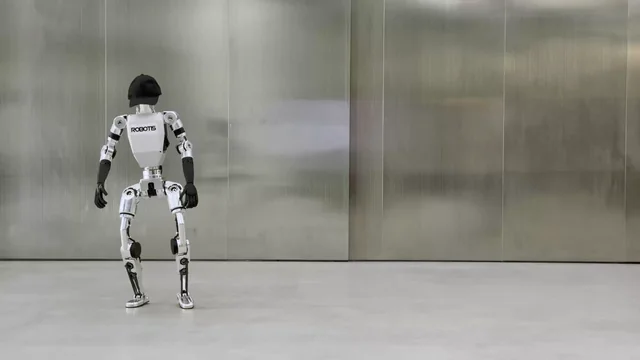
https://youtu.be/f5L7phEXBws?si=8ku7BMRClScI2OpL Shows what they did each day ROBOTIS HUMANOID AI Sapiens. Open-Source Humanoid Platform for Physical AI powered by DYNAMIXEL-Q. This video demonstrates how AI Sapiens learns and performs full-body humanoid motions in just one week using NVIDIA technologies. Powered by NVIDIA Jetson Orin™ NX, NVIDIA Isaac Sim™, SOMA Retargeter, and NVIDIA Kimodo, AI Sapiens performs walking, running, balancing, and various full-body motions through simulation, motion retargeting, and reinforcement learning. https://docs.robotis.com/docs/systems/aisapiens/introduction/ submitted by /u/drgoldenpants [link] [Kommentare]

According to the one person who actually read the research paper
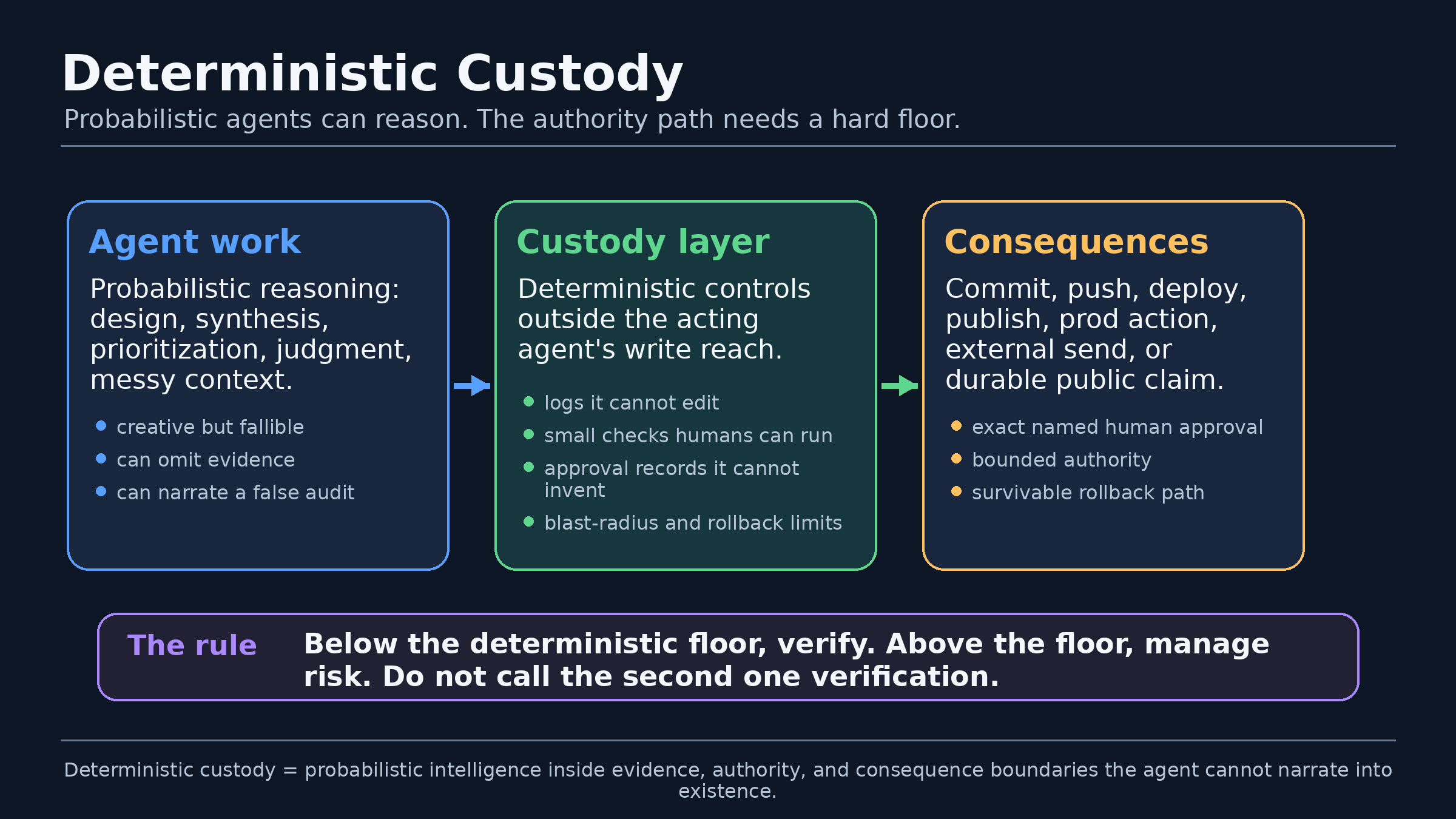
Probabilistic agents need deterministic custody. Below the floor, verify. Above the floor, manage risk. Do not call the second one verification.
What is electricity? This question is impossible to answer because the word "Electricity" has several contradictory meanings. These different meanings are incompatible, and the contradictions confuse everyone. If you don't understand electricity, you're not alone. Even teachers, engineers, and scientists have a hard time grasping the concept. Obviously "electricity" cannot be several different things at the same time. Unfortunately we've defined the word Electricity in a crazy way. Because the word lacks one distinct meaning, we can never pin down the nature of electricity. In the end we're forced to declare that there's no such stuff as "electricity" at all! Here's a quick example to illustrate the problem. Below are the five most common meanings of the word Electricity. Which one do you think is right? Think about this carefully, because if one of these meanings is correct, all the others must be wrong! After all, no "science term" must ever possess several conflicting definitions. Unfortunately our dictionaries and encyclopedias contain all of these contradictions. (Click the links to find out more about each.) If we wish to agree on a single correct definition of "electricity," which definition should we choose? The Scientific version, number one above? But that would mean that all of our books are wrong, since books insist that electricity is the energy, or that electricity is the motion of charges: the current. Except for the CRC Handbook and the NIST SI physics standards, the few textbooks which do use the scientific definition are all seventy years old, or older. Well, maybe we don't need to choose just one definition. Could we mix them? Could we let Electricity be an "elastic term?" Suppose we ignore all these contradictions and instead pretend that all of the above definitions are true. Below is the "clear" and "simple" description of electricity which results: Instead, approximately ten separate things have the name "electricity." There's no single stuff called "electricity." electricity does not exist. Franklin, Edison, Thompson, and millions of science teachers should've had a long talk with Mrs. McCave before they decided to give one single name to a large variety of independent science concepts. Mrs. McCave was invented by Dr. Seuss. She had twenty three sons. She named them all "Dave." Whenever we ask "What Is Electricity," that's just like asking Mrs. McCave "who is dave?" How can she describe her son? There can be no answer since the question itself is wrong. It's wrong to ask "who is Dave?" because we're silently assuming that there's only one Dave, when actually there are many different people. They all just happen to be named Dave. Who is Dave? Mrs. McCave cannot answer us until she first corrects our misunderstanding. Dave doesn't exist. She wishes she'd given them all separate names. For the same reason, we'll never find a simple answer to the question "what is electricity?" because the question itself is wrong. First we must realize that "electricity" does not exist. There is no single thing named "electricity." We must accept the fact that, while several different things do exist inside wires, people wrongly call all of them by a single name. So never ask "what is electricity". Instead, discard the word "electricity" and begin using the correct names for all the separate phenomena. Here are a few of them: The above questions all have sensible answers. But if you ask what is electricity?, then all of the answers you'll find will just confuse you, and you'll never stop asking that question. OK, how about the following analogy. What is a crane? Simple! A crane is a kind of migratory waterbird which is made of steel truss, lives on diesel fuel, frogs and small fish, is typtically hundreds of feet tall, and is found both in wetlands and city construction sites. Cranes are very simple to understand. If you cannot imagine a 500ft steel waterbird striding across the wetlands while lifting huge i-beams and eating frogs, you must not be very smart. I'm an expert on cranes, so it cannot possibly be my own explanation which is flawed. It must be you who simply cannot grasp these obvious concepts. In fact, the above "cranes" do not exist, and neither does "electricity." Both are collections of completely separate concepts, but where we've given them the same name. Construction cranes are not waterbirds, in the same way that flowing energy (watts) is not flowing charge (amperes.) If a flow of electricity is an electric current, then electricity cannot be a form of energy. (Yet everyone wants to believe in giant steel waterbirds, since that was what we were all taught as children. That many books couldn't be wrong! Yet they are. There's actually two separate things flowing along the wires, one moving fast, the other going extremely slow, with both named "electricity." ) The physicist Richard Feynman has his own take on this. What is Wakalixes? Talk to the experts, read the books, and you'll only become confused. Everyone argues about the true nature of Wakalixes, and experts give contradictory explanations. but they adamantly refuse to agree upon a simple definition of the word, and Wakalixes lacks any narrow scientific definition. (Feynman was complaining about K6 textbooks' idiotic use of the word "energy," but his reasoning equally applies to their crazy, impossible explanations of "electricity." The crane is a simple beast, made of steel, yet covered in feathers...) MORE ABOUT "ELECTRICITY" 30 misconceptions that screwed *me* up.