Channels
Banks been bragging about their ironclad systems while running 60-year-old COBOL spaghetti that no one understands anymore. 95% of ATMs, core financial plumbing, all held together by duct tape, prayers and coke. Anthropic drops Mythos and it speedruns classified systems in hours, not weeks. Warner dropped the quote, Dimon himself admitting AI just exposed a mountain of vulnerabilities. Hey y’all... go check out my pet rock collection. Those rocks don't have technical debt. They don't cry when the next AI red-team rolls up. Imagine calling Bitcoin a pet rock while your industry depends on a programming language from 1959, undocumented workarounds nobody understands, and a COBOL engineer who retired three times but still gets emergency calls on weekends. The same people telling us crypto is a dangerous experiment are quietly praying nobody touches their mainframe because nobody knows why it still works. At least the pet rock don’t require a crisis meeting because someone restarted a server. It doesn't have 40 years of technical debt hidden behind a login screen. Our traditional finance is a haunted archaeological site that somehow processes trillions of dollars a day. TL;DR: The people mocking the pet rocks are running civilization on COBOL spaghetti submitted by /u/FluffyAspie [link] [Kommentare]

As part of my ablations, I want to generate text with a medical-oriented LLM, and I was surprised to find no exposed APIs for this kind of model. I found models like MedGemma and BioMistral on Hugging Face, but they don’t seem to offer public APIs, and I really don’t want to host anything myself. Is that actually the case? submitted by /u/Entrepreneur7962 [link] [Kommentare]


Worrying about whether AI can do your job is a blind alley, Cory Doctorow argues. The real danger is AI’s bubble: a speculative fantasy built on convincing bosses to replace workers with systems that can’t actually do what their salesmen promise.

La Commissione europea assegna il Frontier AI Grand Challenge al consorzio guidato dalla scaleup milanese. In gioco non c’è solo la tecnologia: è una scelta geopolitica

In a space war, America must fight on the side of order

Learn real-world slang, flirting, romance & dirty talk in Spanish, French, and Portuguese.

On the 67th edition of the TOP500, LineShine debuts as the new No. 1 system, ending El Capitan's run atop the list and becoming the fifth Exascale system overall. It is the first China-based system to lead the TOP500 since Sunway TaihuLight in 2017. LineShine is installed at the National Supercomputing Centre in Shenzhen (NSCS), China, and was built by the Shenzhen Cloud Computing Center. It submitted a debut measurement of 2.198 Exaflop/s on the HPL benchmark, more than 20% ahead of the No. 2 system, using 13,789,440 cores. The system is based on the custom "LingKun" platform with 304-core LX2 processors running at 1.55 GHz, the proprietary LingQi interconnect, and Kylin OS. LineShine also takes over the No. 1 spot on the HPCG ranking with 22.00 Petaflop/s. On the HPL-MxP benchmark, which measures mixed-precision performance, LineShine debuts in fourth at 7.92 Exaflop/s with a more modest 3.6x speedup, consistent with its CPU-only design. El Capitan, Frontier, Aurora, and JUPITER Booster all remain Exascale-class systems and now occupy No. 2 through No. 5, all still installed at the same sites as last edition. The El Capitan system at the Lawrence Livermore National Laboratory, California, USA, moves to No. 2 on the TOP500. The HPE Cray EX255a system holds at 1.809 Exaflop/s on the HPL benchmark. LLNL's 17.41 Petaflop/s on HPCG now places the system No. 2 on that ranking as well, behind LineShine. El Capitan has 11,340,000 cores and is based on AMD 4th generation EPYC processors with 24 cores at 1.8 GHz and AMD Instinct MI300A accelerators. It uses the Cray Slingshot 11 network for data transfer and achieves an energy efficiency of 60.94 Gigaflops/watt. The Frontier system at the Oak Ridge National Laboratory, Tennessee, USA, is the No. 3 system on the TOP500, holding at an HPL score of 1.353 Exaflop/s. Frontier is based on the HPE Cray EX235a architecture and is equipped with AMD 3rd generation EPYC 64C 2GHz processors. The system has 9,066,176 total cores and also relies on Cray's Slingshot 11 network for data transfer. The Aurora system at the Argonne Leadership Computing Facility, Illinois, USA, holds the No. 4 spot on the TOP500 with 1.012 Exaflop/s on the HPL. Aurora is built by Intel based on the HPE Cray EX - Intel Exascale Compute Blade, which uses Intel Xeon CPU Max Series processors and Intel Data Center GPU Max Series accelerators communicating through Cray's Slingshot-11 interconnect. The JUPITER Booster system at the EuroHPC / Jülich Supercomputing Centre in Germany moves to No. 5, still measured at exactly 1.000 Exaflop/s and remaining the first European Exascale system. JUPITER - JU Pioneer for Innovative and Transformative Exascale Research is located at the Forschungszentrum Jülich campus in Germany and is operated by the Jülich Supercomputing Centre. It is based on Eviden's BullSequana XH3000 direct liquid-cooled architecture, utilizing Grace Hopper Superchips. Rmax and Rpeak values are in PFlop/s. For more details about other fields, check the TOP500 description. Rpeak values are calculated using the advertised clock rate of the CPU. For the efficiency of the systems you should take into account the Turbo CPU clock rate where it applies.

A configurable card with a bright animated edge and a soft outer bloom. Pure CSS, zero JavaScript. No frameworks. No build step. Four independent radii — top-left, top-right, bottom-right, bottom-left. Pull a corner handle on the playground to set one, or toggle Link corners to move them in lockstep. Inner content padding grows with the radius, so type never collides with the curve. Six preset palettes — Azure, Terracotta, Ember, Violet, Teal, Moss — or any custom color via the picker. A single hue drives the fill, the edge, and the bloom together, so every part of the card stays in the same key. Brightness lightens or darkens the body; the gradient angle sets where the light appears to come from. A conic gradient masked to a 1.6 px ring creates a bright arc that sweeps the border forever. Tune the period from a lazy 14 s to a frenetic 2.5 s, or kill the animation entirely and keep the static top-center highlight. A second shadow layer spreads the hue into the surrounding dark — the card doesn't sit on the page, it glows into it. Dial Outer glow from a faint 0 halo to a full 1.0 bloom that bleeds far past the border. The export reads your live configuration and emits a single block of standalone CSS — one .slicard class, no dependencies, no custom-property runtime. Drop it in any project. Drag edges to resize · drag corners to set radii · drag inside to move. Tweak color and animation in the deck, then copy the CSS.
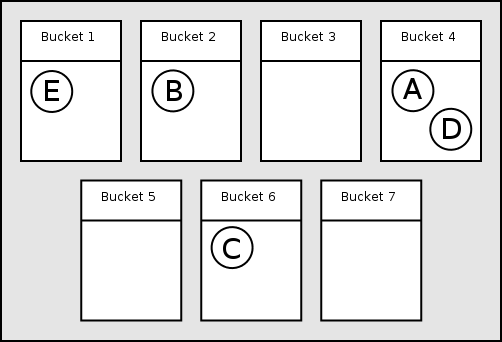
Two Indexed Hash Tables

NeroSoft - Software, Consulting, Dogs, Cars, Airplanes, Fun and More

The real question is not whether AI was used, but whether human judgment remained inside the writing process.

Browse award-winning and finalist science fiction and fantasy novels with award, subgenre, year, and Goodreads rating filters.