Channels

Inside "Adblock for YouTube," a trusted Chrome extension with 11M+ installs whose architecture could be weaponized by a single server-side change to steal data and hijack sessions
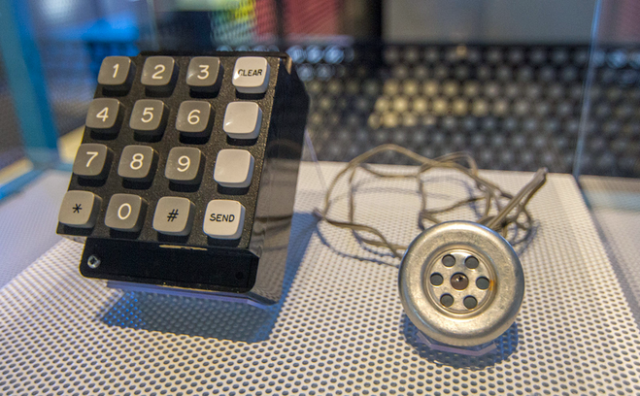
Steve Jobs said building illegal blue boxes to allow users to make long distance and international phone calls for free with Steve Wozniak…
On Tuesday, investors were dumping AI stocks, worried that frothy valuations may be running away from reality. By Thursday, they were believers again.
The Windows video player built for fast playback. Contribute to CalvinSturm/FastPlay development by creating an account on GitHub.

Silicon Valley fails to take into account the human consequences of its technological wizardry.
It has been nine years since a Chinese HPC supercomputer was at the top of the High Performance Linp ...



Welcome to the Daily Crypto Discussion thread. Please read the disclaimer and rules before participating. Disclaimer: Consider all information posted here with several liberal heaps of salt, and always cross check any information you may read on this thread with known sources. Any trade information posted in this open thread may be highly misleading, and could be an attempt to manipulate new readers by known "pump and dump (PnD) groups" for their own profit. BEWARE of such practices and exercise utmost caution before acting on any trade tip mentioned here. Please be careful about what information you share and the actions you take. Do not share the amounts of your portfolios (why not just share percentage?). Do not share your private keys or wallet seed. Use strong, non-SMS 2FA if possible. Beware of scammers and be smart. Do not invest more than you can afford to lose, and do not fall for pyramid schemes, promises of unrealistic returns (get-rich-quick schemes), and other common scams. Rules: All sub rules apply in this thread. The prior exemption for karma and age requirements is no longer in effect. Discussion topics must be related to cryptocurrency. Behave with civility and politeness. Do not use offensive, racist or homophobic language. Comments will be sorted by newest first. Useful Links: Beginner Resources Intro to r/Cryptocurrency MOONs 🌔 MOONs Wiki Page r/CryptoCurrency Discord r/CryptoCurrencyMemes Prior Daily Discussions - (Link fixed.) r/CryptoCurrencyMeta - Join in on all meta discussions regarding r/CryptoCurrency whether it be moon distributions or governance. Finding Other Discussion Threads Follow a mod account below to be notified in your home feed when the latest r/CC discussion thread of your interest is posted. u/CryptoDaily- — Posts the Daily Crypto Discussion threads. u/CryptoSkeptics — Posts the Monthly Skeptics Discussion threads. u/CryptoOptimists- — Posts the Monthly Optimists Discussion threads. u/CryptoNewsUpdates — Posts the Monthly News Summary threads. submitted by /u/AutoModerator [link] [Kommentare]


Hello everyone! I'm posting our research work as you might be interested in how we used ML to map part of the brain cells of the human hippocampus :) We used various human brain slices at high resolution (1 micrometer per pixel) and developed a custom segmentation pipeline that uses SoTA whole slice cell segmentation networks, like CellPoseSAM with good zero shot performances. We then refined semi-automatically those annotations and ensembled more finetuned models within the pipeline, adding a merging algorithm and a cell classification for 3 classes (excitatory and inhibitory neurons, and glial cells). But the high-res slices covered only a few parts of the hippocampus with respect to other slices scanned at 20x less the resolution where the cell nuclei are only 1 pixel wide. So we tried to map the high-res annotations we obtained to the low-res corresponding slices, and used a small UNet to supervise a density estimation task for 3 classes. We obtained a network that outputs a density map that can be sampled to obtain a probabilistic map of the cellular positions. Finally, to reconstruct the volume, we stacked together all the low-resolution density maps from all the slices that covered the hippocampus and obtained a point cloud, which you can see in the GIF along the corresponding anatomical CA (Cornus Ammonis) areas. The performances are still limited by the quantity of data and low-resolution slices, but we showed that the results were biologically plausible given previous estimates by other researchers. The paper was accepted at MICCAI 2026 a few weeks ago! Feedback is very welcome, especially on the density-estimation formulation and possible uses of the generated point cloud. submitted by /u/V_ector [link] [Kommentare]

On why I use the web less

HAMBURG, Germany — June 23, 2026 — The 67th edition of the TOP500 list of the world’s most powerful supercomputers was announced today at the ISC 2026 conference in Hamburg, Germany. LineShine, a previously unlisted system installed in China, debuts at No. 1, displacing El Capitan as the world’s most powerful supercomputer as measured by the High Performance Linpack (HPL) benchmark. The new list also reflects continued depth in U.S. and European exascale capability, a new entrant in Italy’s HPC fleet, and unchanged leadership atop the Green500 energy-efficiency ranking. LineShine Takes the No. 1 Position LineShine achieved 2.198 Exaflop/s on HPL — about 80 percent of its 2.736 Exaflop/s theoretical peak — making it the first system on the TOP500 to exceed two exaflops of sustained double-precision performance using CPUs only. Installed at the National Supercomputing Centre in Shenzhen (NSCS) and built by the Shenzhen Cloud Computing Center, the system is based on a custom Chinese processor and the “LingKun” platform: 13.79 million cores across 304-core LX2 processors running at 1.55 GHz, linked by the proprietary LingQi interconnect and running Kylin OS. LineShine draws approximately 42.2 megawatts of power, for an efficiency of 52.07 Gigaflops/Watt. Its debut marks the first time since 2017 that a Chinese system has led the TOP500, and it also takes over the No. 1 position on the HPCG ranking with 22.00 HPCG-Petaflop/s. On the HPL-MxP mixed-precision benchmark, LineShine reached 7.92 Exaflop/s for fourth place, a comparatively modest 3.6x speedup over its HPL score that points to a CPU-only design without dedicated low-precision accelerators. Five Systems Now Cross the Exascale Threshold LineShine’s debut increases the number of systems sustaining more than one exaflop/s on HPL from four to five and, for the first time, places exascale systems across Asia, North America, and Europe simultaneously. Rank System Site Country HPL (Exaflop/s) 1 LineShine National Supercomputer Center, Shenzhen China 2.198 2 El Capitan Lawrence Livermore National Laboratory United States 1.809 3 Frontier Oak Ridge National Laboratory United States 1.353 4 Aurora Argonne National Laboratory United States 1.012 5 JUPITER Booster Jülich Supercomputing Centre Germany 1.000 El Capitan, at Lawrence Livermore National Laboratory, drops to No. 2 but is otherwise unchanged at 1.809 Exaflop/s, 11.34 million cores, and 60.94 Gigaflops/Watt, built on the HPE Cray EX255a architecture with AMD 4th Gen EPYC CPUs and AMD Instinct MI300A accelerators. Frontier, at Oak Ridge National Laboratory, moves to No. 3 at 1.353 Exaflop/s, and Aurora, at Argonne National Laboratory, holds No. 4 at 1.012 Exaflop/s. JUPITER Booster, operated by the Jülich Supercomputing Centre under the EuroHPC Joint Undertaking, moves to No. 5 at exactly 1.000 Exaflop/s, remaining Europe’s only system above the exascale threshold on HPL. A New Entrant and a Reshuffled Top 10 Eni S.p.A.’s new HPC7 system enters the list directly at No. 6 with 571.5 Petaflop/s, built on the same HPE Cray EX255a / AMD Instinct MI300A architecture as El Capitan, and becomes the most powerful machine in Eni’s HPC fleet alongside its existing HPC6 system. Microsoft’s Azure-based Eagle system falls to No. 7 at 561.2 Petaflop/s, followed by HPC6 at No. 8 (477.9 Petaflop/s). Japan’s Fugaku holds No. 9 at 442 Petaflop/s, and Switzerland’s Alps system rounds out the Top 10 at No. 10 with 434.9 Petaflop/s. Finland’s LUMI and Italy’s Leonardo, No. 9 and No. 10 last edition, fall just outside the new Top 10 at No. 11 and No. 12, respectively. Architectural and Vendor Diversity in the Top 10 The June 2026 Top 10 illustrates an unusually high degree of architectural diversity, reflecting the increasingly heterogeneous nature of high-performance computing. The systems span custom Chinese architectures (LineShine’s LingKun processors and LingQi interconnect), AMD-based systems ranging from exascale (El Capitan and Frontier) to sub-exaflop performance (HPC7 and HPC6), an Intel-based exascale design (Aurora), NVIDIA Grace Hopper architecture (JUPITER Booster and Alps), Microsoft’s cloud-based Eagle system combining Intel Xeon processors with NVIDIA H100 accelerators, and Japan’s distinctive Fugaku system built around Fujitsu’s A64FX Arm processors. The list demonstrates that there is no single dominant technology path to leadership-class computing; instead, vendors are pursuing a variety of CPU, GPU, APU, and custom-accelerator approaches coupled with different interconnect and system designs. Looking at vendor representation, HPE is the dominant system integrator, supplying six of the ten systems (El Capitan, Frontier, Aurora, HPC7, HPC6, and Alps); Aurora runs on the HPE Cray EX platform but is credited to Intel as prime contractor. On the processor side, AMD has the strongest presence, powering four systems directly (El Capitan, Frontier, HPC7, and HPC6) and contributing more than 40 percent of the combined Top 10 HPL performance. NVIDIA technology appears in three systems (JUPITER Booster, Eagle, and Alps), while Intel is represented both as a complete platform vendor (Aurora) and through Xeon processors in Eagle. Eviden/Bull supplies the BullSequana XH3000 platform underlying JUPITER Booster, Fujitsu remains represented through Fugaku, and China’s Shenzhen Supercomputer Center enters the Top 10 with the custom-built LineShine system, demonstrating the emergence of a new indigenous exascale architecture. Overall, the Top 10 reflects a competitive landscape led by HPE integration expertise, AMD’s strong position in exascale computing, NVIDIA’s growing influence through AI-oriented accelerators, and continued innovation from national computing programs in China, Japan, Europe, and the United States. HPCG: LineShine Leads a Reordered Field On the HPCG benchmark, which measures performance on data-intensive, real-world application patterns rather than raw floating-point throughput, LineShine takes over the No. 1 position with 22.00 HPCG-Petaflop/s, ahead of El Capitan (17.41) and Fugaku, now third (16.00). Frontier holds fourth (14.05), Eni’s new HPC7 system takes fifth (5.95), and Aurora rounds out the top six (5.61). JUPITER Booster has not yet submitted an HPCG result. HPL-MxP: El Capitan Holds the Mixed-Precision Lead On the HPL-MxP benchmark, which measures mixed-precision performance, El Capitan remains the No. 1 system at 16.7 Exaflop/s, a 9.2x speedup over its standard HPL score. Aurora holds second place (11.6 Exaflop/s, 11.5x speedup) and Frontier holds third (11.4 Exaflop/s, 8.4x), while LineShine debuts in fourth at 7.92 Exaflop/s with a more modest 3.6x speedup, consistent with its CPU-only design. Further down the list, SoftBank’s CHIE-4 system posted the field’s largest gain at 24.4x over its standard HPL score. Green500: Same Top Three, Same Order, Six Months Later Energy-efficiency leadership is unchanged from the previous list. KAIROS, at CALMIP / University of Toulouse-CNRS in France, again ranks No. 1 on the Green500 at 73.28 Gigaflops/Watt (3.046 Petaflop/s on HPL), followed by ROMEO-2025 at the ROMEO HPC Center - Champagne-Ardenne, France (70.91 Gigaflops/Watt, 9.863 Petaflop/s) and the Levante GPU extension at DKRZ in Germany (69.43 Gigaflops/Watt, 6.747 Petaflop/s). All three share an identical BullSequana XH3000 architecture built on Grace Hopper Superchips and Quad-Rail NVIDIA InfiniBand NDR200; their order reflects system size, since smaller installations of identical technology consistently edge out larger ones on efficiency. Together, the new list illustrates a high-performance computing landscape that is more geographically and architecturally diverse than ever — spanning custom national silicon, GPU-accelerated U.S. Department of Energy systems, and Europe’s sovereign computing infrastructure. About the TOP500 List The TOP500 project began in 1993 as a one-time exercise for a small conference in Mannheim, Germany, followed by a second list compiled later that year for the SC93 conference in the United States. Comparing the two editions revealed how valuable the resulting statistics were, and the project has continued ever since, publishing an updated ranking of the world’s most powerful computer systems every June and November.