Channel
c/crypto-news
No description.
Owner @James · 1517 posts · 2 joined · Status active · Posting permission: Every logged-in user can post
I've been using Kraken and Binance to analyze crypto but they feel sluggish and I can't see everything I need in one place. What tools do you guys use for quick charting and analysis? Looking for something faster that doesn't make me tab between multiple sites. submitted by /u/CryptographerShot551 [link] [Kommentare]
I have a Ukrainian residence. Maybe there's a way to register some decent crypto card and pay in Europe? And even receive cool bonuses? submitted by /u/nov_kiril [link] [Kommentare]
Bubble charts aren't new, cryptobubbles has been around forever and it's genuinely good. Two things always bugged me though: you can't change how it looks, and it only ever shows the whole market, never your coins. So I built one into the tracker I work on. Bubbles sized by price change, market cap or volume, timeframes from 1H to 1Y, and you pick how many assets are on screen. There's a theme system if the default look isn't yours, and besides the market view you can load your own portfolio or watchlist as the bubbles, which is the part I actually use. Physics is d3-force, so they drift and collide for real instead of looping a canned animation. https://mantapex.com/visualization I work on Mantapex, so read this with the appropriate suspicion. The market view is free and needs no account, that's what the link opens. Portfolio and watchlist modes do need one, since it has to know what you hold. And if all you want is a quick look at the whole market, cryptobubbles honestly does that fine too. Curious which theme people end up on. The default is called Big Blue but I keep switching to Asteroids. submitted by /u/Drakuf [link] [Kommentare]
I hate using them and ever since I found out they've been bought by Binance I hate them even more. Which other sites/apps for viewing cryptocurrencies do you like to use the most and why? PS: bonus for other added features on the site submitted by /u/Impossible-Buyer6389 [link] [Kommentare]
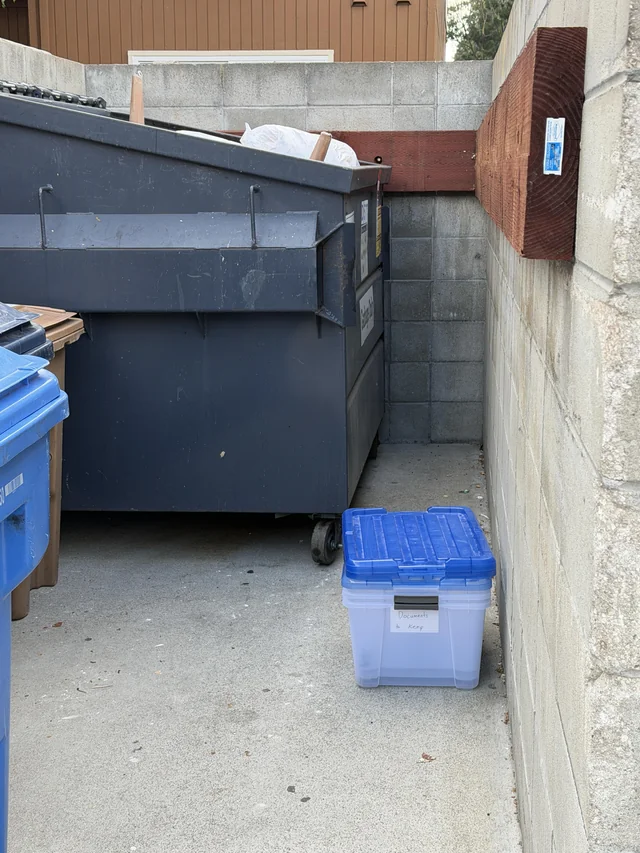
Not saying I’d look,but I’d definitely wonder if there’s a seed phrase in there. 👀 Every crypto holder just zoomed i submitted by /u/airSick-WetLander [link] [Kommentare]
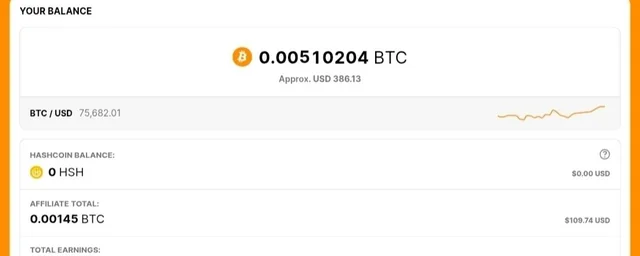
Just wanted to have a general discussion about where we all think BTC / the market will be in general in 40 - aka 4 halving down the line. 2028 / 2032 / 2036 / 2040 - I see a lot of wild speculation and hopium out there, but what do we think is realistic? submitted by /u/IAmTheNorthwestWind [link] [Kommentare]
Compound . This is cool to see from the organization and in a time when the investor has anxiety, you’re seeing a lot of organizational activity, investment and change happen. Ethereum is getting a lot of attention with their new orgs and hiring talent, and it’s great to see others also embrace the environment. Do you guys see this movement in crypto as a fad or as real momentum that will add more tech to finance? submitted by /u/Broncos1997 [link] [Kommentare]


Disclaimer: I’m no expert—just someone with a simple theory to share. I used AI to help organize my thoughts and make this a smoother read. A Synthesis Theory: For over a decade, the greatest mystery of the digital age has been the identity of Satoshi Nakamoto and the fate of the 1.1 million Bitcoin (worth tens of billions) sitting entirely untouched in the genesis wallets. Two major documentaries—HBO's Money Electric (pointing to Peter Todd) and the data-driven film Finding Satoshi (pointing to Hal Finney and Len Sassaman)—have attempted to unmask the creator. Both left gaps. However, when you cross-reference their findings with strict cryptographic realities, a definitive answer emerges. Satoshi Nakamoto was not an individual with superhuman discipline. Satoshi was a small, brilliant team—and the world's largest crypto fortune is permanently trapped by the unyielding mathematics they created. Part 1: The Multi-Person Team (The Lineup) Bitcoin is too multi-disciplinary to have been built by a lone genius in a vacuum. It required mastery of academic whitepaper formatting, flawless network architecture, and complex C++ coding. The evidence points to a three-man team operating under a shared pseudonym: The Academic (Len Sassaman): A brilliant young cryptographer specializing in decentralized anonymity networks. Linguistic and "digital footprint" data science shows Sassaman’s writing style, timezone patterns, and academic prose perfectly match the 9-page Bitcoin whitepaper. The Coder (Hal Finney): A legendary software engineer who built the closest precursor to Bitcoin (Reusable Proof of Work). He possessed the world-class C++ capability needed to code the first version of the software and famously received the first-ever Bitcoin transaction. The Architect (The Surviving Member): A third early cypherpunk pioneer—likely someone like Adam Back (inventor of Hashcash) or Nick Szabo—who acted as an advisory sounding board during the conceptual phase. Part 2: The Cryptographic Dead Man's Switch If Satoshi was a single person who is still alive today, leaving tens of billions of dollars completely dormant requires an impossible, non-human level of restraint. The far more logical reality is that the wallet is mechanically inaccessible. To prevent any single creator from going rogue and stealing the fortune, the founding team almost certainly secured the 1.1 million BTC using a Multi-Signature (Multi-sig) wallet or a split private key. To sign a transaction and move the coins, it likely required the digital keys of all three members, or a minimum threshold (e.g., 2 out of 3). Tragedy naturally triggered an unbreakable lock: April 2011: Satoshi sends a final email to developers: "I’ve moved on to other things." July 2011: Len Sassaman tragically passes away at age 31. His private key fragment dies with him. August 2014: Hal Finney passes away after a long battle with ALS. A second vital key fragment is lost forever. The moment the team dissolved into history, the multi-sig structure became a mathematical vault. [ Satoshi Nakamoto Master Wallet ] │ ┌────────────┼────────────┐ ▼ ▼ ▼ [Len Sassaman] [Hal Finney] [Surviving Member] (Died 2011) (Died 2014) (Alive but ❌ ❌ Key Incomplete) │ │ │ └────────────┴────────────┘ │ ▼ [ WALLET PERMANENTLY BRICKED ] Part 3: The Trap of the Surviving Member If a third member of the Satoshi alliance is still alive today, they are trapped in a state of permanent paralysis: They cannot move the coins: Because their partners’ keys are buried in the grave, they cannot physically authorize a transaction to spend the 1.1 million BTC. They cannot claim the legacy: Even if they stepped forward to prove they were part of the team, doing so without the ability to move a single Satoshi coin would leave them exposed to extreme public scrutiny, target them by global intelligence agencies, and invite endless legal liability—all with zero financial reward. Conclusion: The Ultimate Irony Bitcoin was engineered to strip away the need to "trust" human beings, replacing human error with cold, unyielding mathematical certainty. The ultimate poetry of Bitcoin is that its creator’s hoard remains safe not because of human willpower, but because of the protocol's own design. The code did exactly what it was written to do: it locked out the unauthorized, even when the unauthorized were the creators themselves. Satoshi's coins are gone forever, and that is exactly why Bitcoin can live on. submitted by /u/OGPRESTAR [link] [Kommentare]
Hello everyone, I found this latest development in the Browsercoin Experiment quite interesting and wanted to share it with the community here. Until yesterday, opening browsercoin for the first time meant downloading and re-verifying the entire chain (~26,000 blocks) before you could mine. On a decent machine that was ~20 minutes of staring at a progress bar. That's now gone. What happens now when you open the site fresh: Your browser downloads just the block headers (~3.6 MB for the whole chain) and checks every one locally: the hash linkage back to genesis, the exact difficulty schedule, timestamp rules, plus spot-checked proof-of-work on a random sample. It fetches a compact snapshot of every balance and verifies it against the state commitment inside the header chain. Every block header commits to a fingerprint of the full ledger inside its proof-of-work so a fake snapshot would require redoing the chain's mining. No server is trusted at any point. You're synced and can mine. In testing this takes seconds usually well under a minute even on slower hardware. The full block history still downloads quietly in the background (you'll see a "history N%" pill in the top bar). Once it finishes, your tab is a complete archival node, exactly like before it can serve the chain to other browsers, show full history, everything. So the deal is: everyone is still a full node you just don't have to verify the entire history before your first hash. Verification that used to block you now happens behind you, and if anything ever fails the check, your node throws it all away and re-syncs from genesis the old way. Credit to pijemcolu for pushing on this the suggestion and it turned out the chain design already supported something stronger: verifying the snapshot immediately against proof-of-work. submitted by /u/swompythesecond [link] [Kommentare]