Been doing a lot of cross-chain swaps lately (BTC to ETH, XMR to BTC, etc.) and got tired of manually checking rates across different protocols every time. Wanted to share what I learned in case it's useful to others here. The four main non-custodial options right now: THORChain — Most mature, deepest liquidity for BTC/ETH/major pairs. Fees are usually 0.1-0.3% but can spike on volatile pairs. Occasionally pauses trading for maintenance. Chainflip — Faster settlement than THORChain in my testing, competitive rates especially for BTC/ETH/SOL. Newer so liquidity is thinner on less common pairs. NEAR Intents — Intent-based architecture, surprised me with good rates on XRP and stablecoin pairs. Settlement felt fast. ChangeNOW — Best coverage for long-tail assets (TAO, HYPE, etc.) that the decentralized protocols don't support yet, but it's more centralized in nature. Key takeaway: no single protocol is consistently cheapest. The "best rate" shifts depending on the pair, amount, and time of day. For swaps over $500 I saw rate differences of 1-3% between providers on the same pair, which adds up. I ended up building a small tool (called TokensFund, you can search for it if curious) that pulls quotes from all four side by side so I don't have to manually check each one. Mentioning it for transparency since I'm obviously biased, but the comparison data itself is the useful part even if you check rates manually elsewhere. Curious if others have noticed the same rate variance, or have found other non-custodial protocols worth comparing. Always looking to add more sources. submitted by /u/b4basit [link] [Kommentare]
Channel
c/crypto-news
No description.
Owner @James · 1783 posts · 2 joined · Status active · Posting permission: Every logged-in user can post
Been having conversations with a few early-stage teams in the exchange space lately, and noticed almost everyone underestimates one decision early on: which exchange model to actually build. Most founders jump straight to "let's build a crypto exchange" without realizing how different the paths are depending on the model you pick. Centralized (CEX) - fastest to market, heaviest compliance burden If speed to market matters, CEX is still the most proven model. But the compliance lift is brutal KYC/AML integration, jurisdiction-specific licensing, and custody architecture all need to be solved before you can onboard your first real user. Teams that treat this as a "later" problem usually get stuck for months. Decentralized (DEX) - no custody headache, but liquidity is the real fight DEXs skip the custody and KYC nightmare entirely, but liquidity bootstrapping becomes the new hard problem. An order book with no liquidity is worthless. Most newer DEX teams end up integrating aggregated liquidity from existing pools just to have something usable on day one, then grow organic liquidity over time. Hybrid models - best of both, but the most complex to engineer This is the model I've seen fewer teams attempt, but it solves a real gap combining CEX-level speed and UX with DEX-level non-custodial trust. The engineering complexity is significant though; you're essentially building two systems that need to talk to each other cleanly. White-label vs. building from scratch This is the decision that splits founders into two camps. Building from scratch gives full control but adds 12-18 months minimum before launch, factoring in compliance review cycles. White-label solutions cut that timeline dramatically, but you're trusting someone else's security architecture and need to vet that hard a bad foundation here is the kind of mistake that's nearly impossible to fix later. What I keep telling founders: Pick the model based on your actual user, not what's trendy. A trading-focused product has completely different priorities than a payments-focused or DeFi-native product. Most failed exchange projects I've seen didn't fail on tech they failed because the model didn't match the market they were trying to serve. Curious what this community thinks for those who've built or are building an exchange, did you go CEX, DEX, hybrid, or white-label? And what made you choose that path over the alternatives? submitted by /u/cyphersanthosh [link] [Kommentare]
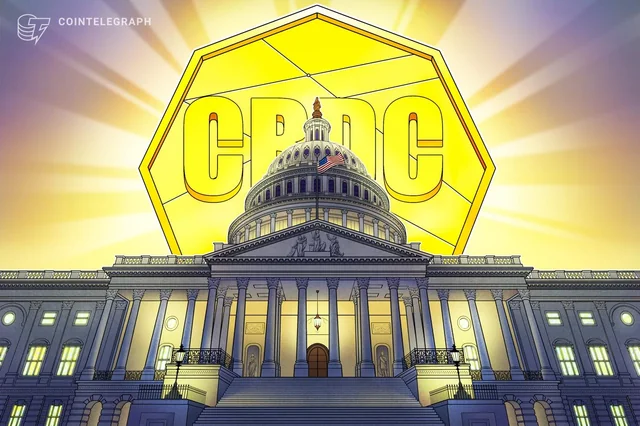
> Article highlight. The House also passed its version of the bill with strong support in May, but the House and Senate disagreed on some aspects. The Senate has now added further amendments that will be put before the House for a final vote. The bill is likely to pass quickly and would hand a win to Republicans who have tried to pass a CBDC ban for years, as earlier standalone bills had stalled in Congress. Crypto advocates have long criticized CBDCs, which they see as an attempt by governments to repurpose crypto technology to a centrally-controlled asset. submitted by /u/zesushv [link] [Kommentare]
Ledger vs Trade Republic Honest question: I already have my stuff on a ledger but am thinking of buying BTC now on Trade Republic. The last years I found it too uncomfortable to go through the hassle of sending them to an exchange to take profits. Missed out on some serious gains this way. Is there really any downside to just buying the BTC ETF via Trade Republic? I mean the funds are secured up to 100k €, and I am talking about way less to buy. Would like honest feedback. Cheers submitted by /u/eeazyew [link] [Kommentare]
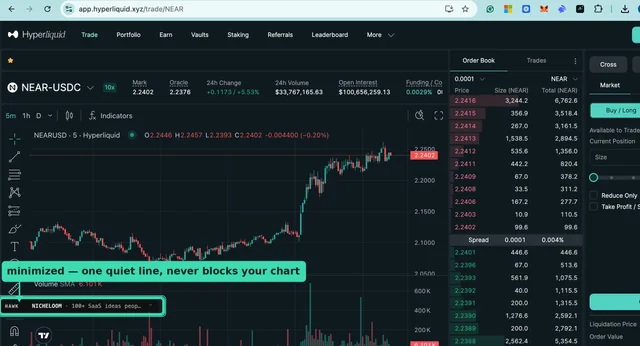
(Founder here) Hawk ◎ is a open source tool where traders can get paid by downloading an extension which allows to run ads below their trading chart. Advertisers can run ads like some PerpDEX running an ad or some AI platform running an ad. Traders who are trading on these charts might see that ad and choose to visit that ad if they see something of value there. Or they can do nothing and get paid in USDC for allowing the ad to be run on their trading terminal. submitted by /u/Fearless_Run4 [link] [Kommentare]

No shot it’s waiting to be cleared this long. yikes Coinbase. I see why everyone hates it now. context: it’s been cleared by my bank since the 6th… I don’t know if they are one of those companies that loans out your money or not, but this is insane. was supposed to be for a p2p payment haha submitted by /u/stravocadomf [link] [Kommentare]
Going to just put my savings into crypto and see what happens im at the point make it or fuck it Anyone any advice? submitted by /u/Prior_Night_985 [link] [Kommentare]
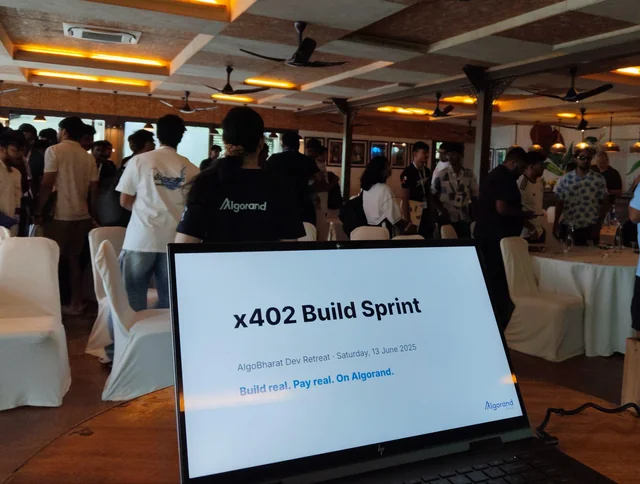
Algorand has launched the Global x402 Challenge, a five-month competition with a $100,000 prize pool aimed at developers building pay-per-request services for AI agents using the x402 payments protocol. submitted by /u/semanticweb [link] [Kommentare]

I've now been scammed twice and lost money, each time the scammers hacked a friend's messaging accounts and suddenly asked for financial help, and gave me all kinds of details that only my friends would know (from reading the hacked accounts, no doubt). Being a helpful friend, I offered to lend them money. They sent me a Tron address for USDT... I guess the lesson is: nobody uses Tron except scammers. If anyone, family, friends, business partners sends you a Tron address for any kind of transaction, they are probably scamming you. submitted by /u/HaikuHaiku [link] [Kommentare]
https://www.reuters.com/technology/blackrock-launches-spot-bitcoin-private-trust-us-clients-2022-08-11/ Blackrock and all their Top Clients have been in BTC since 15k, they got the absolute Bottom back in 2022, so why would anyone think these guys are panicking, these dudes are up still by alot for institutions. and they have been buying up to 20k - 30k range, thats where they loaded their own bags which are the only bags that matter, and they wont let it ever down there again. submitted by /u/Icy-Way3920 [link] [Kommentare]