Channel
c/crypto-news
No description.
Owner @James · 1748 posts · 2 joined · Status active · Posting permission: Every logged-in user can post
You know how people say: "I bought 3 bitcoins," "I invested in bitcoins," "I'm stacking satoshis," "I transferred bitcoins to my wallet," or "I mined bitcoins"? However, all of this is a myth because no bitcoins or their fractions (satoshis) actually exist. The myth stems from a post by an unknown programmer who claimed to have invented a payment system that transfers money. But all his invention does is maintain a decentralized database over a peer-to-peer network that shows which numbers belong to which addresses. People came to believe that this network and its underlying protocol, collectively known as Bitcoin, record an amount of money, namely these bitcoins (abbreviated as BTC), in the database. But that money is not there. For instance, people often claim they have bought digital money, even though nothing digital exists in proportion to the assigned numbers. A person whose address is assigned the number "50" cannot show fifty files, data structures, or software products. There are no digital "bitcoin objects" that can be mined, bought, owned, moved, or used. It is even more obvious that nothing physical exists. Despite media illustrations of metal coins stamped with the '₿' symbol and frequent claims that one is buying something comparable to collectibles or commodities, no fifty tangible units of any kind are stored or reserved for the person next to whose address stands "50." The most common myth, however, is the belief that people have bought something akin to fiat currencies, e-money issued by companies such as PayPal, tokens, or even stocks. Yet, all of the above are instruments of liability, where the holder derives a benefit upon the fulfillment of that liability. Stocks track a company's obligation to its shareholders. When companies decide to distribute profits, execute stock buybacks, or liquidate the business, they are legally required to make direct payments to shareholders. PayPal’s e-money and tokens, like casino chips, track the issuer's obligation to redeem them for a specified amount of fiat currency. Fiat currencies track the obligations of those who took out loans from commercial and central banks. Before each installment payment on these loans, these debtors provided goods, services, or labor to the holders of fiat currency, or, in the case of the state, the ability to settle a tax liability. If debtors default on their payments, banks seize their property, offering them at auctions to holders of fiat currency, providing them with a benefit in that way. That unknown programmer's invention does not track anyone's liability whose fulfillment would provide a benefit to the holders of Bitcoin addresses. Therefore, nothing is tracked with numbers assigned to these addresses. There is no physical, digital, or liability-based money that could be called "bitcoins". What people are actually doing is engaging in a large-scale redistribution of existing assets, and the Bitcoin network numerically tracks this act of redistribution. Through a collective narrative and storytelling, this process is publicly misperceived as an investment or a purchase. Centralized exchanges reinforce this myth most aggressively by displaying the "BTC" ticker and USD side-by-side on trading interfaces. This is a visual lie, where the interface assumes that "something" stands behind the letters "BTC," just as a liability stands behind "USD." Even critics participate in the myth. For example, by speaking of an "overvalued currency," they assume its existence. They call the act of redistribution "overvaluation," even though there is no digital, physical, or liability-based asset that the user has received and could value. You cannot say the price is too high when there is nothing to compare it to. Since there are only numbers in a database, the word "overvalued" makes no sense. You cannot overvalue the number 50; it is simply 50. In short, the myth about the existence of money behind Bitcoin addresses persists, even though it falls apart under elementary analysis, because it exploits a deep get-rich-quick mentality. Early participants amassed fortunes via this large-scale redistribution scheme, which drives newcomers with the seductive illusion that they will get rich as well. The emotions involved are so strong that they override all rationality. Admitting the myth would be too painful, so it lives on, despite being demonstrably false. submitted by /u/BinaryLyric [link] [Kommentare]
Yup thats their own post which says they "remain fully committed to securing our MiCA license" and that they will give users a real update before june 30 which days before a hard legal deadline, the world's largest crypto exchange's official line is still we are working on it. The backstory is that reuters reported sources said greece’s regulator was leaning toward rejecting the application and binance pushed back, saying the regulator actually found them compliant and passed it to ESMA. The regulator hasnt confirmed either version publicly. Meanwhile Coinbase, Kraken and Bitpanda along with roughly 200 other providers already cleared this same process months ago. And now 6 days are left for the deadline and eu users are still waiting on the update binance itself promised. Has anyone seen anything more concrete than the public statements? submitted by /u/Jealous-Drawer8972 [link] [Kommentare]
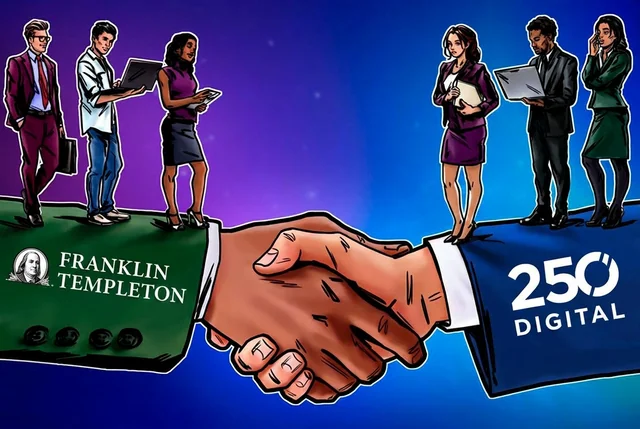
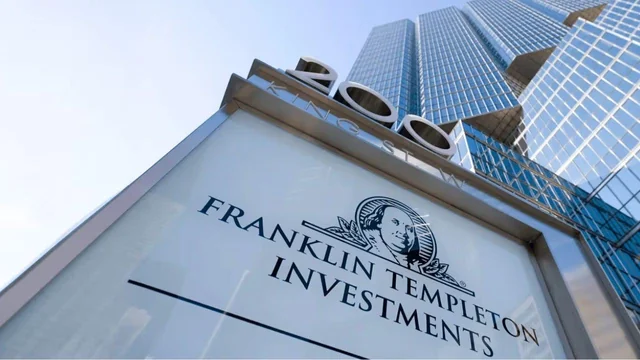
> Article except. The acquisition follows CoinFund's decision earlier this year to spin out its liquid strategies business into 250 Digital as the crypto investment firm sharpened its focus on venture investing. Franklin Templeton said Franklin Crypto will offer institutional investors actively managed cryptocurrency strategies, combining the investment capabilities of the former 250 Digital team with the asset manager's global distribution network. The company did not disclose the financial terms of the acquisition. The new division builds on the asset manager's existing digital asset business, which includes a dedicated unit focused on digital asset research, portfolio construction and institutional risk management. Franklin Templeton manages approximately $1.78 trillion in assets and operates in more than 35 countries, according to the company. submitted by /u/zesushv [link] [Kommentare]
Hi, I still have some BETH on binance. Is it possible to sell it? I don't see it on exchange and have no idea how to sell it. submitted by /u/ansilan [link] [Kommentare]
Crypto AI Trader: Next-Gen Machine Learning Trading & Bot Operations Platform A complete, self-hosted cryptocurrency trading platform that bridges deep learning price forecasting, real-time Binance execution, mobile Telegram interaction, and multi-client SaaS capability. 🚀 The Vision In the highly volatile crypto market, manual trading is emotionally taxing, while typical algorithmic bots lack adaptability. Crypto AI Trader solves this by combining TensorFlow/Keras-based prediction models with a unified mobile interface (Telegram) and a local web operations dashboard (Orchestration Bridge). Whether you want to run risk-free simulations in a sandbox, manage your own live funds via isolated margin, or orchestrate trading signals for multiple clients, this platform provides a secure, modular, and robust solution. 🌟 Key Pillars & Features 1. 🤖 Deep Learning Predictive Models At the heart of the platform is a machine learning pipeline that processes real-time Binance market data to forecast market trends. Multi-Timeframe Feature Engineering: Models analyze technical indicators (RSI, oscillators, price volatility) across historical klines. Diverse Model Architectures: Supports multiple neural network versions including Dense chart models and LSTM (Long Short-Term Memory) networks for sequential time-series data. Auto-Rebalancing: The AI decision engine runs periodic cycles (evaluating positions every 5 minutes and running full strategy iterations every 30 minutes) to adjust leverage targets based on trend confidence and price momentum. Core Implementation: Check out the [Trainer package](about:blank) and the neural network loading module [bot.py](about:blank). 2. 📈 Dual-Mode AI Trading Engine Execute trades with precision and custom risk management in two distinct modes, operating under independent settings: Paper Trading (Sandbox): A simulated wallet starting with a virtual balance of 10,000 USDT to benchmark neural network performance, calculate fees, and monitor liquidations with zero risk. Live Trading: Real-time trade execution on Binance using isolated margin to maximize capital efficiency while strictly controlling downside risk. Safety Protocols: Integrates position watchdog timers, leverage limits (1x to 10x long, 1x to 2x short), daily loss caps, and circuit breakers that halt the bot in the event of persistent API connection drops. Core Implementation: Explore the [AIBotService](about:blank) and the Binance integration client [trader.py](about:blank). 3. 💬 Telegram Command Center (Legacy) The Telegram interface is now considered a legacy entry point, having been succeeded by the web-based administrative dashboard which offers significantly faster loading times and more precise data synchronization. While the web dashboard is the primary tool for platform management, Telegram remains fully operational as a convenience for users who wish to check status or execute quick commands without undergoing the standard web login process. Interactive Trading Flow: Place market, limit, or OCO (One-Cancels-Other) orders on the fly, with automated limit sells placed in profit-taking ratios upon order execution. Trade Signal OCR: Upload screenshots of trading charts or signals from other groups; the bot automatically extracts text, parses parameters, and initiates interactive trade confirmations. Real-time Notifications: Instant price alerts, news delisting notifications, and daily PnL summaries delivered straight to your chat. Core Implementation: See [photo_handler.py](about:blank) for image parsing and the main entry point [app.py](about:blank). 4. 🎛️ Orchestration Bridge: Local Operations Dashboard A self-hosted web console built for managing the bot on multi-cluster orchestration environments with Kubernetes and Docker. State Management: View and modify bot configurations (active symbols, leverage limits, notification preferences) and apply updates dynamically. Ops Command Center: Run remote services (systemd control), track logs (journalctl and deploy logs), and trigger secure git deployment pulls. Production-Grade Security: Bound locally by default and secured via HTTP Basic Auth, with production options for Cloudflare Tunneling, mandatory 2FA, and strict API rate limits. Core Implementation: Explore the FastAPI dashboard codebase in [tools/orchestration_bridge/](about:blank). 5. 👥 BotTrader: Client Copy-Trading SaaS Turn your trading signals into a subscription service: Subscription Management: Clients subscribe to receive signals, with automated USDT/BTC deposit monitoring extending their subscription periods. Secure Client Key Storage: Clients input their API keys directly through Telegram. The bot immediately encrypts these keys at rest using an AES/RSA master key configuration and redacts them from log files. Managed Mirroring: Executes bot signals across client sub-accounts simultaneously with individual custom leverage ceilings. Core Implementation: Review [routes/bottrader.py](about:blank). ## 🛠️ The Tech Stack Programming Language: Python 3.8+ (type-hinted, modular structure) Machine Learning: TensorFlow / Keras (dense & LSTM models) Backend Frameworks: FastAPI (operations dashboard), python-telegram-bot (communication pipeline) Databases: SQLite (historical market klines and Telegram state), JSON/Pickle (bot settings and wallets) Data Sources: Binance WebSockets & REST API Security & Ops: systemd, Git hooks deployment, RSA encryption, Cloudflare Tunnels Dependency Injection: Unified [AppContainer](about:blank) managing service lifecycles. 🔒 Security & Safety First Log Redaction: All incoming API keys or sensitive data are instantly redacted before writing to log files. Permission Hierarchy: Strictly separates command access (Owner/Admin, Authorized Traders, and BotTrader Clients) to prevent unauthorized trades or configurations. Local-First Architecture: Keeps your data and secrets on your own hardware, running under your control. submitted by /u/badjano [link] [Kommentare]
Am I the only one that rushes to find out what the Trump administration said in the news when most of the market takes a downturn? Or upturn? Like today, it was going well then a see of Red and the latest news was that JD Vance walked out of Iran negotiations. It’s all so frustrating and ridiculous. This is not the way it was supposed to be. submitted by /u/HeavenlyCreation [link] [Kommentare]
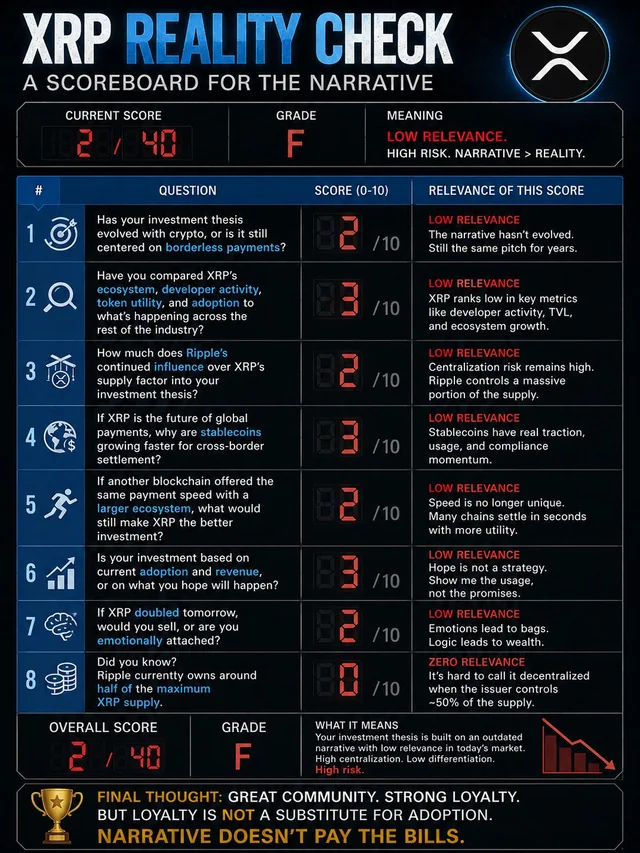
Respect to the XRP community for staying committed. This isn’t a personal attack. It’s a discussion about whether the investment thesis has kept up with the rest of crypto. If you disagree with the scores, let’s hear the facts. submitted by /u/SooperYuk [link] [Kommentare]