Channel
c/robotics
No description.
Owner @master · 603 posts · 1 joined · Status active · Posting permission: Every logged-in user can post
I've been working on tlabel, an open-source Python toolkit that loads tactile sensor data (GelSight, DIGIT, PaXini, etc.) into a unified format. One thing we struggled with: how to define and label manipulation primitives consistently. The T-Rex paper (Tactile-Reactive Dexterous Manipulation) defined 22 motor primitives for dexterous manipulation — grasp, press, wipe, twist, poke, and so on. That's probably the most comprehensive taxonomy out there right now. But not every task needs all 22, and not every lab uses the same definitions. So we built a configurable taxonomy system on top of tlabel, with T-Rex's set as the default starting point. How it works We picked 7 primitives from T-Rex that have clear force signatures (reach, grasp, press, squeeze, wrap, wipe, lift), plus Cutkosky grasp subtypes. The engine can auto-predict these from visual-tactile images — even without a force sensor, it estimates force distributions from GelSight/DIGIT images and maps patterns to primitives. python import tlabel data = tlabel.demo('gelsight') data.predict_primitives() Every prediction carries a source tag (ai_predicted vs ai_predicted_estimated vs manual) and a confidence score. Low-confidence segments are left blank for you to annotate. Defining your own primitives If your task has primitives not in the default set, you can register custom ones with physical rules: python tlabel.register_custom_primitive('poke', force_range=(0.1, 0.8), deformation_max=0.15, contact_required=True, confidence=0.5 ) data.predict_primitives(min_confidence=0.4) Or scope it to a local taxonomy without polluting the global registry: python taxonomy = tlabel.get_default_taxonomy() from tlabel import PrimitiveRule taxonomy.register(PrimitiveRule( name='poke', min_force=0.1, max_deformation=0.15, contact_required=True, min_confidence=0.5 )) data.predict_primitives(taxonomy=taxonomy, min_confidence=0.4) Manual annotation still works python data.add_primitive('reach', start_frame=0, end_frame=10) data.add_primitive('grasp', start_frame=10, end_frame=25) data.add_primitive('lift', start_frame=25, end_frame=40) data.get_primitive_timeline() # [('reach', 0, 10), ('grasp', 10, 25), ('lift', 25, 40)] Export python data.export("output.csv") # Columns: primitive_label, primitive_source, primitive_confidence The design principle is "assist, not autoritate" — AI predictions are suggestions with metadata, not ground truth. You stay in control. Pure Python, MIT license, no dependencies beyond numpy. Code: https://github.com/liesliy/tlabel Curious what primitive sets other people are using for their manipulation tasks. submitted by /u/ImmediateArm7942 [link] [Kommentare]

I've noticed that in many demos of embodied robots, their movements are still quite slow. Is this mainly because we don't have enough real-world data to train good control policies yet, or is it more of a hardware limitation, such as motors, actuators, power, or thermal constraints? It also seems that visual tracking can still lose fast-moving objects pretty easily. Does perception latency or tracking reliability become a major bottleneck for how fast robots can move in the real world? Curious how people in robotics think about this: is the main limit data, control algorithms, hardware, perception, safety, or something else? submitted by /u/D1n0saurMecha [link] [Kommentare]
I have done quite a bit of work, including most of my Master's thesis, with ROS Noetic and Ubuntu 20.04, which worked well. However, I recently got a Raspberry Pi 5 that I want to use for various personal robotics projects, and the Pi 5 doesn't support anything below Ubuntu 23.10. I'm currently debating between installing ROS 2 Jazzy Jalisco with Ubuntu 24.04 or ROS 2 Lyrical Luth with Ubuntu 26.04. Both have similar EoL (2029 vs 2031), so I'm curious if any of you in the robotics community have found major advantages or disadvantages between the two distros. Any reason not to choose Lyrical, since it's newer? Thanks for all your wisdom! submitted by /u/Dying_Of_Board-dom [link] [Kommentare]
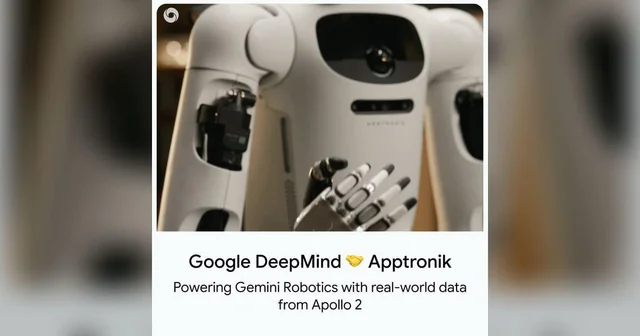

Found this demo on their project page showing exactly the transparent-surface problem that breaks most RGB-D setups. Raw sensor depth drops to nothing on the glass panel, and the completion model fills it in from the backbone features. Only the four vision encoders went up on HuggingFace and GitHub this week under Apache-2.0; the depth completion weights themselves are not released. Their paper lists NYUv2 RMSE of 0.296 for the flagship ViT-g, and they report 2.552 on KITTI, trailing both DINOv3-7B and V-JEPA 2.1. For actual robotics work this is the exact failure mode that makes wine glasses and steel cabinets a consistent headache for grasp pipelines. Curious how people see validating these depth numbers when the completion weights are not available for independent testing. submitted by /u/Savings-Display5123 [link] [Kommentare]
Hi, I have an interview with Neuralink for this fall for robotics software engineer intern. I was wondering what should i expect and what is the interview process. Thank you. submitted by /u/-KHEOPS [link] [Kommentare]
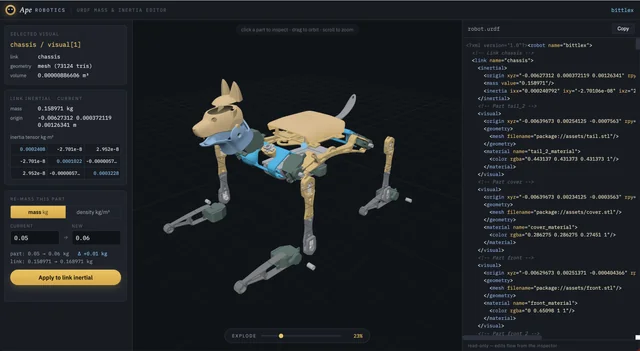
I sometimes need to tune the inertial property of the robot by changing the density or mass of each parts. Doing it in CAD and have it re-export to URDF takes a bit long and too tedious. So this online editor lets you (and me) quickly make changes, and have the inertia tensor of the links be recomputed immediately. You can then copy-paste the updated URDF. This is basically entirely made by claude (with some of my help :)) (And yes, it is placed under my startup's domain as a potential lead magnet. but I think it could be useful for some people nonetheless. EDIT (forgot to post the link) Welcome to try: https://urdf.aperobotics.io/ submitted by /u/FearlessPrice7187 [link] [Kommentare]
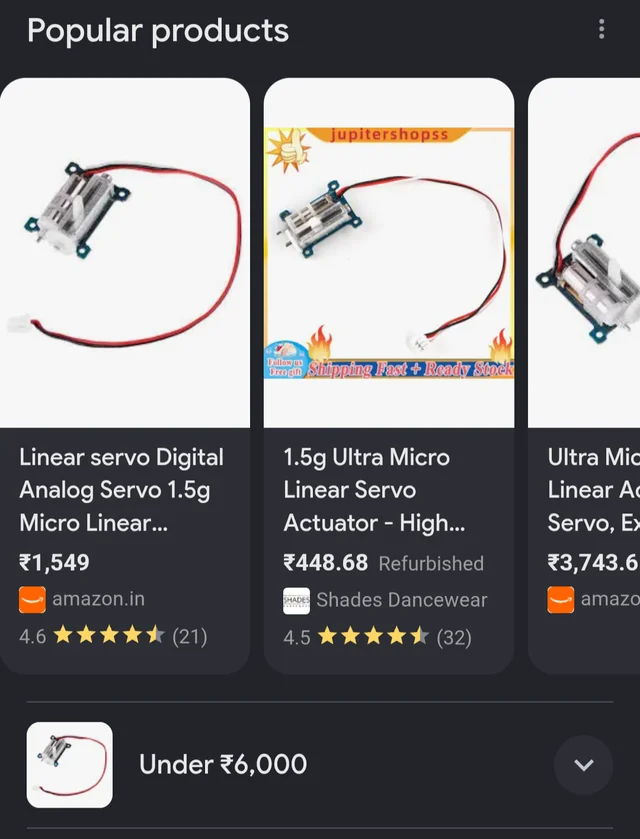
I see a lot of smaller parts are costlier than the usual sizes. Even for screws , it sometimes costs 2k rs. Why is this? Don't tell that it's because of the import duty. submitted by /u/MotorPsychology1712 [link] [Kommentare]
Have been building this project for a while now, and would love to get eyes on it. Will appreciate it if you could try it out in actual workflows and give me feedback so I can decide the direction to move in. Currently it has been benchmarked against OPEN3D v0.19 on the same machine, using full-resolution frames from three real datasets: TUM RGB-D, KITTI, and nuScenes-mini. In the table below, higher is better — a ratio above 1 means ThreeCrate is faster than Open3D. Workload How ThreeCrate compares Reading files (raw float parsing) 1.8x–2.2x faster Voxel downsampling (CPU) 1.6x–1.8x faster Voxel downsampling (GPU, wgpu) 1.8x–2.9x faster (vs our own CPU path, not Open3D) Normal estimation 0.57x–1.09x (falls behind on big clouds) Single-scale ICP 0.71x–0.99x (falls behind on big clouds) Would appreciate any contributions and feedback for the repo. Link to the repo: https://github.com/rajgandhi1/threecrate submitted by /u/Practical-Dig-4052 [link] [Kommentare]
Agility Robotics CTO Pras Velagapudi says Digit’s early commercial work is focused on repetitive warehouse and manufacturing tasks like moving totes, unloading AMRs, placing items on shelves, and connecting parts of existing automation systems. He says these are useful “in-between” automation roles where companies do not want to heavily modify infrastructure. The article covers Agility’s partnership with NVIDIA as the first partner for Halos for Robots, NVIDIA’s autonomous safety platform for robots, as well as Agility’s plan to go public through a merger with Churchill Capital Corp. XI, giving the company a $2.5 billion pre-money valuation and $620 million in expected gross proceeds. submitted by /u/Responsible-Grass452 [link] [Kommentare]
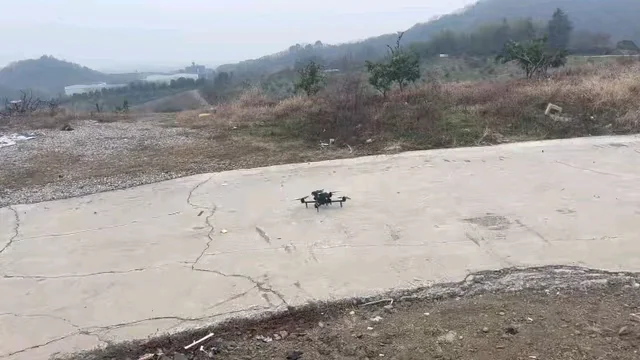
I used the HM-LD1 dToF LiDAR, yep, the robot vacuum sensor, to build an obstacle-stop demo on my drone. it is easy to replicate. l will open-sourcing on GitHub soon. submitted by /u/RiskHot1017 [link] [Kommentare]
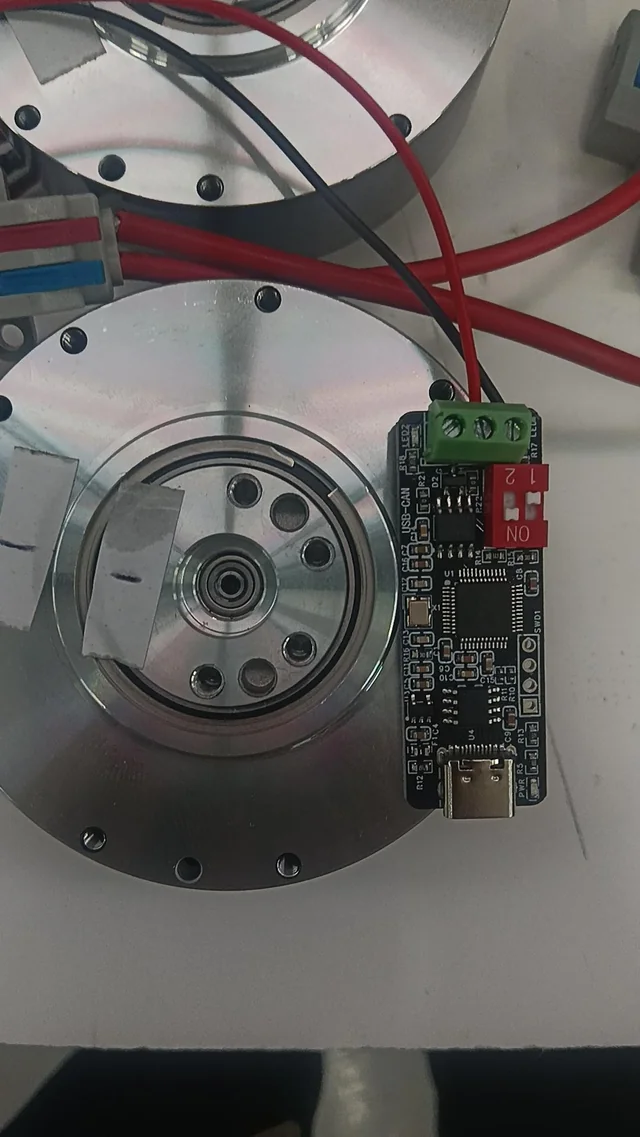
Is there anyone who could help me regarding controlling multiple robstride o2 motor? What im trying to do is to control multiple Robstride o2 motors (preferably 3) with the default CAN to USB debugger it came with. Is it possible to control multiple motor with that?. I search around the internet for guides, says it'll work if i daisy chained the motor?. I tried wiring 2 motors , first i tried to wire it parallel and second i tried Daisy chain wiring. But it always result the same. Using robstride official software motorstudio it only detects and control 1 motor (the nearest motor to the CAN-USB debugger). And i know it's not a faulty motor or anything since if i only test 1 motor using the CAN-USB debugger . The motor still works (i can rotate it around and such) I tried using ai to solve this. And it still dont work. I mean i understand that ai can sometimes be bs. So if anyone here can help me, That would be really great, also sorry if this is a dumb question 🙏 submitted by /u/uloneone [link] [Kommentare]

Scientists built a talking robot equipped with mechanical vocal cords, an artificial vocal tract, and a nasal cavity that allows it to generate real human-like speech by continuously listening to its own voice and adjusting its vocal organs until the output matches natural vocalization, mirroring the exact trial and error process infants use to acquire language. Beyond being a technical milestone in speech robotics, the system is being applied to help hearing-impaired individuals train their pronunciation by giving them a physical, audible model of correct speech to imitate. The research highlights how self-correcting, feedback-driven systems inspired by human development could reshape assistive communication technology. Credits: https://onlinelibrary.wiley.com/doi/10.1155/2008/768232 submitted by /u/Similar_Suit_3709 [link] [Kommentare]