 R
↗
R
↗
Engineers have spent billions teaching robots to do backflips and solve complex math, yet a wet, mossy hill can stop a state-of-the-art robot completely. This video breaks down how researchers solved that problem not with better software, but by copying the design of a mountain goat's hoof, using a rigid outer shell to mimic keratin and a soft flexible core to mimic the natural grip pad, creating a robotic foot that uses zero cameras, sensors, or microprocessors. The result is a purely mechanical solution called passive mechanics, proving that sometimes evolution has already engineered the answer millions of years before we did. Published research on biomimetic robotic foot design for rough terrain locomotion. submitted by /u/Similar_Suit_3709 [link] [Kommentare]
 R
↗
R
↗
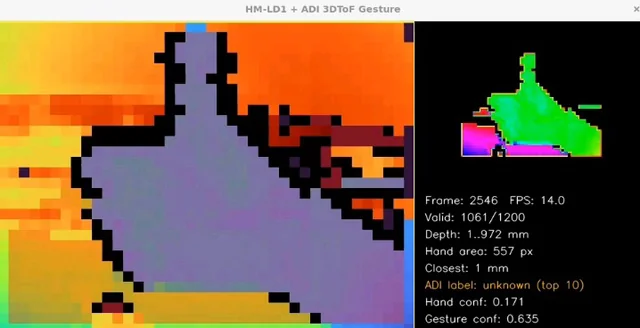
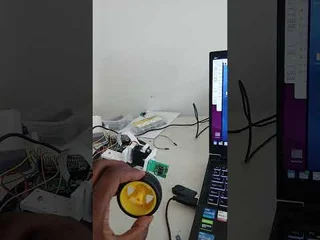
I saw other products that can do this, so I also want to use my dtof lidar HM-LD1 to implement this. I haven't finished yet, just share a video first. I believe I am about to realize my idea. Looking forward to it, I will open source it on GitHub. submitted by /u/RiskHot1017 [link] [Kommentare]
 R
↗
R
↗
Ranjay Krishna argues that language may be an unnecessary intermediary between perception and action in robotics. Humans do not translate every physical interaction into words before reacting. Catching a ball, pulling a hand away from something hot or moving through a room happens through a direct connection between perception and movement. He believes robotics models should work the same way, moving directly from visual and sensor input to action rather than relying on an LLM in the middle. submitted by /u/Responsible-Grass452 [link] [Kommentare]
 R
↗
R
↗
R
↗
R
↗
I’ve been looking at cheaper ways to test robotics projects properly before putting anything onto real hardware. The clean version in my head is something like. develop locally > run in Isaac Sim, Gazebo or MuJoCo > do the heavier training/eval somewhere with more GPU > test on the real robot But after looking through some forums, the real flow seems a lot messier, Isaac Lab install and version conflicts, Docker setups breaking, headless rendering hanging, cloud GPUs running out of memory, or the sim using the wrong GPU entirely. What does your actual setup look like, including the slightly cursed scripts, pinned environments, machine images, or other workarounds that have somehow become part of the normal process? submitted by /u/michaelmanleyhypley [link] [Kommentare]
 R
↗
R
↗
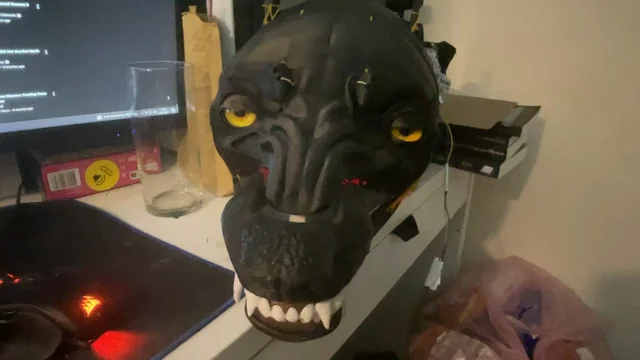
This is "Shbeeve' kinda like Steve but I named him Shbeeve. I 3dmodeled the entire mask and all it's pieces in Nomad, did reprints to ensure it fit properly, then connected every part of the servos & arduino to him! he was supposed to have eyes that moved left and right but they need to be fixed before I do that! He can blink using servos, but the eyebrows, snout & ears are all elastics & thread controlled! :D submitted by /u/Arkranum [link] [Kommentare]
R
↗
I've been working on ML/Robotics research for a while and often work with HDF5, Parquet, and Zarr files. Personally, I love the myHDF5 viewer, but there's no good equivalent for Parquet and Zarr, and switching between different sites also gets annoying. So, I built a tool that provides a unified solution: ViewKit For now, it supports viewing HDF5, Parquet, and Zarr files (and a bunch of other common data formats), but I'm hoping to add more depending on what people find useful! Everything is loaded and parsed locally in your browser (WebAssembly + JS), so your data never leaves your machine. It's also built to remain responsive on big files via efficient reading, caching, and prefetching. Traversing through data files actually feels faster than existing solutions like myHDF5 with simple caching strategies. It also supports some common data types that existing viewers don't support (e.g. float16, complex numbers for HDF5). It's free to use with no sign-up required. I'd love for people to try it out: https://viewkit.app/ I'd appreciate any feedback (feel free to comment or send a message through the website). Looking forward to supporting additional features/file formats that the community finds useful! submitted by /u/ayu055 [link] [Kommentare]
R
↗
So I’ve been interested in robotics for a while and wanted to get started, but I have no idea what to do. I have almost zero knowledge, and I want to know where to get started. Could I get some tips on where to start? I would appreciate something like YouTube tutorials and what parts to buy (preferably cheaper) in order to start learning, as well as some beginner projects. submitted by /u/LatterCombination408 [link] [Kommentare]
 R
↗
R
↗
 R
↗
R
↗
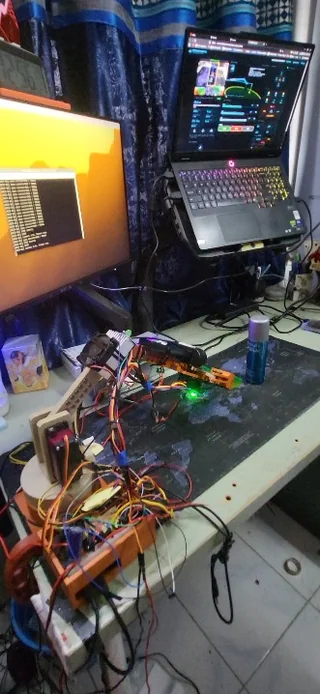
https://youtube.com/shorts/DapBP4Frb9c?si=u6yqt5xPw4Y-4\_09 Link to full vid 4-DOF Raspberry Pi 4B robot arm with a Three.js 3D web interface. Features YOLOv8 object detection, VL53L1X depth sensing, 2-link inverse kinematics, autonomous object pickup, INA219 current-based gripper stall detection, floor collision protection, and a live digital twin for real-time visualization. submitted by /u/MMK11327 [link] [Kommentare]
 R
↗
R
↗
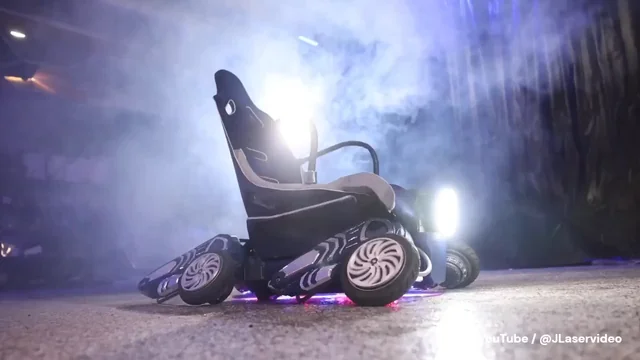
Full video: YouTube: JLaservideo: I Built My Dad Bionic Legs!: https://www.youtube.com/watch?v=ZyHrKD3SE-M It's an Unitree B2: https://shop.unitree.com/products/unitree-b2 submitted by /u/Nunki08 [link] [Kommentare]
R
↗
This new paper develops an information-processing theory of consciousness and uses it to identify how consciousness can be instantiated in AI, paving the way for genuine AGI and beyond (the paper demonstrates that conscious functioning is the missing ingredient that enables a toddler to navigate an obstacle-strewn room or an 18-year-old to learn to drive with massively less training than is required by a robot or autonomous vehicle): Abstract: An acceptable information-processing theory of consciousness should be able to identify the adaptive advantages that drove the emergence of consciousness during the evolution of life. It should also predict the specific dynamical architecture of information processing that would need to be instantiated in AI to produce consciousness and the superior adaptation it enables. Whether such an instantiation produces AI that is actually conscious and also more adaptable would provide the ultimate test of the theory. A prime candidate for such a theory is the Subject-Object Emergence Theory of consciousness. It argues that consciousness first evolved because it enabled organisms to achieve adaptive body-environment coordination without extensive trial-and-error learning. It postulates that the subject in an appropriate Subject-Object subsystem would be able to use depictive (iconic) visual representations of the relative positions of its body and the environment to guide motor actions that will produce adaptive body-environment coordination. The depictive representations will 'light up' for such a subject, producing subjective experience that is used to deliver adaptive benefits. Hand-eye coordination is a familiar example in humans—novel and intricate coordination tasks can be undertaken without additional reinforcement learning, provided focused conscious attention is employed to provide us (the subject) with relevant depictive images. The paper identifies how such a conscious Subject-Object subsystem could be instantiated in AI systems, enabling hand-eye and other body-environment coordination without the extensive reinforcement learning or complex computational programming needed at present. Drawing further on the Subject-Object theory of consciousness, the paper also identifies how these simple conscious subsystems evolved further in organisms to establish the conscious modelling that enables conscious planning, imagining, abduction and other higher cognitive functions. It demonstrates that current approaches to incorporating world modelling in AI will fail to achieve key elements of the general intelligence found in humans that require consciousness. The full paper can be accessed freely at: https://ssrn.com/abstract=6911039 submitted by /u/BigPicturexyz [link] [Kommentare]
 R
↗
R
↗
I made a 2dof raspberry pi object tracking robot in c++. It is the second iteration of a 1dof version i had made: https://github.com/Dawsatek22/raspberrypi_objectracking_1dof_cpp . i still need to make te documentation and post the cad files but if you wanna check the code i posted it on the repo: https://github.com/Dawsatek22/raspberrypi_objectracking_2dof_cpp- . submitted by /u/Guilty_Question_6914 [link] [Kommentare]
 R
↗
R
↗
R
↗
R
↗
Hi all, I’m building a data-readiness platform that runs a raw-to-training-ready workflow for Physical AI teams. It starts with the messy middle after capture: robot video, sensor streams, logs, and kinematics that are not yet reliable training data. Euler combines visual and kinematic readiness checks with annotation and labeling, with the goal of taking a raw data slice toward a dataset for a specific policy. I’m conducting user interviews to gauge whether I'm heading in the right direction, because I do not want to build just another annotation platform. For teams training VLA or other robot policies, I’d really value a candid view on three questions: Is the harder problem knowing which data is usable, or annotating it once you know? Would a policy-aware workflow from raw capture to training-ready data be useful? What would make this meaningfully better than annotation software: readiness checks, visual plus kinematic context, curation, or something else? Project: https://sudotank.com/ I’m looking for honest pushback as much as interest. Thanks! submitted by /u/sennath [link] [Kommentare]