 R
↗
R
↗
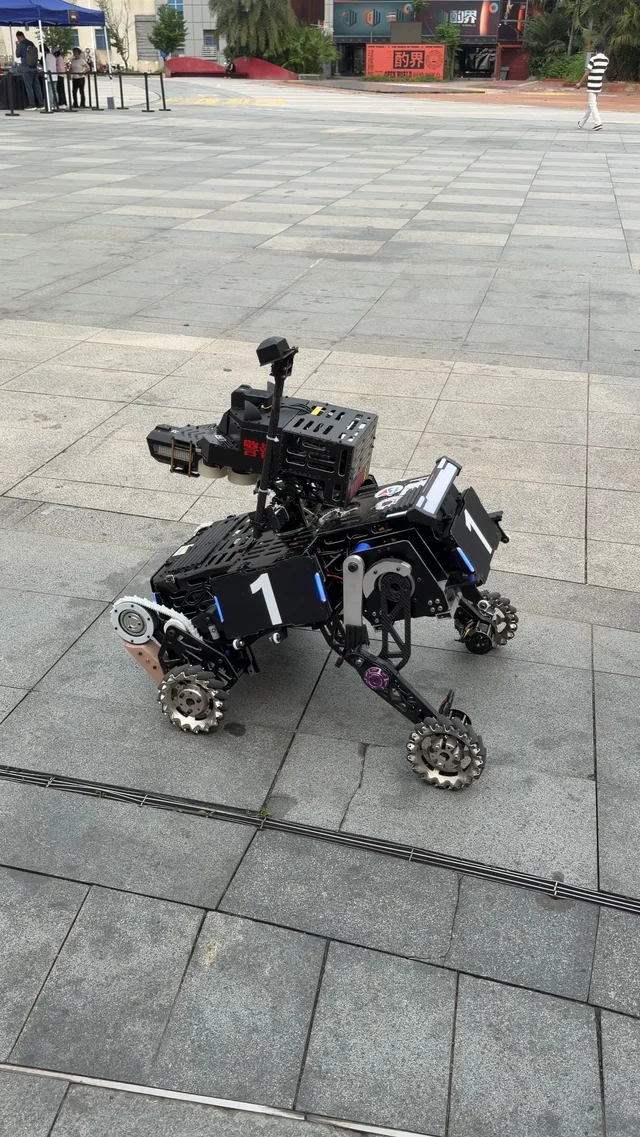
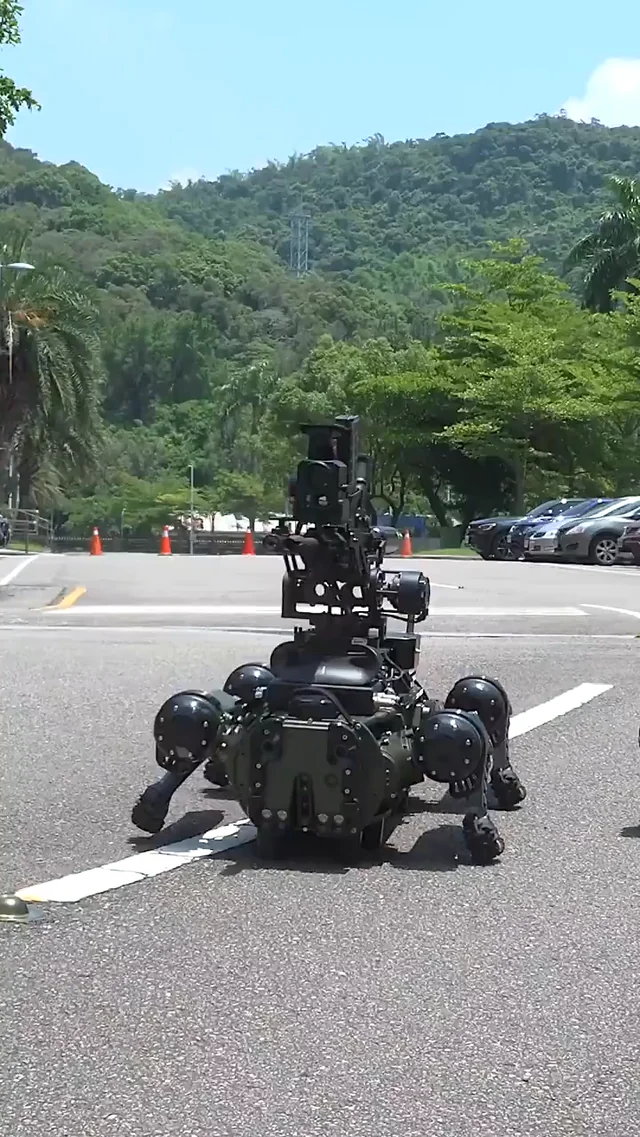
The robot behaved long enough for us to record this video. This robot was developed for the RoboMaster competition and powered by us. submitted by /u/Cubemars [link] [Kommentare]
R
↗
I keep thinking about this idea of a small robot that lives on your desk and is built specifically to help you focus, not just look cute. Like, it tracks your work sessions, notices when you've been scrolling instead of working, reacts when you hit a deep focus streak, calls you out when you've been on your phone for an hour. Vector and Emo type robots failed because they were essentially toys pretending to be useful. What if you flip it? A focus tool with a personality, not a toy with productivity bolted on. Right now it's just a side project so I'm focused on getting the prototype right first. I will take it to cocreate pitch. Price range I'm imagining: somewhere between a fitness band and a smartwatch. submitted by /u/RemarkableCaptain318 [link] [Kommentare]
 R
↗
R
↗
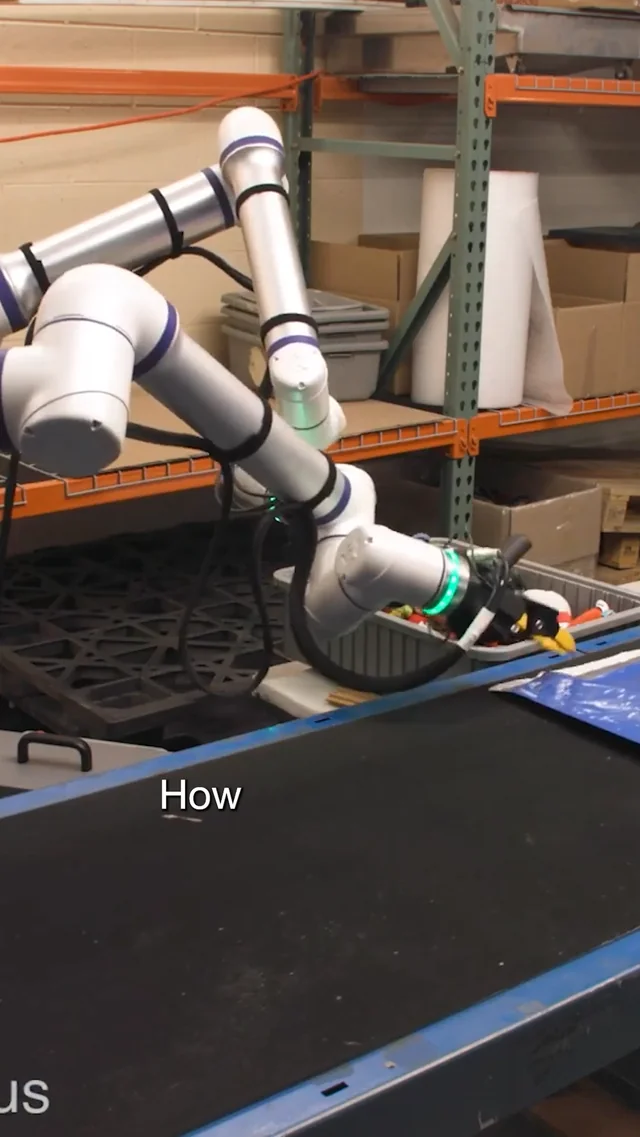
Andrew Barry from Generalist says the company is upfront with people collecting robot training data: the data is being used to train robots. Some workers are excited by that, especially when the tasks are repetitive, physically demanding, or jobs they do not want to keep doing. Full episode: https://www.youtube.com/watch?v=-TTAOxVN2eo submitted by /u/Responsible-Grass452 [link] [Kommentare]
R
↗
Hey r/robotics, I’ve been playing around with bridging AI and simple, accessible hardware. The goal is to avoid buying expensive robotics gear, starting instead with a basic
R
↗
I want to make a post asking for help. I want to buy a 3D printer to start printing some components and figures that I might be able to sell in the future. I mainly want to print robotic parts such as housings, arms, or support pieces that I could use for robotic kits. I want to know which is the best 3D printer to start with without breaking the bank. My budget is around 350–400€. I have some good experience using the Elegoo Neptune 3 Pro and the Raise3D Pro2 Plus, which I often use to make parts and components for my projects at school. I want to get something similar to the Elegoo. I was considering these 3 options: • Bambu Lab A2L • Elegoo Neptune 4 Plus • Elegoo Centauri Carbon I want something that isn’t too big but not too small either. I also talked to some teachers, and they told me to take into consideration that at some point I may need to repair or replace some parts of the printer, which could cost more or less depending on the model. So I want to keep that in mind too. If anyone can help me, please submitted by /u/Mf_KingIsHere [link] [Kommentare]
 R
↗
R
↗
Implementing beam-search based algorithms for decision making turns out to be quite helpful for agents. Check the repo. submitted by /u/ahmedzeer [link] [Kommentare]
 R
↗
R
↗
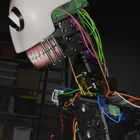
Curious if this neck mechanism is realistic using what appears to be Nema 17 stepper motors. From an animated series online (Elberr). https://preview.redd.it/n67mm00oz87h1.png?width=1640&format=png&auto=webp&s=2ab62ce3046d173cb88432848e2150767405d6ce https://preview.redd.it/z39nq50oz87h1.png?width=1640&format=png&auto=webp&s=ea70615ede462bab141915d7f93e7d14e90cfd79 submitted by /u/Positive_Valuable980 [link] [Kommentare]
 R
↗
R
↗
From Eren Chen on 𝕏: https://x.com/ErenChenAI/status/2065565071816741000 submitted by /u/Nunki08 [link] [Kommentare]
 R
↗
R
↗
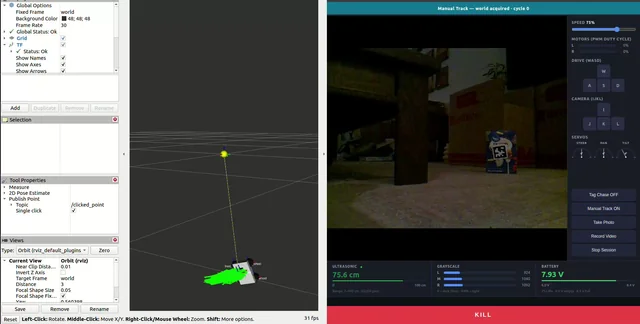
v1 post here if you want the background. Where v2 is now The big addition in v2 is a world-frame coordinate system and live trajectory visualization in RViz2. The robot now runs two AprilTags simultaneously: tag0 is the chase target, tag1 is physically fixed to the wall and acts as the world anchor. A ROS2 node on Ubuntu (tf_bridge) connects to the Pi over WebSocket, ingests raw camera-frame poses, and computes a floor-anchored world frame on first tag1 detection. World origin is the floor point directly below the camera. From there it publishes /trajectory/car and /trajectory/tag0 as LINE_STRIP markers to RViz2, and writes per-cycle PLY point clouds for inspection in MeshLab. The URDF visualization is also live — a picar_description ROS2 package provides a tracking URDF anchored to the camera TF frame, so the robot mesh follows its world-frame position in RViz2 in real time. Manual Track mode lets me drive with WASD while tag detection and TF publishing run in the background, which is what the video shows. What the video shows Split view: dashboard on the right, RViz2 on the left. I'm driving forward with keyboard controls. You can see the trajectory building in RViz2 as the robot moves — and you can also clearly see the problem: the path is a zig-zag even when the motion is roughly straight. That's not wheel slip or steering noise. That's measurement noise from the AprilTag pose solver, visualized honestly. The jitter problem The zig-zags are real and understood. Root cause is AprilTag PnP pose ambiguity — the solver has two valid solutions for a planar tag and flips between them frame to frame. One axis swings ±15cm per frame while the robot is stationary. On top of that, a small angular error in the tag1 pose gets amplified into position noise in world frame: at ~74cm tag distance, a 5° rotation error becomes ~6.5cm of position error. Every raw frame goes straight to TF with no filtering, so one bad frame is a spike on the trajectory. What's next Two things need fixing before the trajectory is useful: Fix the world frame geometry. The current floor-anchoring logic and world frame initialization are approximate. Tag1 needs to be treated more carefully — its pose relative to the world origin needs to be stable across the session, not just initialized once and held. Add a noise filter. An EWMA filter with a velocity gate in _process_frame would reject the frame-to-frame pose flips without introducing lag on real motion. This was prototyped and tested during the v2 session but pulled out to keep the debrief clean — it's the next thing going in. Once those two are solid the trajectory should be smooth enough to actually reason about where the robot has been. Stack: Raspberry Pi 4B · PiCar-X v2.0 · Picamera2 · pupil-apriltags · FastAPI · ROS2 Humble · Python 3.13 References Post history v1 tag chaser PiCar-X introduction Hardware / code PiCar-X on Amazon Git repo submitted by /u/okineedaplan [link] [Kommentare]
 R
↗
R
↗
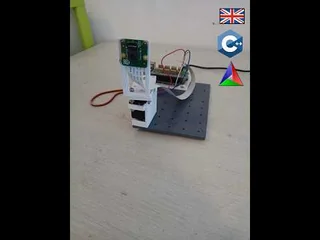
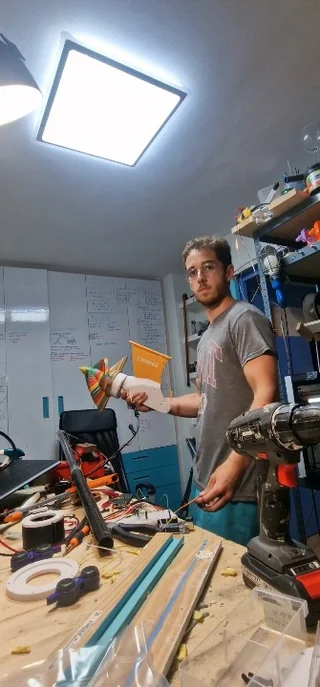
I finnaly after a month or 2 made a Raspberry pi object 1 degrees of freedom tracking robot it took me a while but it was worth it. I was using lccv for raspberry camera module(i also have made code for usb camera).if anyone wants to try out i have the link to the repo in the video description.i do advise ti read the eng_list.txt file first. submitted by /u/Guilty_Question_6914 [link] [Kommentare]
 R
↗
R
↗
I'm making a custom bldc motor to use as the main propulsion for an automated rigg to map the bottom of the sea! For now i'm testing it in my paddle surf, outside the water it seems to be way to powerful! The motor itself is all 3d printed, I'll soon make a post about it! submitted by /u/ArnauAguilar [link] [Kommentare]
R
↗
Hi everyone, I built a small open-source web simulation of a double pendulum to demonstrate chaotic motion and sensitivity to initial conditions. Repo: https://github.com/mohammadijoo/Double-Pendulum-Chaos-Mechanism The goal is educational: a browser-based demo that lets students or beginners see how a simple mechanical system can produce complex, chaotic behavior. It is written with HTML, CSS, and JavaScript, so it can run without installing a physics engine. I would appreciate feedback on: whether the visualization explains chaotic behavior clearly whether the equations / numerical integration could be improved what parameters or plots would make the simulator more useful for control, robotics, or physics students whether adding energy plots, phase portraits, or Lyapunov-style divergence visualization would be useful I’m sharing it mainly for technical feedback, not as a commercial project. submitted by /u/abolfazl1363 [link] [Kommentare]