Sie können Google Docs, Google Sheets, Google Präsentationen, Google Vids und Google Formulare mit einem kompatiblen Browser und Betriebssystem verwenden. Weitere Informationen zu kompatiblen Browser Source: https://support.google.com/drive/answer/2375082
Channel
c/technology
Technology
Owner @master · 54 posts · 1 joined · Status active · Posting permission: Every logged-in user can post
IBM is bringing the rigor and modularity of software engineering to LLMs. Source: https://github.com/generative-computing/granite-switch

Conversations, turns, rounds, tools, agents and more! Source: https://substackcdn.com/image/fetch/$s_!RMZF!,f_auto,q_auto:good,fl_progressive:steep/https%3A%2F%2Fsubstack-post-media.s3.amazonaws.com%2Fpublic%2Fimages%2F4c8454c2-b5cc-4dc6-aa84-41f204adc6da_2048x2048.png

by a human - no AI was used Source: http://disqus.com/?ref_noscript
Pollen, algae, insects, radiolarians – each unique microfossil holds clues to how Earth has changed over millions of years. Combining AI with digital scanners helps researchers piece it all together. Source: http://www.linkedin.com/shareArticle?mini=true&source=The+Conversation&title=Galaxies+of+life+are+collecting+dust+in+museums+%E2%80%93+digitizing+microscope+slides+can+uncover+billions+of+fossils+for+natural+history&url=https%3A%2F%2Ftheconversation.com%2Fgalaxies-of-life-are-collecting-dust-in-museums-digitizing-microscope-slides-can-uncover-billions-of-fossils-for-natural-history-281304%3Futm_source%3Dlinkedin%26utm_medium%3Dbylinelinkedinbutton

The internet is an essential resource for young people and adults to access information, explore community, and find themselves—both inside countries and across continents. Yet governments around the world continue to introduce and implement legislation requiring all online users to verify their ages before accessing the digital space. Source: https://share.joinmastodon.org/#text=+https%3A%2F%2Fwww.eff.org%2Fdeeplinks%2F2026%2F06%2Finternet-age-gates-are-growing-global-threat

He is about to take SpaceX public—pushing other AI companies to do the same. Source: https://www.facebook.com/TheAtlantic

Spring Data Solr stopped active development in 2020 and was archived in 2023. Three years later and some pairing with Claude, its now back from the attic. Source: https://github.com/tomaytotomato
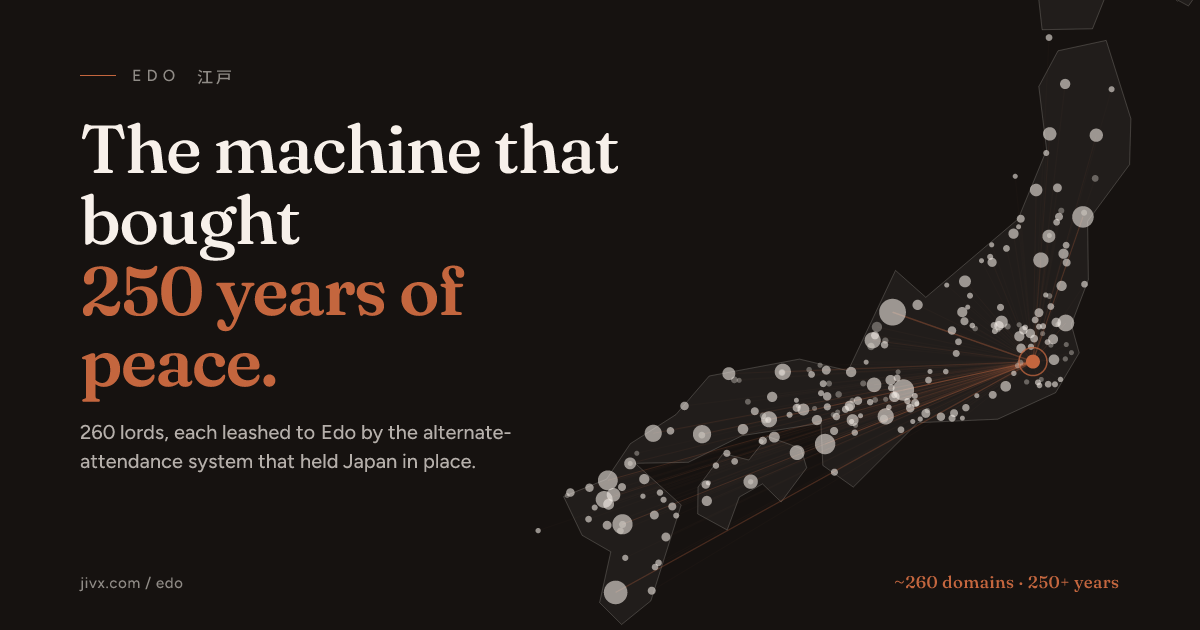
To stop 260 armed warlords from going back to war, the Tokugawa shogunate built a schedule. Every lord marched to Edo and back, his family held hostage. A data map of the alternate-attendance system that bought Japan two and a half centuries of peace. Source: https://jivx.com/edo

We introduce an automated, agent-driven approach to the design of photonic devices. We instruct large language models (LLMs) to solve photonic design problems, given access to software tools for performance evaluation (through numerical simulations) and quantitative acceptance criteria (e.g., fabrication rules, geometric constraints, physical-consistency checks). Within this context, agents run autonomous design loops (propose, simulate, evaluate, iterate) and generate devices with state-of-the-art performance. We demonstrate this approach in two stages: First, we run it individually on four canonical problem classes in photonic chip design: a) passive components (waveguide bends, splitters, crossings, etc.); b) active devices (silicon microring modulators (MRMs)); c) radio-frequency (RF) devices (traveling-wave electrodes for a Mach-Zehnder modulator (MZM)); d) chip layout (electrical routing). Then, we combine the previous studies in one demonstration to produce a silicon photonic modulator, incorporating layout, charge transport, optical mode, and RF electrode design. The approach generalizes to any problem that combines a numerical simulator with performance criteria that an LLM can evaluate. Source: https://www.cornell.edu/
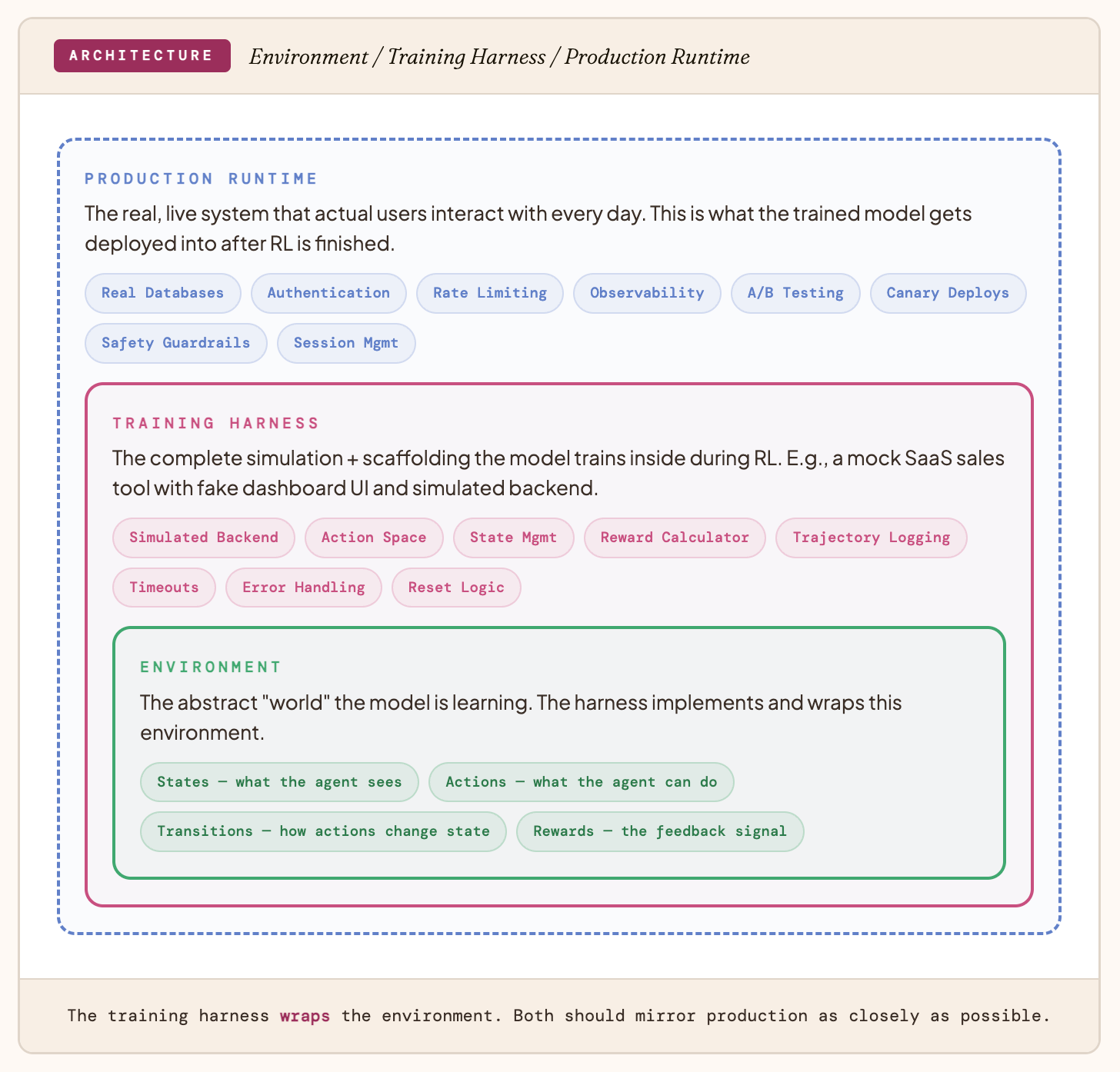
Your broken harness is actively making the model worse. Here's what I keep seeing after years of eyeballing trajectories, and what you need to fix. Source: https://substackcdn.com/image/fetch/$s_!NbXz!,f_auto,q_auto:good,fl_progressive:steep/https%3A%2F%2Fsubstack-post-media.s3.amazonaws.com%2Fpublic%2Fimages%2Fe58868ac-23a0-453d-81e5-5ca830f7454d_1456x1394.png
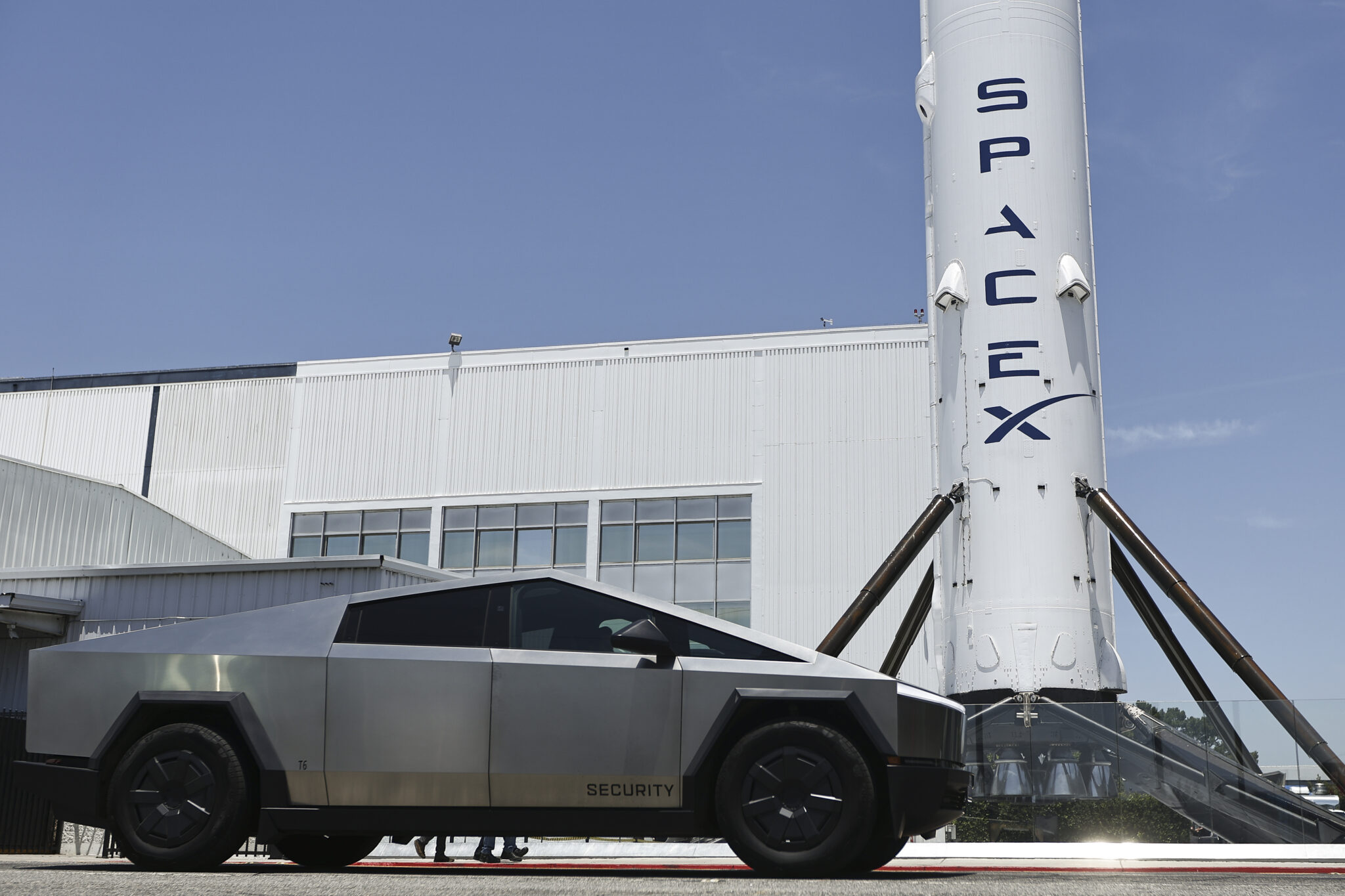
SpaceX won’t get easy access to billions of dollars from passive investors. Source: https://cdn.arstechnica.net/wp-content/uploads/2026/06/SpaceX-signage.jpg

Both sides are grappling with a real existential threat, and both sides feel like they are screaming into the void. There is a way to close the gap and get everyone pulling in the same direction.. … Source: https://wordpress.org/